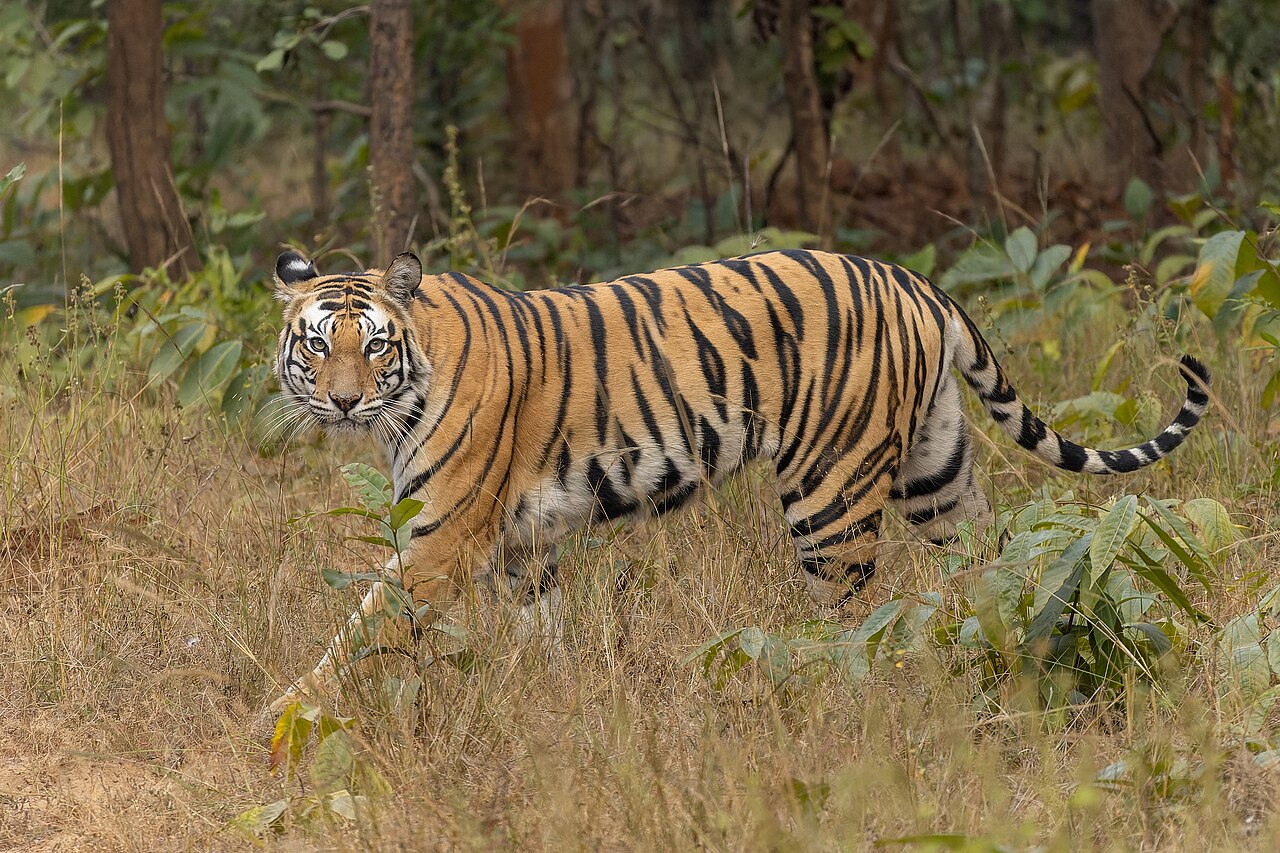
Bengal Tiger
Panthera tigris tigris
Explore the complete life journey from birth to maximum documented longevity. Move the interactive age slider below to see real-time biometric growth ranges, developmental milestones, metabolic changes, and ontogenetic stages.
Interactive Lifespan & Growth Scrubber
Drag the slider or click any milestone step to observe dynamic biometrics and physiological changes.
Maternal milk exclusively.
Crawls blind toward mother's warm teats.
Taxon-Specific Life Stage Machine
How Bengal Tiger progresses through distinct morphological phases.
Neonate / Blind Cub
Born blind and helpless in a secluded rock den. Completely dependent on mother’s milk.
- •Eyes open at 6–12 days with blue haze
- •Milk teeth emerge at 2–3 weeks
- •Stripes already visible on soft natal fur
Exploring Cub
Leaves the den to follow mother on short treks. Starts eating meat regurgitated or cached by mother.
- •Eyes turn amber-gold
- •Deciduous canines fully erupted
- •Learns stalk-and-pounce mechanics through sibling play
Juvenile Apprentice Hunter
Accompanies mother on hunts, observing stalking technique, wind direction, and throat-bite dispatch.
- •Permanent 7.5 cm canine teeth replace milk canines around month 8–10
- •Reaches ~60% of adult body mass
- •Huge paw pads indicate future size
Subadult Dispersal / Transient
Leaves mother’s territory. Males wander extensive distances seeking an unclaimed forest territory.
- •Rapid muscle mass accrual across shoulders and neck
- •Reproductive hormone maturation
- •Full skull ridge development
Resident Territorial Prime Adult
Claims and fiercely defends a prime 30–100 km² territory. Breeds and sires litters.
- •Peak muscular mass (up to 260 kg in males)
- •Full cheek ruff hair growth
- •Massive paws delivering 10,000 ft-lbs strike force
Growth Timeline Reference Matrix
Standardized peer-reviewed biometric development data.
| Age Milestone | Life Stage | Total Length Range | Body Mass Range | Maturity | Dietary Regime |
|---|---|---|---|---|---|
| 🐯Birth (Day 0) | Blind Cub | 28–35 cm | 0.8–1.4 kg | 0% | Maternal milk exclusively. |
| 🐯6 Months | Active Juvenile | 110–135 cm | 25–38 kg | 0% | 100% meat diet (eats 3–5 kg per meal). |
| 🐯2 Years (Dispersal) | Dispersing Subadult | 220–270 cm | 130–175 kg | 75% | Medium to large ungulates. |
| 👑4+ Years (Prime Resident) | Prime Resident Apex Tiger | 260–330 cm | 180–260 kg | 100% | Eats 18–40 kg meat after major kill. |
Key Milestones in the Life of a Bengal Tiger
Eyes Open
Opens blue-tinted eyes, transitioning to golden amber by month 2.
Canine Lock
Permanent 3-inch canines complete root growth.
Frequently Asked Questions About Bengal Tiger Life History
Scientific answers to high-intent queries regarding lifespan and growth.



