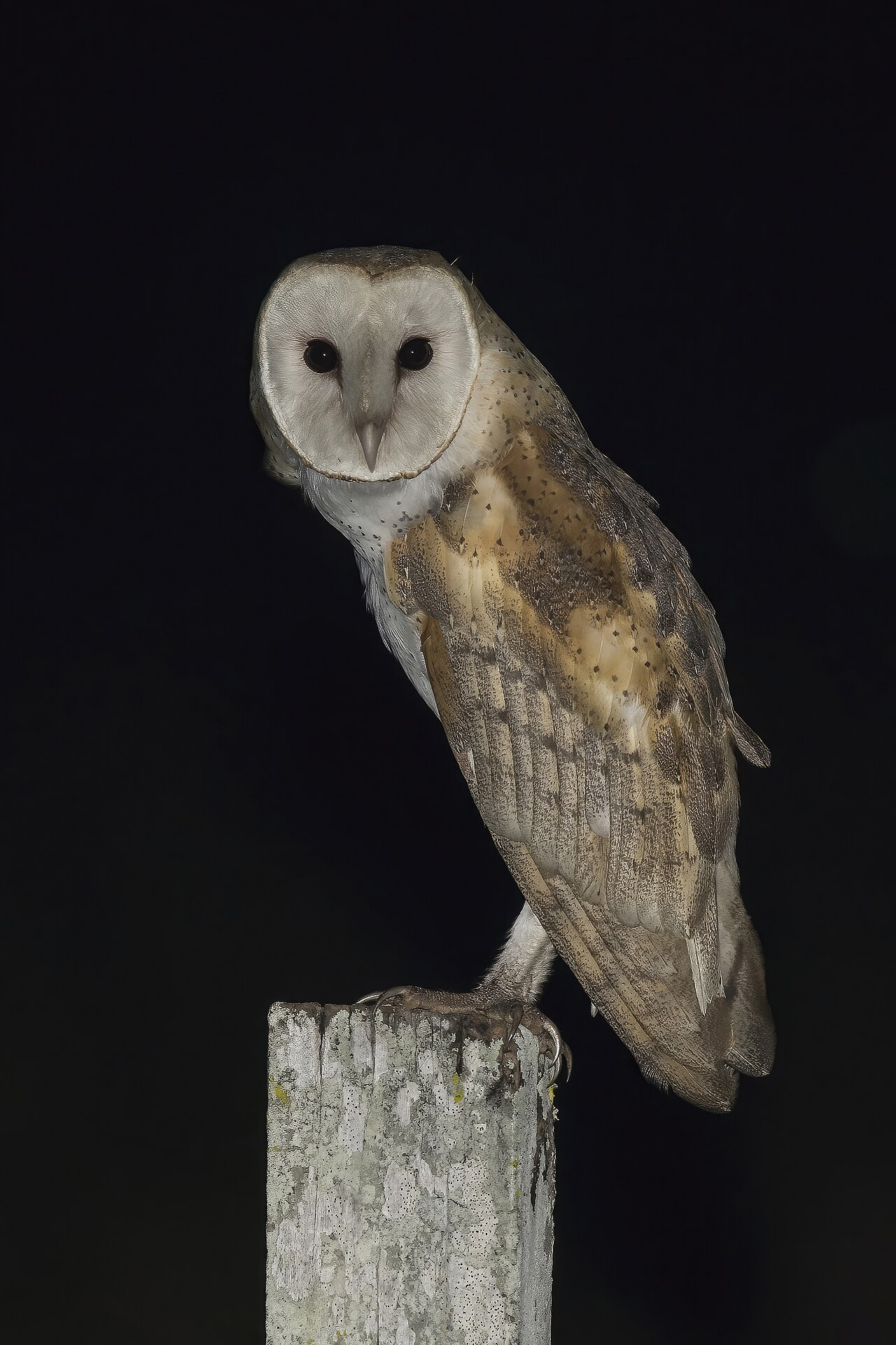
Native Biome: Farmlands, grasslands, barn attics, and open woodlands.
Barn Owl
Tyto alba
Heart-shaped white face; cosmopolitan barn hunter.
Linnaean Taxonomic Tree
300–500 g
Female: Slightly heavierSilent flight specialist
Burst Acceleration5–10 years
Captivity: 15+ yearsCompare Look-Alikes
vs Great Horned Owl
🐣Growth & Lifespan
Birth to old age slider
🔍 Distinctive Diagnostic Markings & Anatomy
Critical morphological field marks naturalists use to verify species identification in the wild.
Pale heart face; buff/gray upperparts; white underparts.
Heart-shaped facial disc.
Dark eyes (not yellow like many owls).
Long feathered legs.
Short
Females often more spotted
🍖 Trophic Role & Hunting Strategy
MesopredatorLow quartering flight over fields for rodents
🏕️ Social Behavior & Activity Rhythms
Strictly NocturnalPairs; nest in barns/cavities
Female incubates; male hunts
Life Cycle, Growth & Lifespan Journey
| Age | Stage | Length/Height | Weight |
|---|---|---|---|
| Birth / Hatch / Day 0 | Nestling | 5–7 cm | 0.014–0.02 kg |
| Early growth | Nestling | 14–17.6 cm | 0.042–0.102 kg |
| Mid juvenile | Fledgling | 31.3–37.8 cm | 0.097–0.258 kg |
| Late juvenile | Juvenile | 50–59.8 cm | 0.156–0.428 kg |
| Near maturity | Adult | 68.8–81.8 cm | 0.215–0.598 kg |
How Big Will a Barn Owl Get?
Calculate estimated adult weight, shoulder height, remaining growth timeline, and weekly development rate based on current age and biometrics.
Conservation Status & Population Dynamics
Widespread
Subject to ongoing wildlife telemetry monitoring
- •Rodenticides
- •Barn conversion
- •Cars
- Habitat protection
- Public education
Field Intelligence & Diagnostic Hub for Barn Owl
Short
Audio frequency analysis, territorial roar/call synthesis, and harmonic resonance measurements.
Ecosystem food web, trophic interactions, and cohabiting species in Global.
⚖️ Look-Alike Species Differentiation Matrix
Instant one-click comparison tools to prevent common field misidentifications
Barn Owl vs. Great Horned Owl
Key DifferentiationGreat horned owls have ear tufts and yellow eyes; barn owls have heart faces and dark eyes.
How to Identify Barn Owl from a Photograph
Standard operating procedures for photographers and field naturalists submitting sightings for verification.
- 📷Clear side profile
- 📷Head/face close-up
- 📷Full body in natural light
- 🔍Heart face
- 🔍Dark eyes
- 🔍Pale underside
- 🔍Long legs
- ⚠️Confusing with great horned owl (ear tufts, yellow eyes)
Frequently Asked Questions About Barn Owl
Verified answers compiled by zoologists, wildlife biologists, and field guides.
Related Identification Tools
Identify similar animals with focused photo tools for dogs, cats, birds, reptiles, fish, bugs, and more.



