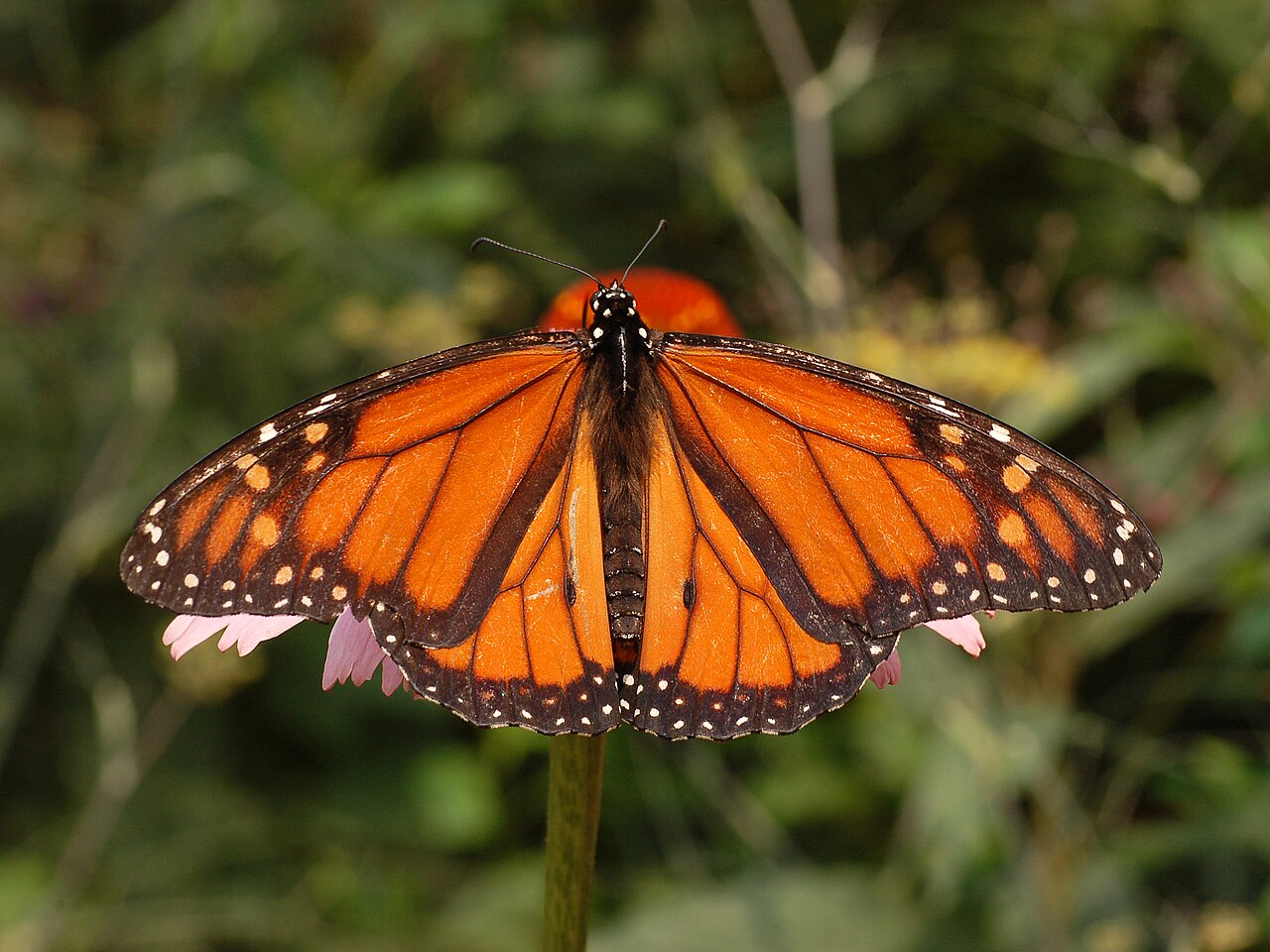
Native Biome: Milkweed fields, meadows, parks, coastal pine forests in winter.
Monarch Butterfly
Danaus plexippus
Danaus references a mythical king; plexippus means “one who rides horses,” historically linked to migratory wanderings.
Linnaean Taxonomic Tree
~0.25–0.75 g adult
Female: Similar; females often slightly heavier when gravidSteady flight ~8–20 km/h; stronger in migration tailwinds
Burst AccelerationMost generations live weeks; migratory generation can live 6–9 months
Captivity: Similar generational pattern in rearingCompare Look-Alikes
vs Luna Moth
🐣Growth & Lifespan
Birth to old age slider
🔍 Distinctive Diagnostic Markings & Anatomy
Critical morphological field marks naturalists use to verify species identification in the wild.
Bright orange wings with black veins and white-spotted black borders; toxic cardenolide warning colors.
Clubbed antennae; coiled proboscis for nectar; no chewing adult mouthparts.
Large compound eyes for navigation and flower detection.
Six legs (forelegs reduced in use); scales cover wings.
No vertebrate tail; paired hindwings form the rear silhouette.
Males usually have a small black scent-spot on each hindwing; females lack it and often have thicker wing veins.
🍖 Trophic Role & Hunting Strategy
Primary HerbivoreAdults nectar-feed; larvae specialize on milkweed leaves (herbivory, not predation).
🏕️ Social Behavior & Activity Rhythms
DiurnalSolitary feeders; massive communal roosts on migration/wintering grounds
Eggs laid singly on milkweed; no further care
Life Cycle, Growth & Lifespan Journey
| Age | Stage | Length/Height | Weight |
|---|---|---|---|
| Oviposition | Milkweed Egg | 1.1–1.3 mm | 0.4–0.6 mg |
| 4 Days | 1st Instar Caterpillar | 2–3.5 mm | 0.5–1.5 mg |
| 14 Days | 5th Instar Caterpillar | 38–50 mm | 1400–1800 mg |
| 16 Days | Jade Chrysalis | 20–25 mm | 1100–1400 mg |
| 28 Days | Newly Eclosed Butterfly | 89–102 mm | 450–650 mg |
How Big Will a Monarch Butterfly Get?
Calculate estimated adult weight, shoulder height, remaining growth timeline, and weekly development rate based on current age and biometrics.
Conservation Status & Population Dynamics
Eastern overwintering colonies have fallen dramatically from historic peaks
Subject to ongoing wildlife telemetry monitoring
- •Milkweed loss
- •Pesticides
- •Deforestation of Mexican overwintering sites
- •Climate extremes
- Milkweed planting corridors
- Monarch Watch / Journey North tagging
- Oyamel forest protection
Field Intelligence & Diagnostic Hub for Monarch Butterfly
No vertebrate tail; paired hindwings form the rear silhouette.
Audio frequency analysis, territorial roar/call synthesis, and harmonic resonance measurements.
Ecosystem food web, trophic interactions, and cohabiting species in Americas.
⚖️ Look-Alike Species Differentiation Matrix
Instant one-click comparison tools to prevent common field misidentifications
Monarch Butterfly vs. Luna Moth
Key DifferentiationLuna moths are pale green nocturnal moths with long tails; monarchs are orange diurnal butterflies with black veining.
How to Identify Monarch Butterfly from a Photograph
Standard operating procedures for photographers and field naturalists submitting sightings for verification.
- 📷Clear side profile
- 📷Head/face close-up
- 📷Full body in natural light
- 🔍Orange wings with black veins
- 🔍White spots on black borders
- 🔍Male hindwing scent spots
- ⚠️Confusing with viceroy (viceroys have a black hindwing line across the wing)
- ⚠️Assuming all orange butterflies are monarchs
Frequently Asked Questions About Monarch Butterfly
Verified answers compiled by zoologists, wildlife biologists, and field guides.
Related Identification Tools
Identify similar animals with focused photo tools for dogs, cats, birds, reptiles, fish, bugs, and more.