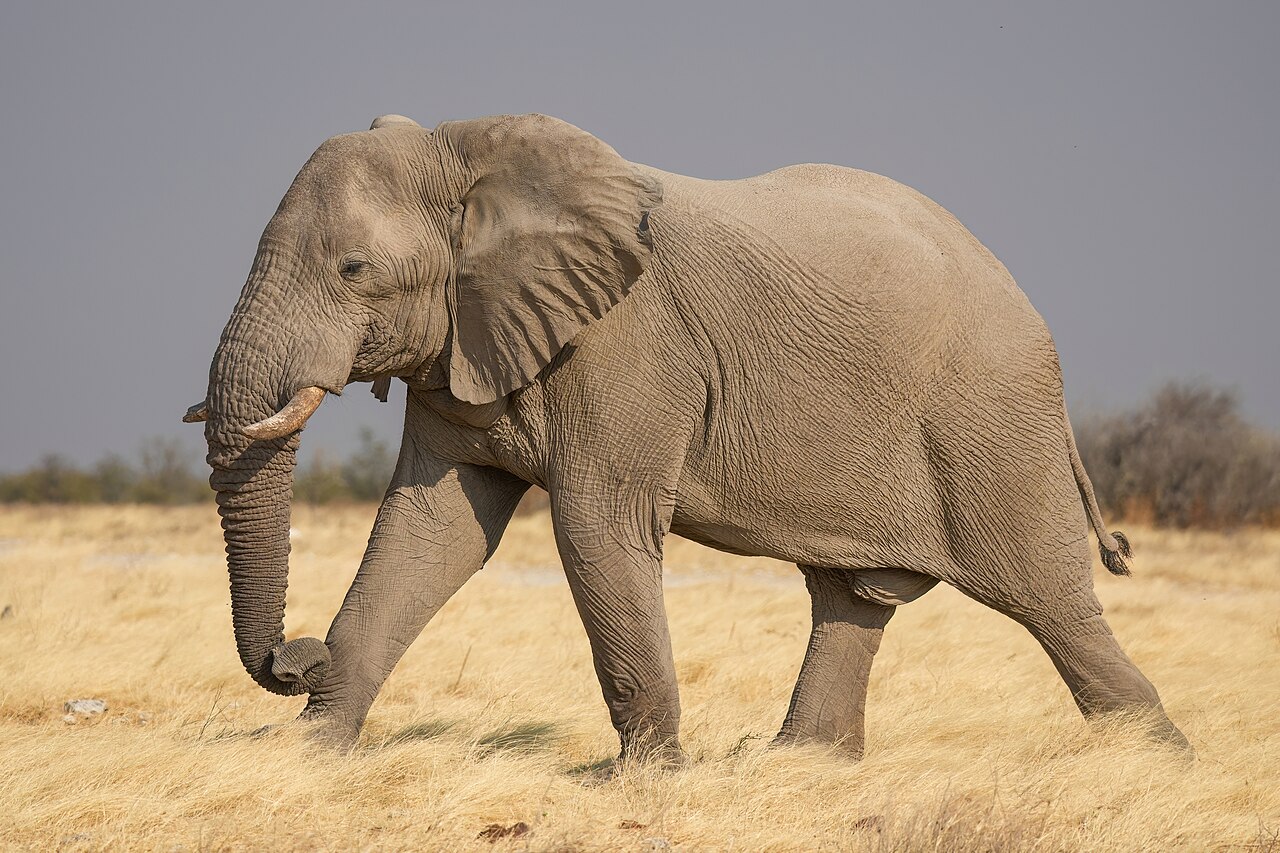
Native Biome: Savannahs, grasslands, riverine woodlands, and semi-deserts.
African Bush Elephant
Loxodonta africana
Loxodonta refers to lozenge-shaped molar plates; africana denotes African origin.
Linnaean Taxonomic Tree
4,000–6,000+ kg
Female: 2,500–3,500 kg~40 km/h charge speed
Burst Acceleration60–70 years
Captivity: Similar in well-managed parksCompare Look-Alikes
vs Common Hippopotamus
🐣Growth & Lifespan
Birth to old age slider
🔍 Distinctive Diagnostic Markings & Anatomy
Critical morphological field marks naturalists use to verify species identification in the wild.
Wrinkled gray skin sparsely haired; large ears shaped roughly like Africa; trunk with two finger-like tips.
Massive skull; tusks are elongated incisors; molars replaced in conveyor-belt fashion.
Small relative to body; rely heavily on smell/hearing.
Columnar pillar legs; nail-like toenails; spongy foot pads.
Long thin tail with terminal hair tuft.
Bulls larger with typically larger tusks; both sexes can have tusks.
🍖 Trophic Role & Hunting Strategy
Primary HerbivoreBrowsing and grazing — grasses, bark, leaves, fruit; knocks trees when needed.
🏕️ Social Behavior & Activity Rhythms
CathemeralMatriarchal family herds; adult bulls often solitary or bachelor groups
Allomothering by related females; calves nurse for years
Life Cycle, Growth & Lifespan Journey
| Age | Stage | Length/Height | Weight |
|---|---|---|---|
| Birth | Neonate Calf | 85–95 cm | 90–120 kg |
| 1 Month | Young Calf | 92–102 cm | 115–155 kg |
| 6 Months | Active Calf | 110–125 cm | 240–320 kg |
| 1 Year | Yearling Calf | 130–150 cm | 450–580 kg |
| 5 Years | Weaned Juvenile | 180–210 cm | 1400–1800 kg |
How Big Will a African Bush Elephant Get?
Calculate estimated adult weight, shoulder height, remaining growth timeline, and weekly development rate based on current age and biometrics.
Conservation Status & Population Dynamics
~400,000 estimated across Africa (status varies by region)
Subject to ongoing wildlife telemetry monitoring
- •Ivory poaching
- •Habitat loss
- •Human–elephant conflict
- CITES ivory bans
- Anti-poaching units
- Corridor conservation
Field Intelligence & Diagnostic Hub for African Bush Elephant
Long thin tail with terminal hair tuft.
Audio frequency analysis, territorial roar/call synthesis, and harmonic resonance measurements.
Ecosystem food web, trophic interactions, and cohabiting species in Africa.
⚖️ Look-Alike Species Differentiation Matrix
Instant one-click comparison tools to prevent common field misidentifications
African Bush Elephant vs. Common Hippopotamus
Key DifferentiationHippos are aquatic barrel-bodied ungulates without trunks; elephants have trunks and tusks.
How to Identify African Bush Elephant from a Photograph
Standard operating procedures for photographers and field naturalists submitting sightings for verification.
- 📷Clear side profile
- 📷Head/face close-up
- 📷Full body in natural light
- 🔍Huge ears
- 🔍Two trunk “fingers”
- 🔍Tusks
- 🔍Pillar legs
- ⚠️Confusing with Asian elephant (smaller ears, one trunk finger)
- ⚠️Underestimating charge danger
Frequently Asked Questions About African Bush Elephant
Verified answers compiled by zoologists, wildlife biologists, and field guides.
Related Identification Tools
Identify similar animals with focused photo tools for dogs, cats, birds, reptiles, fish, bugs, and more.