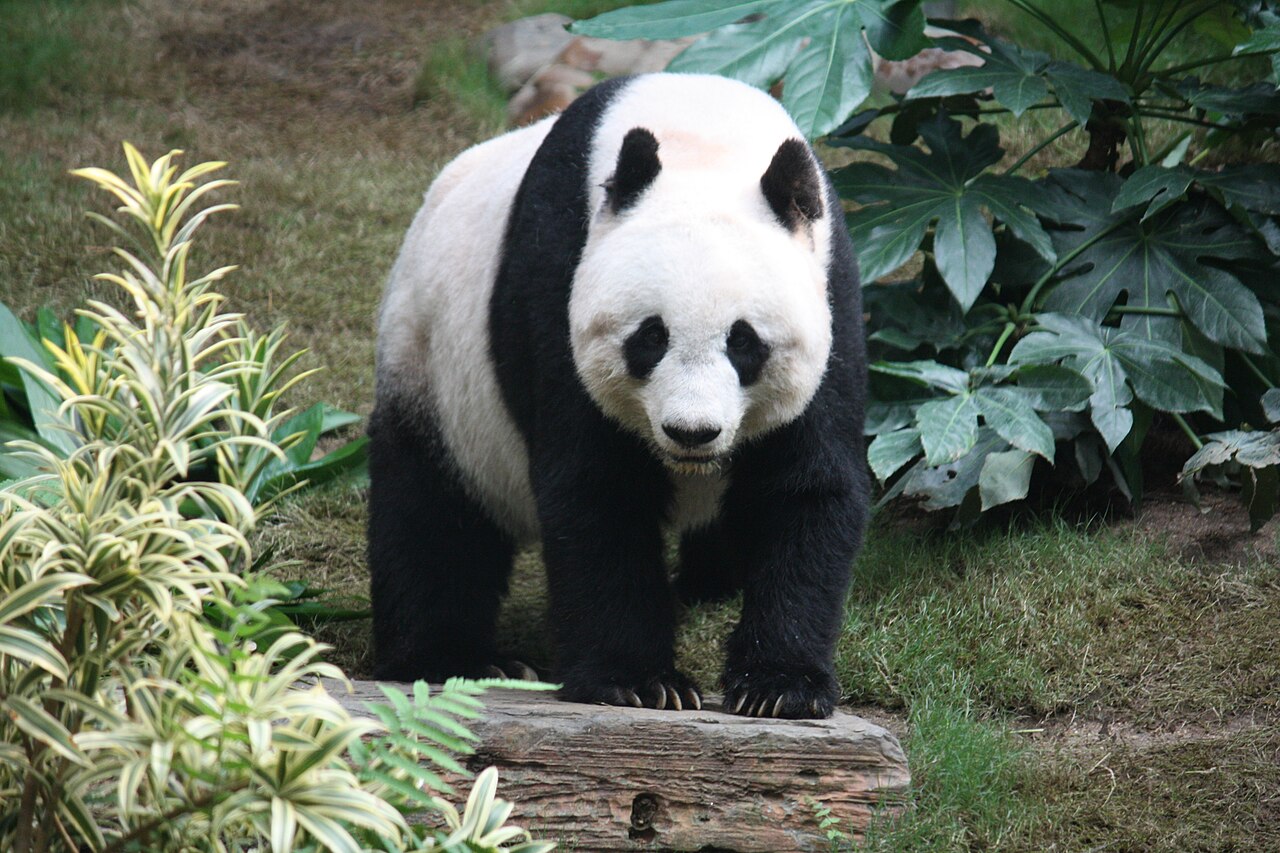
Native Biome: Temperate montane bamboo forests with dense canopy cover.
Giant Panda
Ailuropoda melanoleuca
Ailuropoda means “cat-footed”; melanoleuca means “black and white.”
Linnaean Taxonomic Tree
80–120 kg
Female: 70–100 kgCan gallop short distances but usually slow climbers/walkers
Burst Acceleration15–20 years
Captivity: 20–30 yearsCompare Look-Alikes
vs Grizzly Bear
🐣Growth & Lifespan
Birth to old age slider
🔍 Distinctive Diagnostic Markings & Anatomy
Critical morphological field marks naturalists use to verify species identification in the wild.
Iconic black-and-white pattern — black ears, eye patches, limbs; white face and body.
Massive crushing molars and enlarged “pseudo-thumb” radial sesamoid for bamboo.
Dark eye patches create false large-eye look; round pupils.
Stocky limbs; pseudo-thumb aids bamboo grasping.
Short inconspicuous tail.
Males slightly larger.
🍖 Trophic Role & Hunting Strategy
Primary HerbivoreSpecialized bamboo feeder (~99% of diet) despite carnivoran ancestry.
🏕️ Social Behavior & Activity Rhythms
CathemeralMostly solitary
Intensive care of tiny altricial cubs
Life Cycle, Growth & Lifespan Journey
| Age | Stage | Length/Height | Weight |
|---|---|---|---|
| Birth / Hatch / Day 0 | Cub | 15–17 cm | 0.09–0.13 kg |
| Early growth | Cub | 31.2–36.6 cm | 8.5–14.5 kg |
| Mid juvenile | Yearling | 62.3–74.1 cm | 24.6–42.1 kg |
| Late juvenile | Subadult | 96–115 cm | 42–72.1 kg |
| Near maturity | Adult | 130–156 cm | 59.5–102 kg |
How Big Will a Giant Panda Get?
Calculate estimated adult weight, shoulder height, remaining growth timeline, and weekly development rate based on current age and biometrics.
Conservation Status & Population Dynamics
~1,800+ in wild (improving with protection)
Subject to ongoing wildlife telemetry monitoring
- •Habitat fragmentation
- •Bamboo flowering die-offs
- •Climate change
- Chinese nature reserves
- Corridor restoration
- Captive breeding & release
Field Intelligence & Diagnostic Hub for Giant Panda
Short inconspicuous tail.
Audio frequency analysis, territorial roar/call synthesis, and harmonic resonance measurements.
Ecosystem food web, trophic interactions, and cohabiting species in Asia.
⚖️ Look-Alike Species Differentiation Matrix
Instant one-click comparison tools to prevent common field misidentifications
Giant Panda vs. Grizzly Bear
Key DifferentiationGrizzlies are brown and lack the panda’s black-and-white pattern and bamboo specialization.
How to Identify Giant Panda from a Photograph
Standard operating procedures for photographers and field naturalists submitting sightings for verification.
- 📷Clear side profile
- 📷Head/face close-up
- 📷Full body in natural light
- 🔍Black eye patches
- 🔍Black-and-white body
- 🔍Round face
- 🔍Bamboo feeding posture
- ⚠️Confusing with red panda (unrelated small mammal)
- ⚠️Assuming they are bears that hunt like polar bears
Frequently Asked Questions About Giant Panda
Verified answers compiled by zoologists, wildlife biologists, and field guides.
Related Identification Tools
Identify similar animals with focused photo tools for dogs, cats, birds, reptiles, fish, bugs, and more.



