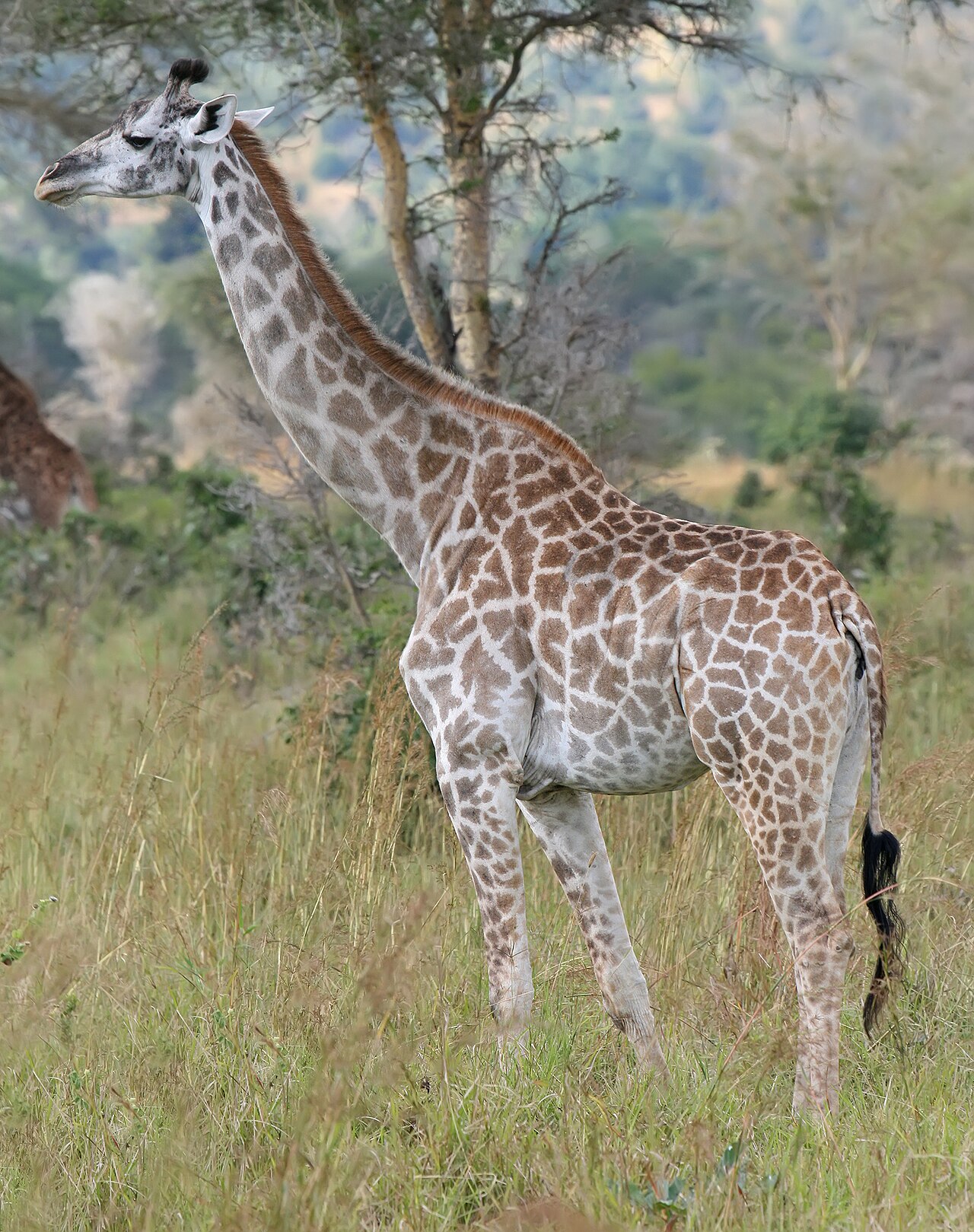
Native Biome: Savannahs, arid scrublands, and open acacia woodlands.
Northern Giraffe
Giraffa camelopardalis
Giraffa via Arabic zarāfa; camelopardalis means “camel-leopard,” from early naturalists comparing the shape and spots.
Linnaean Taxonomic Tree
800–1,200 kg
Female: 600–900 kg~50–60 km/h gallop
Burst Acceleration20–25 years
Captivity: 25–30 yearsCompare Look-Alikes
vs African Bush Elephant
🐣Growth & Lifespan
Birth to old age slider
🔍 Distinctive Diagnostic Markings & Anatomy
Critical morphological field marks naturalists use to verify species identification in the wild.
Tall neck; polygonal brown blotches on cream; pattern varies by subspecies/species complex.
Ossicones (horn-like skin-covered bone); long prehensile tongue (~45 cm) for leaves.
Large lateral eyes with wide view above the savanna.
Long legs with specialized gait; cloven hooves.
Long tail with dark terminal tuft for fly swatting.
Males taller/heavier with thicker ossicones often bald on top from combat.
🍖 Trophic Role & Hunting Strategy
Primary HerbivoreHigh browser of Acacia and other trees using tongue and lips.
🏕️ Social Behavior & Activity Rhythms
DiurnalLoose fission–fusion herds; not tightly hierarchical like elephants
Calves can stand quickly; mothers may form nursery groups
Life Cycle, Growth & Lifespan Journey
| Age | Stage | Length/Height | Weight |
|---|---|---|---|
| Birth / Hatch / Day 0 | Young | 1.7–2 m | 50–70 kg |
| Early growth | Young | 2–2.4 m | 140–205.6 kg |
| Mid juvenile | Juvenile | 2.7–3.2 m | 312.5–465.5 kg |
| Late juvenile | Juvenile | 3.4–4.1 m | 500–748 kg |
| Near maturity | Adult | 4.1–5 m | 687.5–1030.5 kg |
How Big Will a Northern Giraffe Get?
Calculate estimated adult weight, shoulder height, remaining growth timeline, and weekly development rate based on current age and biometrics.
Conservation Status & Population Dynamics
~100,000+ across all giraffe forms combined (declining overall)
Subject to ongoing wildlife telemetry monitoring
- •Habitat loss
- •Poaching
- •Civil conflict
- •Fencing
- GCF conservation
- Translocations
- Anti-poaching
Field Intelligence & Diagnostic Hub for Northern Giraffe
Long tail with dark terminal tuft for fly swatting.
Audio frequency analysis, territorial roar/call synthesis, and harmonic resonance measurements.
Ecosystem food web, trophic interactions, and cohabiting species in Africa.
⚖️ Look-Alike Species Differentiation Matrix
Instant one-click comparison tools to prevent common field misidentifications
Northern Giraffe vs. African Bush Elephant
Key DifferentiationElephants are bulky with trunks; giraffes are ultra-tall spotted browsers with ossicones.
How to Identify Northern Giraffe from a Photograph
Standard operating procedures for photographers and field naturalists submitting sightings for verification.
- 📷Clear side profile
- 📷Head/face close-up
- 📷Full body in natural light
- 🔍Extreme height
- 🔍Ossicones
- 🔍Blotch pattern
- 🔍Long dark-tufted tail
- ⚠️Ignoring subspecies/species pattern differences
- ⚠️Assuming neck has extra vertebrae (still seven)
Frequently Asked Questions About Northern Giraffe
Verified answers compiled by zoologists, wildlife biologists, and field guides.
Related Identification Tools
Identify similar animals with focused photo tools for dogs, cats, birds, reptiles, fish, bugs, and more.



