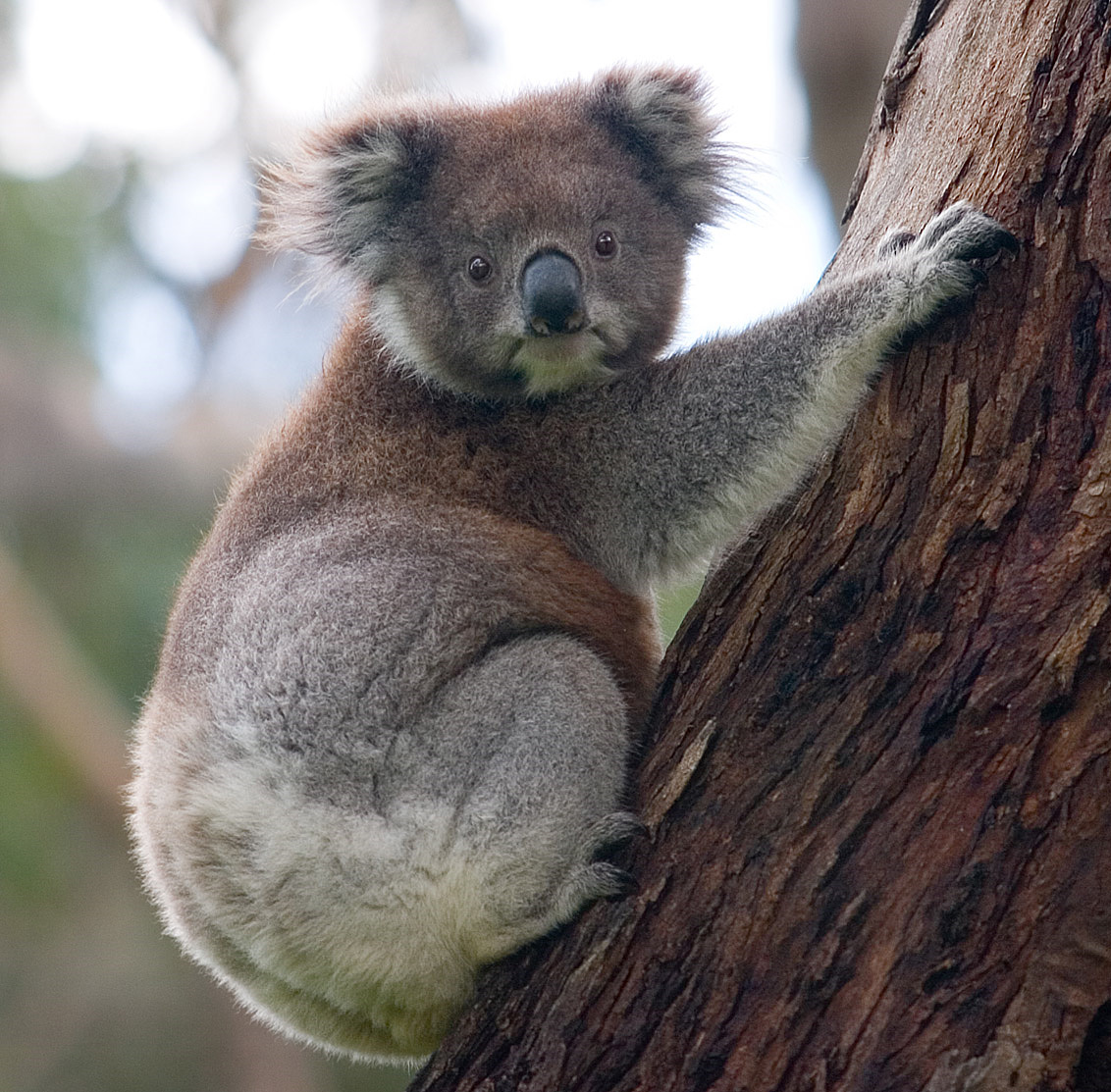
Native Biome: Open eucalyptus woodlands and coastal forests.
Koala
Phascolarctos cinereus
Phascolarctos means “pouched bear”; cinereus means ash-colored; “koala” from Dharug language.
Linnaean Taxonomic Tree
8–14 kg (southern larger)
Female: 6–10 kgSlow climber; can hustle on ground when needed
Burst Acceleration10–15 years
Captivity: 12–18 yearsCompare Look-Alikes
vs Quokka
🐣Growth & Lifespan
Birth to old age slider
🔍 Distinctive Diagnostic Markings & Anatomy
Critical morphological field marks naturalists use to verify species identification in the wild.
Dense gray to brown woolly fur; white chest; large fluffy ears; spoon-shaped nose.
Specialized teeth for fibrous eucalyptus; cheek pouches limited vs rodents.
Small forwardish eyes; rely on smell/hearing in canopy.
Strong climbing limbs; two thumbs on forepaws; sharp claws.
Vestigial — appears tailless.
Males larger with broader faces and scent gland on chest.
🍖 Trophic Role & Hunting Strategy
Primary HerbivoreSelective eucalyptus leaf browser; sleeps most of the day to conserve energy.
🏕️ Social Behavior & Activity Rhythms
Strictly NocturnalMostly solitary with overlapping home ranges
Joey in pouch then rides on back; receives “pap” for gut flora
Life Cycle, Growth & Lifespan Journey
| Age | Stage | Length/Height | Weight |
|---|---|---|---|
| Birth / Hatch / Day 0 | Neonate | 2–2.5 cm | 0.0004–0.0005 kg |
| Early growth | Pouch Young | 9–12.4 cm | 0.48–1.7 kg |
| Mid juvenile | Joey | 22.3–31.4 cm | 1.4–4.9 kg |
| Late juvenile | Joey | 36.8–52 cm | 2.4–8.4 kg |
| Near maturity | Adult | 51.3–72.6 cm | 3.4–11.9 kg |
How Big Will a Koala Get?
Calculate estimated adult weight, shoulder height, remaining growth timeline, and weekly development rate based on current age and biometrics.
Conservation Status & Population Dynamics
Hundreds of thousands estimated but declining in many regions
Subject to ongoing wildlife telemetry monitoring
- •Habitat loss
- •Disease (chlamydia)
- •Dogs
- •Vehicle strikes
- •Fire
- Habitat restoration
- Wildlife hospitals
- Disease management
Field Intelligence & Diagnostic Hub for Koala
Vestigial — appears tailless.
Audio frequency analysis, territorial roar/call synthesis, and harmonic resonance measurements.
Ecosystem food web, trophic interactions, and cohabiting species in Australia.
⚖️ Look-Alike Species Differentiation Matrix
Instant one-click comparison tools to prevent common field misidentifications
Koala vs. Quokka
Key DifferentiationQuokkas are small terrestrial hoppers with a short macropod tail and “smiling” face; koalas are arboreal gray eucalyptus specialists that appear nearly tailless.
Koala vs. Giant Panda
Key DifferentiationPandas are large black-and-white bears of China; koalas are gray Australian marsupials specialized on eucalyptus.
How to Identify Koala from a Photograph
Standard operating procedures for photographers and field naturalists submitting sightings for verification.
- 📷Clear side profile
- 📷Head/face close-up
- 📷Full body in natural light
- 🔍Large fluffy ears
- 🔍Spoon nose
- 🔍Gray woolly coat
- 🔍Tree-clinging posture
- ⚠️Calling them bears
- ⚠️Assuming they drink lots of water (name myth — they get moisture from leaves)
Frequently Asked Questions About Koala
Verified answers compiled by zoologists, wildlife biologists, and field guides.
Related Identification Tools
Identify similar animals with focused photo tools for dogs, cats, birds, reptiles, fish, bugs, and more.



