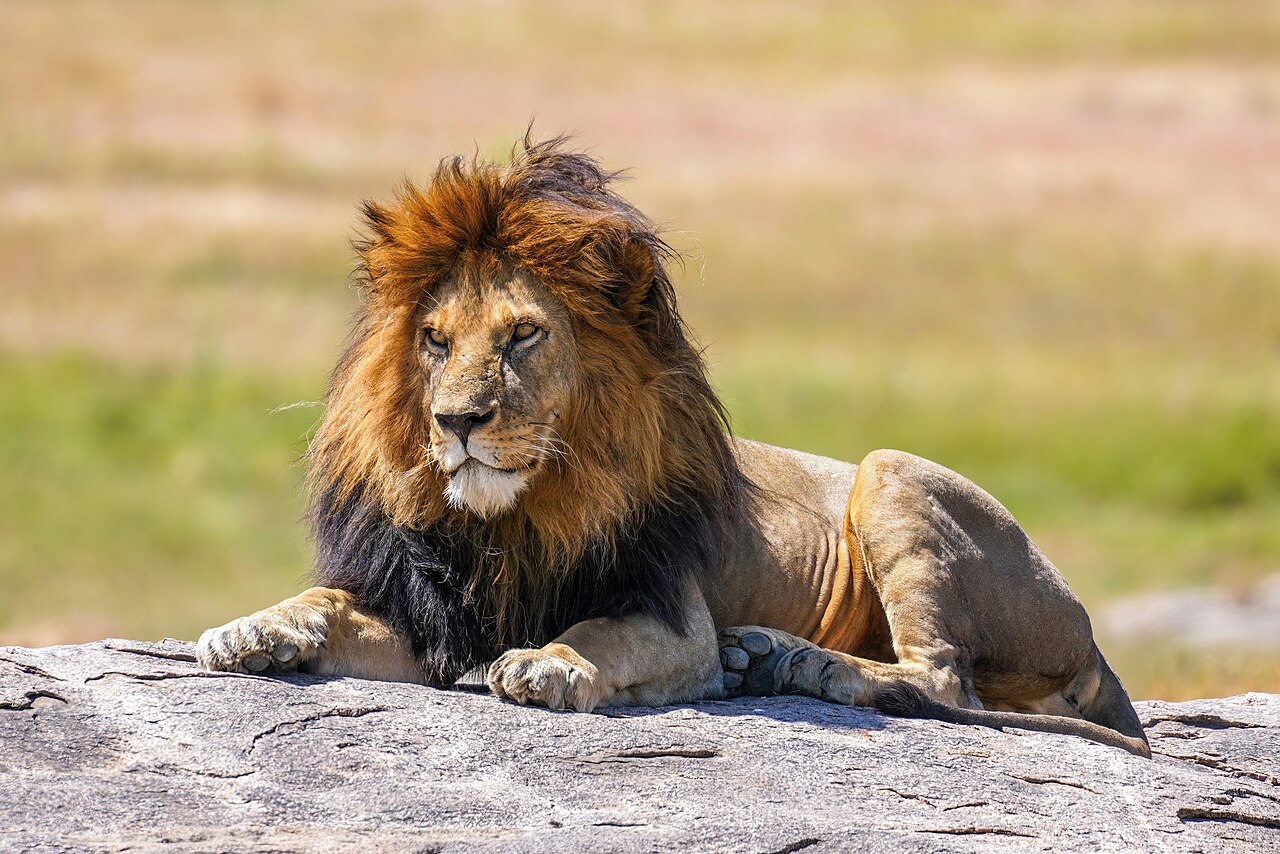
Native Biome: Savannahs, grasslands, open woodlands, and semi-deserts.
African Lion
Panthera leo
Panthera from Greek for panther/large cat; leo is Latin for lion.
Linnaean Taxonomic Tree
150–250 kg (330–550 lbs) typical African males
Female: 110–180 kg (240–400 lbs)~80 km/h in short bursts
Burst Acceleration10–14 years typical (males often shorter due to takeovers)
Captivity: 15–20+ yearsCompare Look-Alikes
vs Bengal Tiger
Vision
Through their eyes
🐣Growth & Lifespan
Birth to old age slider
🔍 Distinctive Diagnostic Markings & Anatomy
Critical morphological field marks naturalists use to verify species identification in the wild.
Tawny to sandy coat; males develop mane from blond to black depending on age/genetics/climate.
Robust skull; canines for killing bites; males have broader heads.
Amber round pupils; binocular night/day vision.
Large paws with retractable claws; dewclaws present.
Long tail with dark tufted tip used in signaling.
Males much larger with prominent manes; females leaner without manes.
🍖 Trophic Role & Hunting Strategy
Apex PredatorCooperative stalking by lionesses; ambush and short chase; males may join on large prey.
🏕️ Social Behavior & Activity Rhythms
CrepuscularPride-living; related females + cubs; coalition males defend pride
Communal crèche nursing among pride lionesses
Life Cycle, Growth & Lifespan Journey
| Age | Stage | Length/Height | Weight |
|---|---|---|---|
| Birth | Den Cub | 30–38 cm | 1.2–1.8 kg |
| 6 Months | Pride Cub | 90–110 cm | 20–28 kg |
| 3 Years | Subadult Coalition Male | 220–260 cm | 140–175 kg |
| 6+ Years | Dominant Pride Male / Matriarch | 250–300 cm | 180–230 kg |
How Big Will a African Lion Get?
Calculate estimated adult weight, shoulder height, remaining growth timeline, and weekly development rate based on current age and biometrics.
Conservation Status & Population Dynamics
~20,000–25,000 in wild Africa (estimates vary)
Subject to ongoing wildlife telemetry monitoring
- •Habitat loss
- •Human–wildlife conflict
- •Prey depletion
- •Trophy/illegal killing
- Protected area networks
- Community conservancies
- Lion Guardians-type programs
Field Intelligence & Diagnostic Hub for African Lion
Long tail with dark tufted tip used in signaling.
Audio frequency analysis, territorial roar/call synthesis, and harmonic resonance measurements.
Ecosystem food web, trophic interactions, and cohabiting species in Sub-Saharan Africa.
⚖️ Look-Alike Species Differentiation Matrix
Instant one-click comparison tools to prevent common field misidentifications
African Lion vs. Bengal Tiger
Key DifferentiationTigers are striped orange; lions are plain tawny and males have manes.
African Lion vs. Leopard
Key DifferentiationLeopards are spotted and solitary; lions are social and unspotted as adults.
How to Identify African Lion from a Photograph
Standard operating procedures for photographers and field naturalists submitting sightings for verification.
- 📷Clear side profile
- 📷Head/face close-up
- 📷Full body in natural light
- 🔍Male mane
- 🔍Tawny uniform coat (no stripes/spots as adults)
- 🔍Tufted tail tip
- 🔍Rounded ears
- ⚠️Confusing distant lionesses with other tawny cats
- ⚠️Assuming all maned cats are African lions (Asiatic lions exist but rare)
Frequently Asked Questions About African Lion
Verified answers compiled by zoologists, wildlife biologists, and field guides.
Related Identification Tools
Identify similar animals with focused photo tools for dogs, cats, birds, reptiles, fish, bugs, and more.