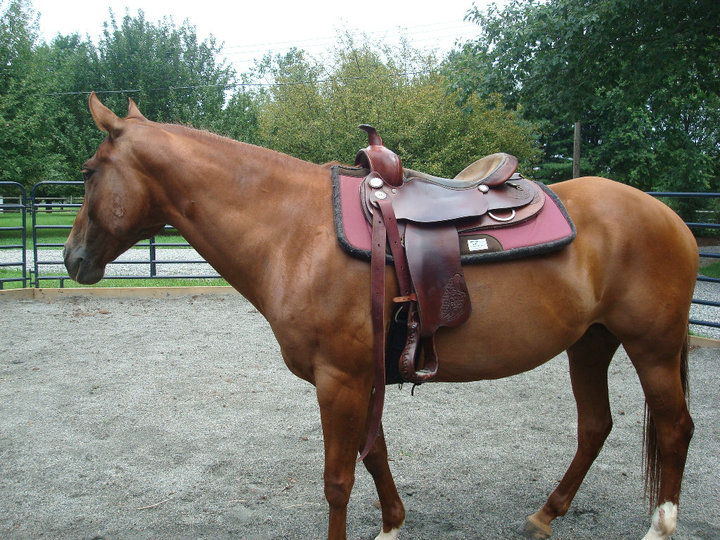
Native Biome: Domestic / ranch and western sport
Quarter Horse
Equus caballus
Named for speed in the quarter-mile; American breed blending English horses with Spanish/colonial stock for ranch and sprint work.
Linnaean Taxonomic Tree
480–550+ kg typical
Female: 450–520 kg typicalExceptional short-sprint acceleration
Burst AccelerationDomestic companion — not typically free-living
Captivity: 25–35 years possibleCompare Look-Alikes
vs Thoroughbred
Vision
Through their eyes
🐣Growth & Lifespan
Birth to old age slider
🔍 Distinctive Diagnostic Markings & Anatomy
Critical morphological field marks naturalists use to verify species identification in the wild.
Short coat; vast color range including sorrel, bay, palomino, black, etc.
Short broad head; kind expression (“cow sense” look).
Wide-set, calm.
Small-to-medium ears; heavily muscled hips and hindquarters.
Full; lower head/neck carriage than many Thoroughbreds at rest.
Stallions heavier through chest and hindquarters.
🍖 Trophic Role & Hunting Strategy
Primary HerbivoreGrazing herbivore.
🏕️ Social Behavior & Activity Rhythms
DiurnalHerd animal; widely used for western disciplines.
Typical equine maternal care
Life Cycle, Growth & Lifespan Journey
| Age | Stage | Length/Height | Weight |
|---|---|---|---|
| Birth | Newborn Foal | 95–110 cm | 40–55 kg |
| 6 Months | Weanling | 125–138 cm | 220–280 kg |
| 1 Year | Yearling | 140–152 cm | 340–420 kg |
| 4–6 Years | Mature Prime Horse | 152–168 cm | 480–600 kg |
| 25+ Years | Senior Horse | 152–168 cm | 440–540 kg |
How Big Will a Quarter Horse Get?
Calculate estimated adult weight, shoulder height, remaining growth timeline, and weekly development rate based on current age and biometrics.
Conservation Status & Population Dynamics
Domestic breed — not a wild population
Subject to ongoing wildlife telemetry monitoring
- •Irresponsible breeding
- •Obesity / sedentary lifestyle
- •Breed-specific health risks
- Responsible breed clubs
- Health testing programs
- Rescue & rehoming networks
Field Intelligence & Diagnostic Hub for Quarter Horse
Full; lower head/neck carriage than many Thoroughbreds at rest.
Audio frequency analysis, territorial roar/call synthesis, and harmonic resonance measurements.
Ecosystem food web, trophic interactions, and cohabiting species in Worldwide; especially North America.
⚖️ Look-Alike Species Differentiation Matrix
Instant one-click comparison tools to prevent common field misidentifications
Quarter Horse vs. Thoroughbred
Key DifferentiationThoroughbreds are leaner and longer-legged; Quarter Horses are more muscular and compact.
How to Identify Quarter Horse from a Photograph
Standard operating procedures for photographers and field naturalists submitting sightings for verification.
- 📷Side profile showing body proportions
- 📷Front face for ear/eye/muzzle shape
- 📷Three-quarter view of coat texture and markings
- 🔍Powerful muscular hindquarters
- 🔍Compact stock-horse build
- 🔍Broad short head
- 🔍Shorter, thicker outline than Thoroughbred
- ⚠️Confusing with Thoroughbreds (look for hindquarter mass and compactness)
- ⚠️Confusing with Appendix horses (TB×QH crosses)
Frequently Asked Questions About Quarter Horse
Verified answers compiled by zoologists, wildlife biologists, and field guides.
Related Identification Tools
Identify similar animals with focused photo tools for dogs, cats, birds, reptiles, fish, bugs, and more.



