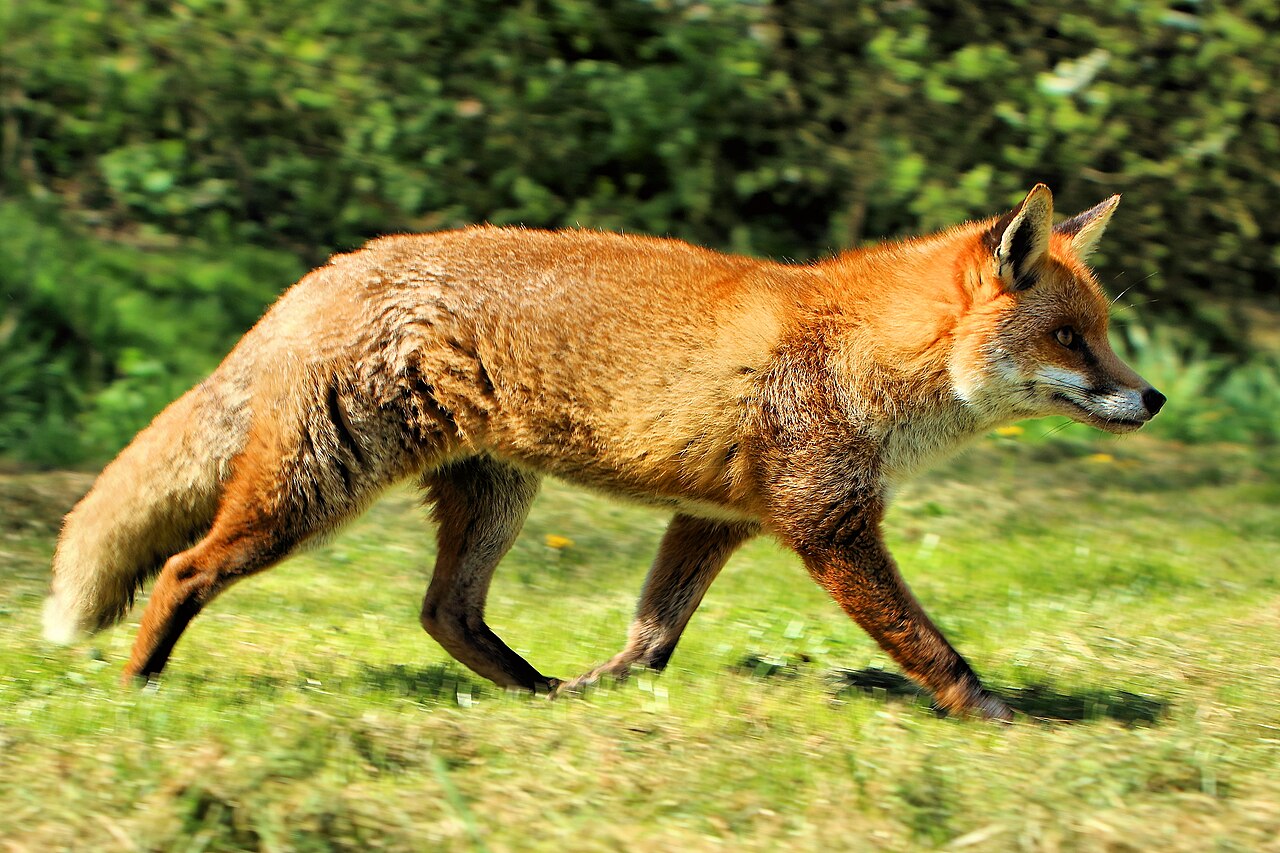
Native Biome: Forests, grasslands, mountains, deserts, farmlands, and urban gardens.
Red Fox
Vulpes vulpes
Vulpes is Latin for fox; vulpes vulpes emphasizes the widespread red fox species.
Linnaean Taxonomic Tree
4–8 kg
Female: 3.5–7 kg~50 km/h
Burst Acceleration2–5 years average (up to ~8–10)
Captivity: 10–14 yearsCompare Look-Alikes
vs Gray Wolf
Vision
Through their eyes
🐣Growth & Lifespan
Birth to old age slider
🔍 Distinctive Diagnostic Markings & Anatomy
Critical morphological field marks naturalists use to verify species identification in the wild.
Rusty red coat common; black back of ears; white-tipped bushy tail (tag); pale belly.
Slender muzzle; sharp carnassials; excellent hearing for rodent prey.
Vertical-slit pupils in bright light; amber irises.
Digitigrade black legs; non-retractable claws.
Long bushy white-tipped “brush.”
Males (“dogs”) slightly larger.
🍖 Trophic Role & Hunting Strategy
MesopredatorMousses with high pounce on rodents; also takes birds, fruit, scavenges.
🏕️ Social Behavior & Activity Rhythms
CrepuscularUsually solitary hunters; family groups in breeding season
Vixen provisions den; dog may help
Conservation Status & Population Dynamics
Millions globally
Subject to ongoing wildlife telemetry monitoring
- •Mange
- •Vehicle strikes
- •Persecution
- •Rodenticides
- Urban wildlife education
- Rabies oral vaccine programs in some regions
Field Intelligence & Diagnostic Hub for Red Fox
Long bushy white-tipped “brush.”
Audio frequency analysis, territorial roar/call synthesis, and harmonic resonance measurements.
Ecosystem food web, trophic interactions, and cohabiting species in Global.
⚖️ Look-Alike Species Differentiation Matrix
Instant one-click comparison tools to prevent common field misidentifications
Red Fox vs. Gray Wolf
Key DifferentiationWolves are far larger pack hunters without a white-tipped fox brush; foxes are small solitary mesopredators.
Red Fox vs. Alaskan Malamute
Key DifferentiationMalamutes are large domestic dogs; red foxes are small wild canids with white-tipped tails.
How to Identify Red Fox from a Photograph
Standard operating procedures for photographers and field naturalists submitting sightings for verification.
- 📷Clear side profile
- 📷Head/face close-up
- 📷Full body in natural light
- 🔍White-tipped tail
- 🔍Black ear backs
- 🔍Slender muzzle
- 🔍Rusty coat
- ⚠️Confusing with gray fox (has black-tipped tail, climbs)
- ⚠️Assuming all color morphs (cross/silver) are different species
Frequently Asked Questions About Red Fox
Verified answers compiled by zoologists, wildlife biologists, and field guides.
Related Identification Tools
Identify similar animals with focused photo tools for dogs, cats, birds, reptiles, fish, bugs, and more.



