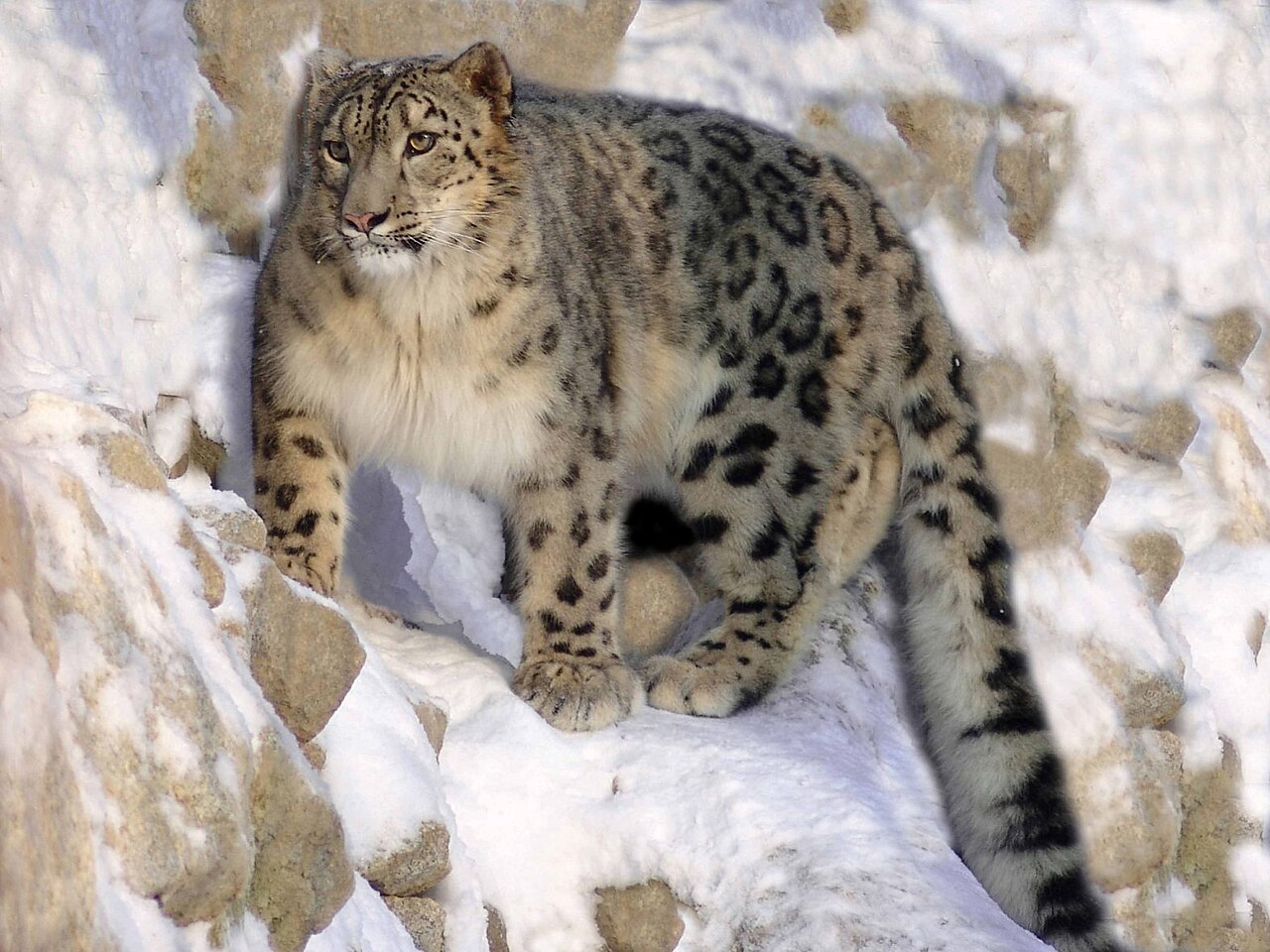
Native Biome: Alpine meadows, rocky scree slopes, and high ridges above tree line.
Snow Leopard
Panthera uncia
Uncia is a historic name for the ounce/snow leopard; “snow leopard” describes its high-altitude pale coat.
Linnaean Taxonomic Tree
45–55 kg typical
Female: 35–40 kgAgile climber; short downhill charges rather than open sprint records
Burst Acceleration10–12 years
Captivity: 15–18 yearsCompare Look-Alikes
vs Leopard
Vision
Through their eyes
🐣Growth & Lifespan
Birth to old age slider
🔍 Distinctive Diagnostic Markings & Anatomy
Critical morphological field marks naturalists use to verify species identification in the wild.
Smoke-gray to cream coat with dark rosettes and spots; thick woolly fur; small rounded ears.
Short muzzle; powerful jaws for ibex/blue sheep.
Pale gray-green to gray eyes; excellent vision on cliffs.
Large furred paws act as snowshoes; retractable claws.
Exceptionally long, thick, furry — balance and wrap-around warmth.
Males slightly larger; both sexes densely furred and spotted.
🍖 Trophic Role & Hunting Strategy
Apex PredatorStalks along ridgelines then ambushes ungulates on steep terrain.
🏕️ Social Behavior & Activity Rhythms
CrepuscularSolitary
Female raises cubs alone in rocky dens
Life Cycle, Growth & Lifespan Journey
| Age | Stage | Length/Height | Weight |
|---|---|---|---|
| Birth / Hatch / Day 0 | Cub | 25–35 cm | 0.3–0.5 kg |
| Early growth | Cub | 43.6–58.4 cm | 3.9–7 kg |
| Mid juvenile | Juvenile | 79.3–103 cm | 10.7–19.6 kg |
| Late juvenile | Subadult | 118–152 cm | 18.1–33.2 kg |
| Near maturity | Adult | 157–201 cm | 25.5–46.8 kg |
How Big Will a Snow Leopard Get?
Calculate estimated adult weight, shoulder height, remaining growth timeline, and weekly development rate based on current age and biometrics.
Conservation Status & Population Dynamics
~4,000–6,500 estimated
Subject to ongoing wildlife telemetry monitoring
- •Poaching
- •Retaliatory killing
- •Prey depletion
- •Climate-driven habitat change
- GSLEP
- Community livestock insurance
- Anti-poaching patrols
Field Intelligence & Diagnostic Hub for Snow Leopard
Exceptionally long, thick, furry — balance and wrap-around warmth.
Audio frequency analysis, territorial roar/call synthesis, and harmonic resonance measurements.
Ecosystem food web, trophic interactions, and cohabiting species in Central Asia.
⚖️ Look-Alike Species Differentiation Matrix
Instant one-click comparison tools to prevent common field misidentifications
Snow Leopard vs. Leopard
Key DifferentiationCommon leopards are more golden with different proportions and usually inhabit lower elevations; snow leopards are paler with thicker tails and smaller ears.
How to Identify Snow Leopard from a Photograph
Standard operating procedures for photographers and field naturalists submitting sightings for verification.
- 📷Clear side profile
- 📷Head/face close-up
- 📷Full body in natural light
- 🔍Pale smoky coat
- 🔍Thick long tail
- 🔍Small ears
- 🔍Wide snowshoe paws
- ⚠️Confusing with common leopard at lower elevations
- ⚠️Mis-ID of lynx in some regions
Frequently Asked Questions About Snow Leopard
Verified answers compiled by zoologists, wildlife biologists, and field guides.
Related Identification Tools
Identify similar animals with focused photo tools for dogs, cats, birds, reptiles, fish, bugs, and more.