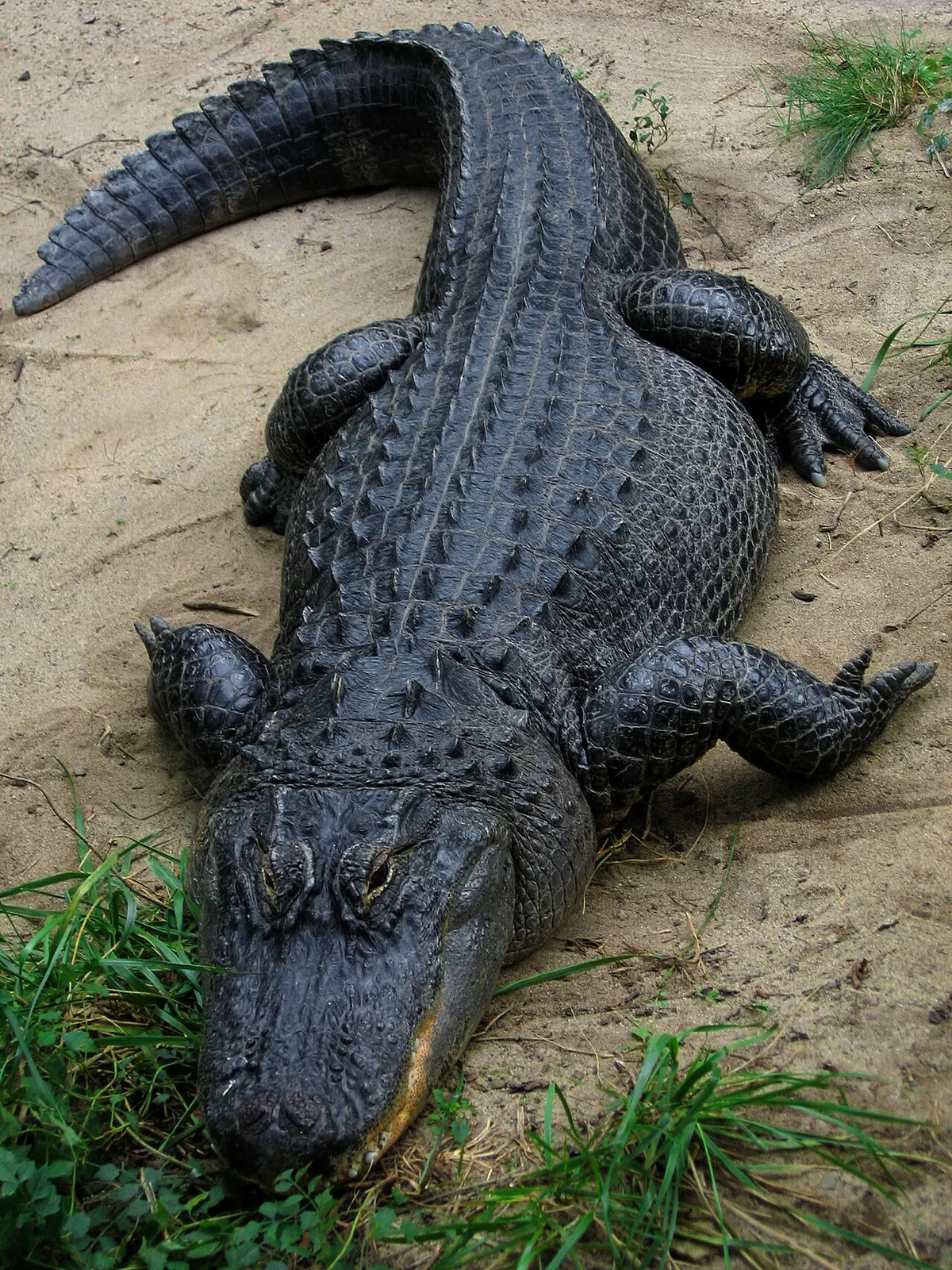
Native Biome: Freshwater swamps, marshes, bayous, lakes, and slow-moving rivers.
American Alligator
Alligator mississippiensis
Alligator from Spanish el lagarto (“the lizard”); mississippiensis refers to the Mississippi River basin.
Linnaean Taxonomic Tree
200–450+ kg large bulls
Female: 70–150 kg typicalExplosive aquatic burst; surprisingly quick short land lunges
Burst Acceleration35–50 years
Captivity: 50–70+ yearsCompare Look-Alikes
vs Nile Crocodile
🐣Growth & Lifespan
Birth to old age slider
🔍 Distinctive Diagnostic Markings & Anatomy
Critical morphological field marks naturalists use to verify species identification in the wild.
Dark olive-black armored osteoderms; broad rounded snout; fourth lower tooth hidden when mouth closed.
Broad U-shaped snout; conical teeth; immense bite force.
Vertically slit pupils; eyes glow with tapetum at night.
Short limbs; webbed hind feet; used for steering more than fast running.
Laterally flattened muscular swimming tail.
Males larger; both sexes armored.
🍖 Trophic Role & Hunting Strategy
Apex PredatorAmbush at water edges; death roll on large prey; also eats fish, turtles, birds.
🏕️ Social Behavior & Activity Rhythms
CathemeralMostly solitary; bellowing congregations in breeding season
Female guards nest and may carry hatchlings to water
Life Cycle, Growth & Lifespan Journey
| Age | Stage | Length/Height | Weight |
|---|---|---|---|
| Birth / Hatch / Day 0 | Hatchling | 20–25 cm | 0.05–0.08 kg |
| Early growth | Hatchling | 53.6–76 cm | 24–54.1 kg |
| Mid juvenile | Juvenile | 118–174 cm | 70–157.6 kg |
| Late juvenile | Juvenile | 188–280 cm | 120–270 kg |
| Near maturity | Adult | 258–386 cm | 170–382.5 kg |
How Big Will a American Alligator Get?
Calculate estimated adult weight, shoulder height, remaining growth timeline, and weekly development rate based on current age and biometrics.
Conservation Status & Population Dynamics
Millions in the SE US after recovery from overhunting
Subject to ongoing wildlife telemetry monitoring
- •Wetland loss
- •Vehicle strikes
- •Human conflict
- •Cold snaps
- ESA recovery success story
- Sustainable ranching/harvest programs
- Wetland protection
Field Intelligence & Diagnostic Hub for American Alligator
Laterally flattened muscular swimming tail.
Audio frequency analysis, territorial roar/call synthesis, and harmonic resonance measurements.
Ecosystem food web, trophic interactions, and cohabiting species in North America.
⚖️ Look-Alike Species Differentiation Matrix
Instant one-click comparison tools to prevent common field misidentifications
American Alligator vs. Nile Crocodile
Key DifferentiationNile crocodiles have narrower V-shaped snouts and a visible tooth interlocking grin; they are African, not SE US freshwater specialists like American alligators.
How to Identify American Alligator from a Photograph
Standard operating procedures for photographers and field naturalists submitting sightings for verification.
- 📷Clear side profile
- 📷Head/face close-up
- 📷Full body in natural light
- 🔍Broad rounded snout
- 🔍Dark color
- 🔍Hidden lower 4th tooth
- 🔍Osteoderm armor
- ⚠️Confusing with American crocodile (narrower snout, toothy grin)
- ⚠️Assuming all are aggressive toward people
Frequently Asked Questions About American Alligator
Verified answers compiled by zoologists, wildlife biologists, and field guides.
Related Identification Tools
Identify similar animals with focused photo tools for dogs, cats, birds, reptiles, fish, bugs, and more.