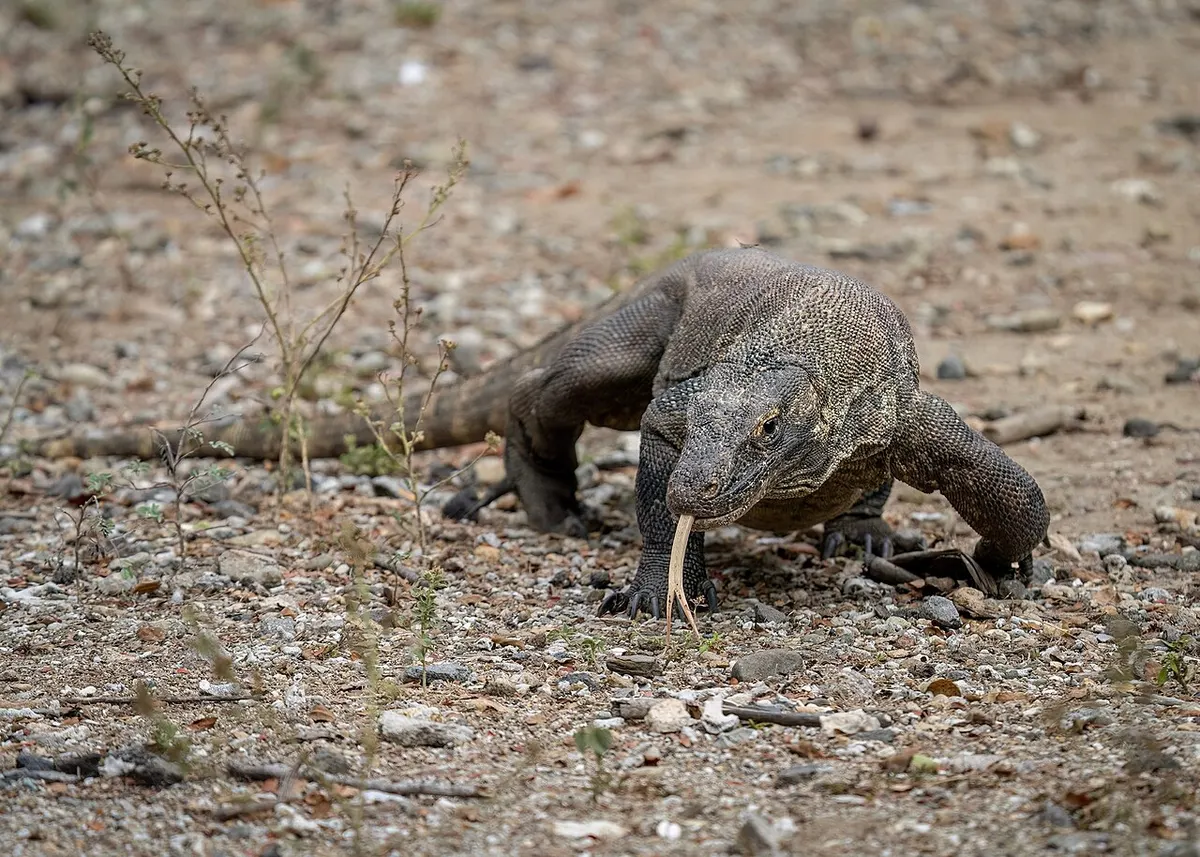
Native Biome: Tropical dry savannahs, open deciduous forests, and coastal hills.
Komodo Dragon
Varanus komodoensis
Largest living lizard; endemic to Indonesian islands.
Linnaean Taxonomic Tree
70–90+ kg
Female: Less on averageSurprisingly fast over short distances
Burst Acceleration30+ years
Captivity: N/A wild focusCompare Look-Alikes
vs Green Iguana
🐣Growth & Lifespan
Birth to old age slider
🔍 Distinctive Diagnostic Markings & Anatomy
Critical morphological field marks naturalists use to verify species identification in the wild.
Gray-brown armored scales; long forked tongue.
Powerful jaws; serrated teeth.
Lateral.
Strong claws.
Heavy muscular weapon
Males larger
🍖 Trophic Role & Hunting Strategy
Apex PredatorAmbush and scavenging of large prey
🏕️ Social Behavior & Activity Rhythms
DiurnalDominance hierarchies at carcasses
Nests; limited care
Life Cycle, Growth & Lifespan Journey
| Age | Stage | Length/Height | Weight |
|---|---|---|---|
| Hatch | Hatchling | 35–45 cm | 80–120 g |
| 5 Years | Juvenile | 120–160 cm | 10–20 kg |
| 10 Years | Adult | 200–280 cm | 40–70 kg |
How Big Will a Komodo Dragon Get?
Calculate estimated adult weight, shoulder height, remaining growth timeline, and weekly development rate based on current age and biometrics.
Conservation Status & Population Dynamics
A few thousand
Subject to ongoing wildlife telemetry monitoring
- •Habitat loss
- •Prey decline
- •Human conflict
- Habitat protection
- Public education
Field Intelligence & Diagnostic Hub for Komodo Dragon
Heavy muscular weapon
Audio frequency analysis, territorial roar/call synthesis, and harmonic resonance measurements.
Ecosystem food web, trophic interactions, and cohabiting species in Asia.
⚖️ Look-Alike Species Differentiation Matrix
Instant one-click comparison tools to prevent common field misidentifications
Komodo Dragon vs. Green Iguana
Key DifferentiationIguanas are herbivores with dewlaps/crests; Komodos are giant predatory monitors.
How to Identify Komodo Dragon from a Photograph
Standard operating procedures for photographers and field naturalists submitting sightings for verification.
- 📷Clear side profile
- 📷Head/face close-up
- 📷Full body in natural light
- 🔍Enormous size
- 🔍Forked tongue
- 🔍Monitor build
- 🔍Island endemic
- ⚠️Any close approach in the wild without guides
Frequently Asked Questions About Komodo Dragon
Verified answers compiled by zoologists, wildlife biologists, and field guides.
Related Identification Tools
Identify similar animals with focused photo tools for dogs, cats, birds, reptiles, fish, bugs, and more.



