Native Biome: Lakes, rivers, wetlands, shorelines
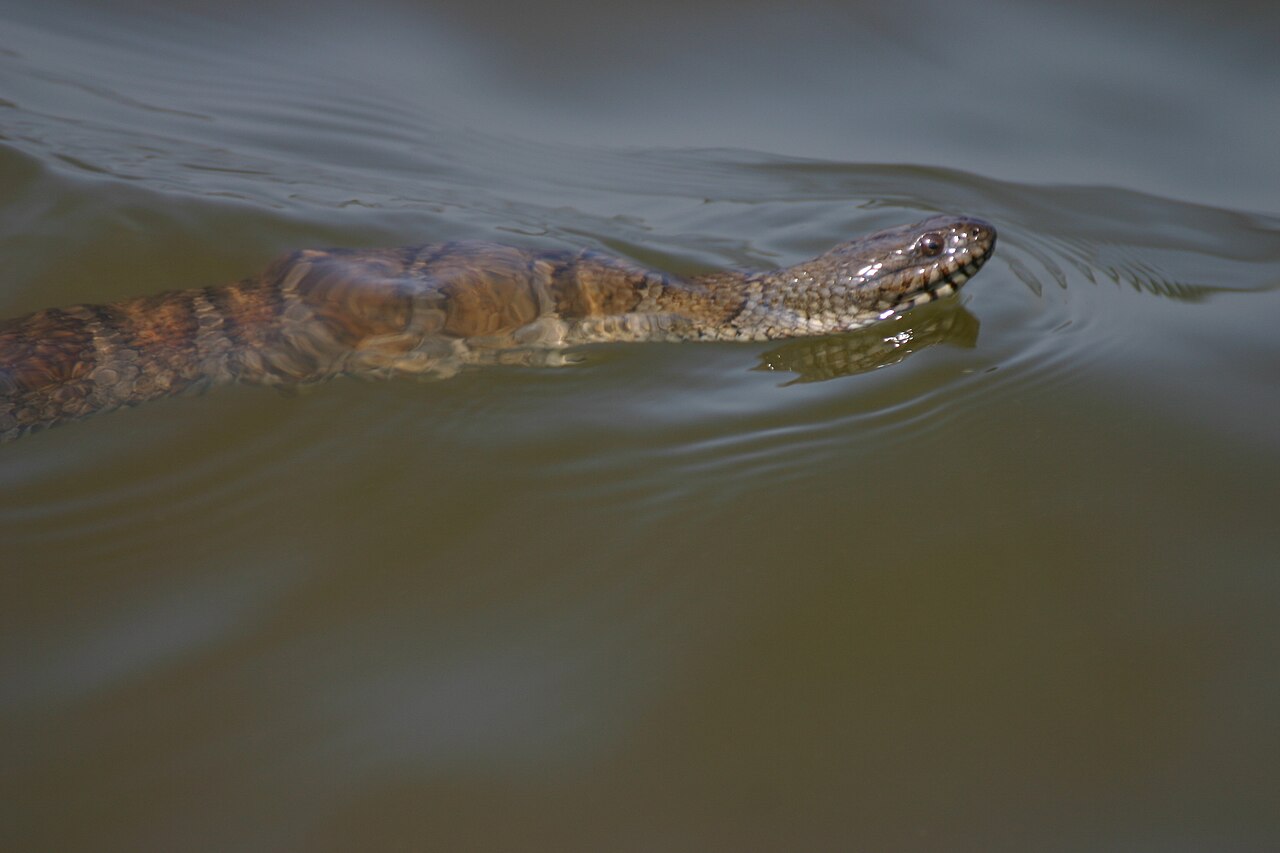
Northern Water Snake
Nerodia sipedon
Common nonvenomous water snake often mistaken for cottonmouths.
Linnaean Taxonomic Tree
0.3–0.7 kg
Female: HeavierStrong swimmer
Burst Acceleration5–10 years
Captivity: SimilarCompare Look-Alikes
vs Cottonmouth
Vision
Through their eyes
🐣Growth & Lifespan
Birth to old age slider
🔍 Distinctive Diagnostic Markings & Anatomy
Critical morphological field marks naturalists use to verify species identification in the wild.
Dark bands/blotches; darkens with age; keeled scales.
Narrower than cottonmouth; no heat pits.
Round pupils.
None
Tapers gradually
Females larger
🍖 Trophic Role & Hunting Strategy
MesopredatorAquatic hunter of fish and amphibians
🏕️ Social Behavior & Activity Rhythms
DiurnalBasks in groups
None after birth
Life Cycle, Growth & Lifespan Journey
| Age | Stage | Length/Height | Weight |
|---|---|---|---|
| Birth | Live-Born Neonate | 30–38 cm | 40–60 g |
| 1 Year | Juvenile Rattler | 65–80 cm | 350–550 g |
| 4+ Years | Prime Diamondback Adult | 140–210 cm | 2.5–5.5 kg |
How Big Will a Northern Water Snake Get?
Calculate estimated adult weight, shoulder height, remaining growth timeline, and weekly development rate based on current age and biometrics.
Conservation Status & Population Dynamics
Common
Subject to ongoing wildlife telemetry monitoring
- •Persecution as “moccasins”
- Habitat protection
- Public education
Field Intelligence & Diagnostic Hub for Northern Water Snake
Tapers gradually
Audio frequency analysis, territorial roar/call synthesis, and harmonic resonance measurements.
Ecosystem food web, trophic interactions, and cohabiting species in Eastern North America.
⚖️ Look-Alike Species Differentiation Matrix
Instant one-click comparison tools to prevent common field misidentifications
Northern Water Snake vs. Cottonmouth
Key DifferentiationCottonmouths are venomous with heat pits and stockier heads; water snakes are nonvenomous colubrids.
How to Identify Northern Water Snake from a Photograph
Standard operating procedures for photographers and field naturalists submitting sightings for verification.
- 📷Clear side profile
- 📷Head/face close-up
- 📷Full body in natural light
- 🔍Keeled scales
- 🔍Banded body
- 🔍Near water
- 🔍Round pupils
- ⚠️Killing as cottonmouth
- ⚠️Getting too close
Frequently Asked Questions About Northern Water Snake
Verified answers compiled by zoologists, wildlife biologists, and field guides.
Related Identification Tools
Identify similar animals with focused photo tools for dogs, cats, birds, reptiles, fish, bugs, and more.