15 Most Venomous Animals in the World
A species-by-species comparison of fifteen frequently discussed venomous animals — snakes, jellyfish, spiders, octopuses, fish, cone snails, and more — with clear caveats that potency is not the same as danger.
Quick answer
What are the 15 most venomous animals in the world? There is no definitive scientific ranking from #1 to #15. Laboratory potency (including LD50), delivered dose, delivery system, human exposure, and treatment context measure different things — and they do not produce one universal podium across snakes, jellyfish, spiders, and fish.
This page is a species-by-species comparison listicle for education. The numbers help you scan the cast of animals people most often ask about — they are not a championship scoreboard.
Looking for poisonous (not venomous)? Read the poisonous-animal pillarQuick comparison
Scan animal type, region, and venom delivery before diving into each profile. Delivery route is the practical field-guide clue that separates these species from poisonous amphibians and other passive-toxin animals.
| # | Animal | Type | Region | Venom delivery |
|---|---|---|---|---|
| 1 | Inland Taipan | Snake | Inland Australia | Fang bite |
| 2 | Box Jellyfish | Jellyfish | Tropical Australia / Indo-Pacific | Nematocyst stings |
| 3 | Geographer Cone Snail | Cone snail | Indo-Pacific reefs | Harpoon-like radular tooth |
| 4 | Blue-Ringed Octopus | Octopus | Indo-Pacific coasts | Bite |
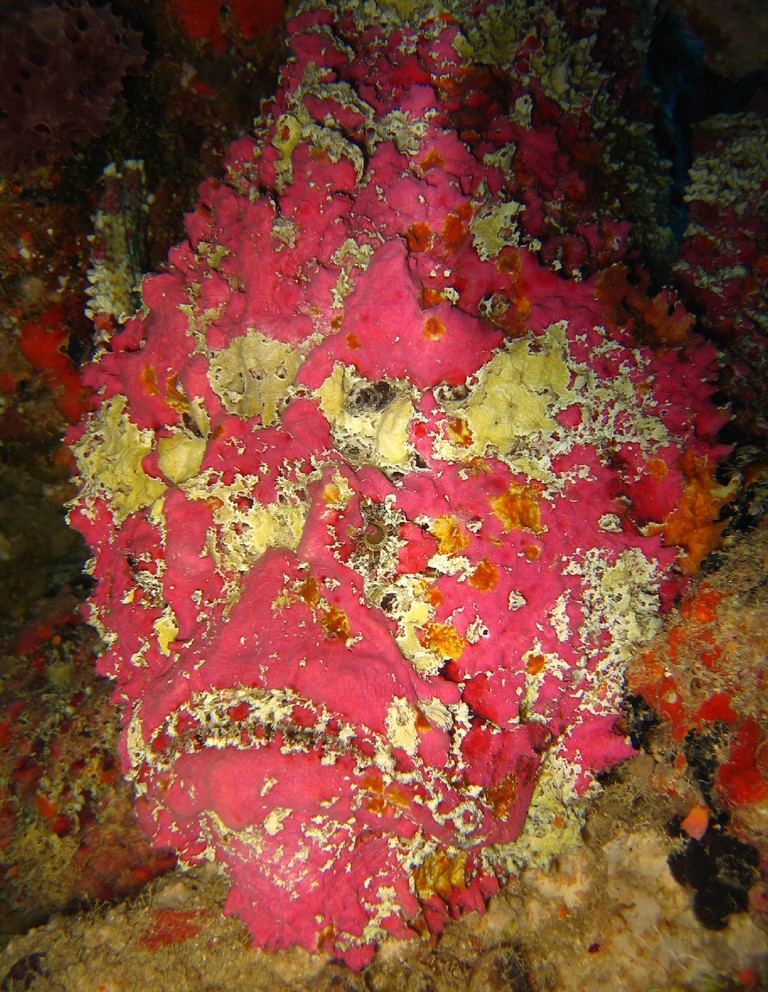
| 5 | Reef Stonefish | Fish | Indo-Pacific reefs | Dorsal spines |
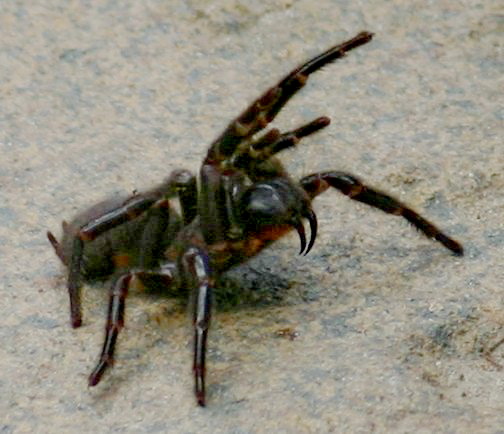
| 6 | Sydney Funnel-Web Spider | Spider | Eastern Australia | Fang bite |
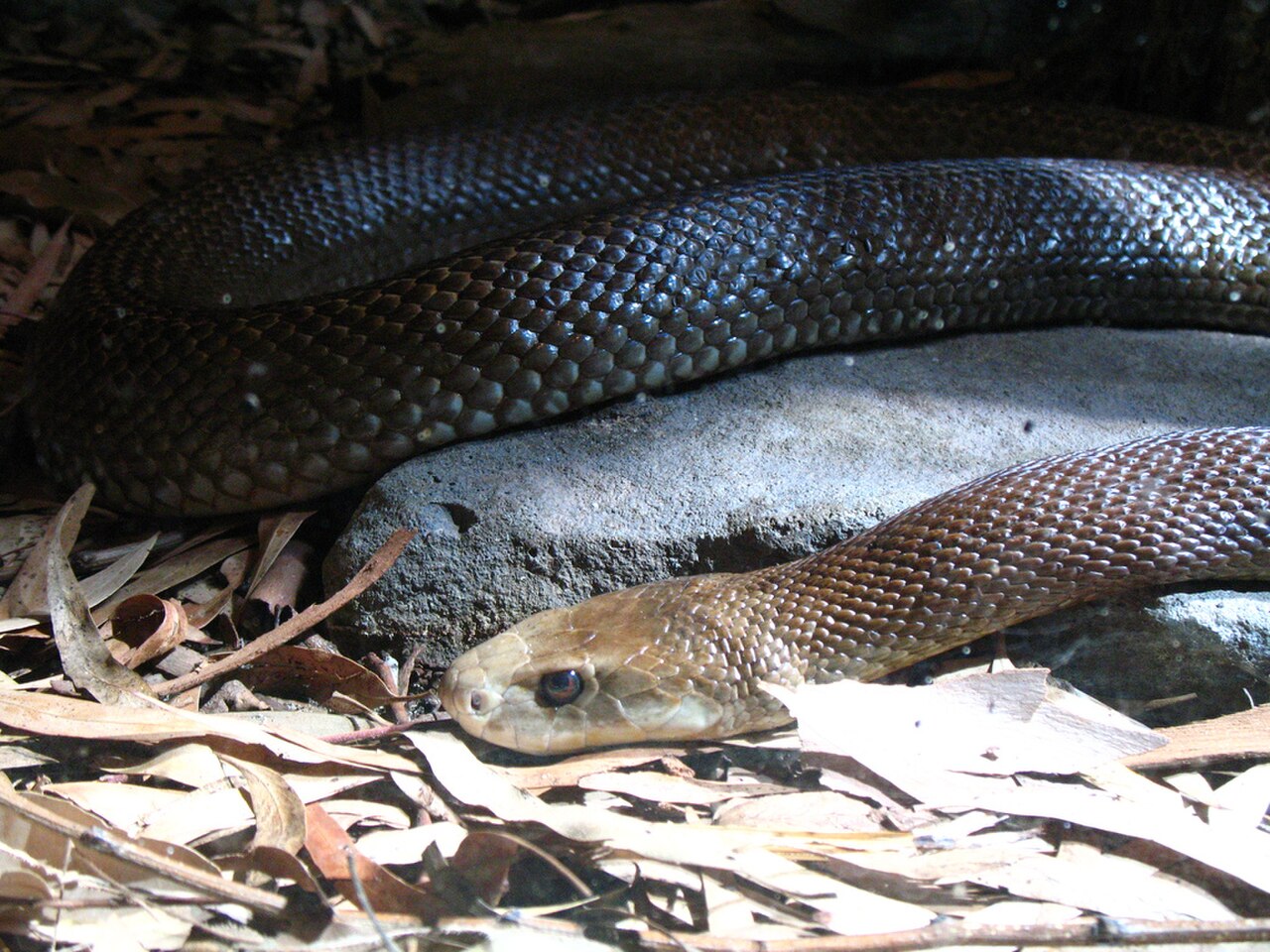
| 7 | Coastal Taipan | Snake | Coastal Australia / New Guinea | Fang bite |
| 8 | Irukandji Jellyfish | Jellyfish | Tropical Australia / tropical seas | Nematocyst stings |
| 9 | Deathstalker Scorpion | Scorpion | North Africa / Middle East | Stinger |
| 10 | Brazilian Wandering Spider | Spider | South America | Fang bite |
| 11 | Black Mamba | Snake | Sub-Saharan Africa | Fang bite |
| 12 | King Cobra | Snake | South & Southeast Asia | Fang bite |
| 13 | Boomslang | Snake | Sub-Saharan Africa | Rear-fang bite |
| 14 | Sea Snakes | Snake | Indo-Pacific oceans | Fang bite |
| 15 | Gila Monster | Lizard | Southwestern North America | Venomous bite |
Editorial note: numbers 1–15 are a reading order for comparison, not a definitive scientific podium. LD50 and other potency assays do not equal delivered dose, clinical outcome, or everyday danger to humans.
The 15 animals
Each entry includes scientific name, type, location, and why the species appears in venom education. Where AnimalIDFinder has a catalog profile, open it for photos, taxonomy, and safety status.
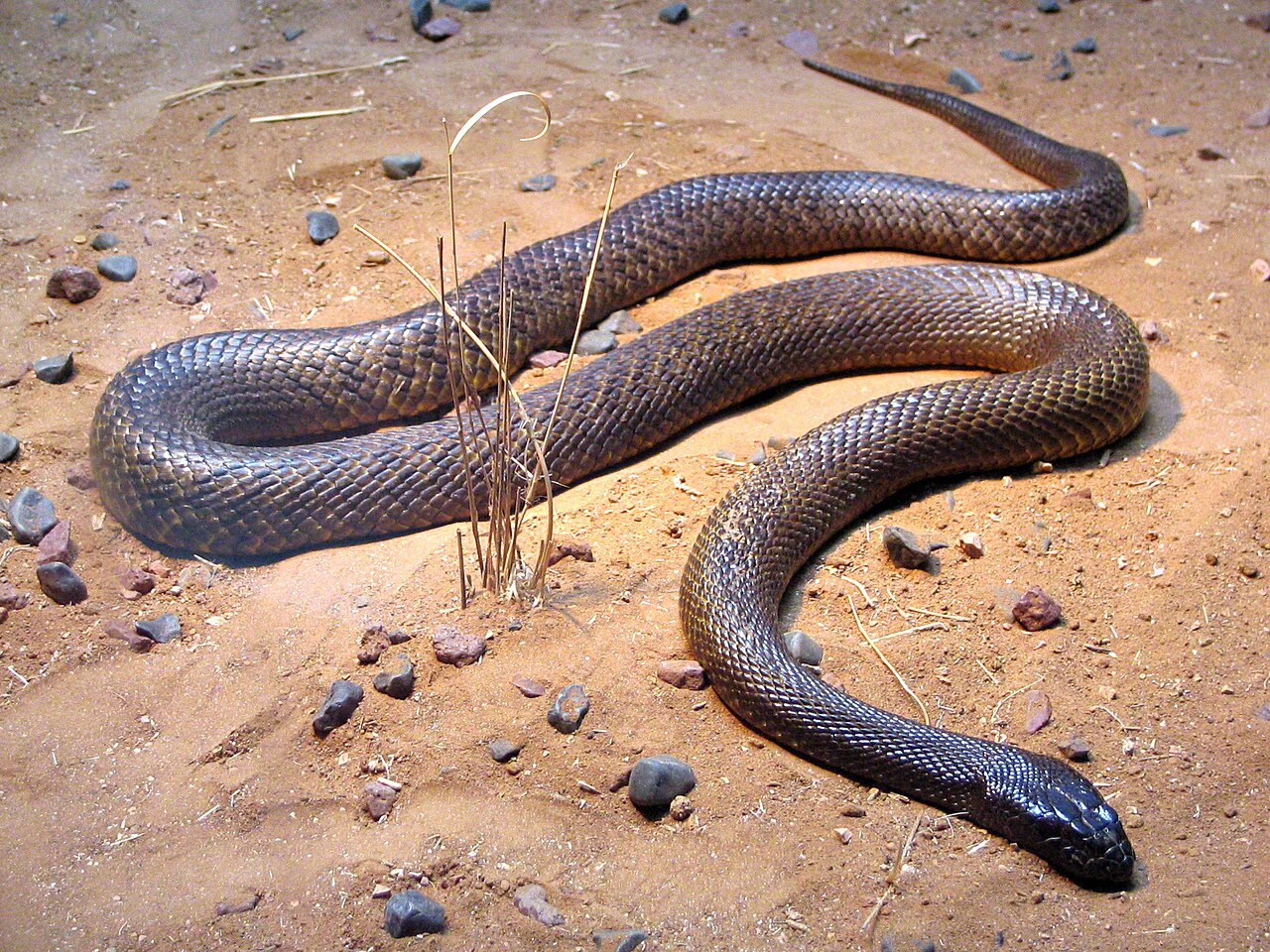
Inland Taipan
SnakeOxyuranus microlepidotus
- Type
- Snake
- Location
- Remote inland Australia
- Habitat
- Arid cracking-clay plains and grasslands
- Venom delivery
- Front-fang bite (elapid)
- Why it is listed
- Landmark LD50 / potency reputation among snakes
- Explanation
- Often called the world’s most venomous snake based on laboratory LD50 testing of its venom. Extreme assay potency is not the same as frequent human danger: the species is shy and lives far from most people.
- Human context
- Low everyday encounter rate due to remote range and behavior
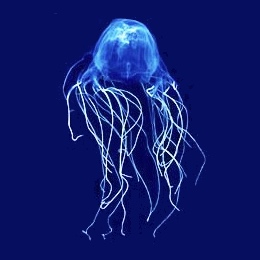
Box Jellyfish
JellyfishChironex fleckeri
- Type
- Jellyfish
- Location
- Northern Australia and nearby tropical seas
- Habitat
- Tropical coastal waters and nearshore shallows
- Venom delivery
- Nematocyst stinging cells on tentacles
- Why it is listed
- Potent marine cubozoan venom + documented human risk waters
- Explanation
- A major candidate in “most venomous marine animal” discussions. Tentacles deliver venom through nematocysts; near-transparency makes detection in water difficult during risk periods.
- Human context
- Risk rises where swimmers and tropical stinger seasons overlap
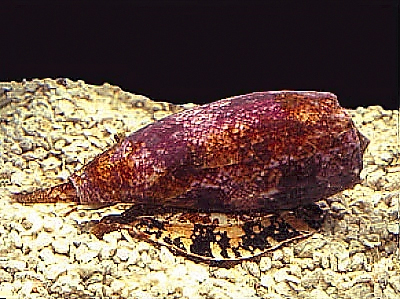
Geographer Cone Snail
Cone snailConus geographus
- Type
- Cone snail
- Location
- Indo-Pacific tropical reefs
- Habitat
- Coral reefs, sand flats, and lagoons
- Venom delivery
- Harpoon-like radular tooth
- Why it is listed
- Among the most medically discussed piscivorous cone snails
- Explanation
- A large cone snail whose harpoon-like radular tooth injects complex peptide toxins (conotoxins). Beautiful shells hide an active venom delivery system — venomous, not poisonous.
- Human context
- Encounters typically involve handling live shells or reef contact
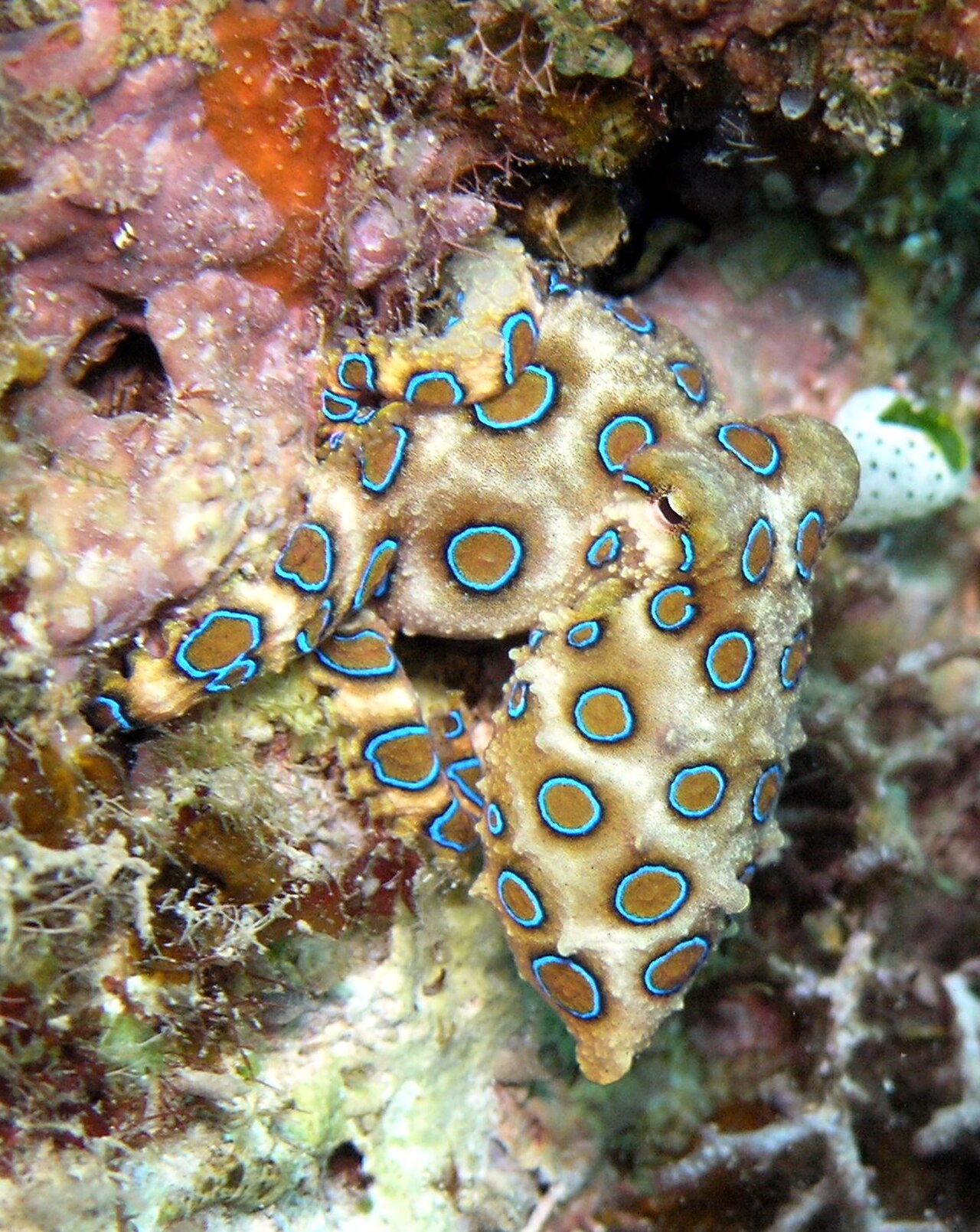
Blue-Ringed Octopus
OctopusHapalochlaena lunulata
- Type
- Octopus
- Location
- Indo-Pacific coasts and tide pools
- Habitat
- Tide pools, coral rubble, and shallow reefs
- Venom delivery
- Bite
- Why it is listed
- Neurotoxic venom in a tiny, frequently handled intertidal animal
- Explanation
- Small cephalopod that delivers tetrodotoxin-bearing venom in a bite. Bright blue rings are a warning display when the animal is alarmed.
- Human context
- Risk is mainly from picking up or disturbing the octopus
Reef Stonefish
FishSynanceia verrucosa
- Type
- Fish
- Location
- Indo-Pacific coral reefs and rocky shallows
- Habitat
- Reef flats, rubble, and sandy bottoms near coral
- Venom delivery
- Venomous dorsal spines
- Why it is listed
- Highest fish-venom reputation in many educational sources
- Explanation
- Widely identified as the world’s most venomous fish. Rock-like camouflage and dorsal spines mean accidental contact can occur when people walk or stand on reefs.
- Human context
- Camouflage raises accidental step-on exposure on popular reefs
Sydney Funnel-Web Spider
SpiderAtrax robustus
- Type
- Spider
- Location
- Eastern Australia (notably the Sydney region)
- Habitat
- Silk-lined burrows in moist soils, gardens, and bushland
- Venom delivery
- Fang bite
- Why it is listed
- High clinical significance among Australian spiders
- Explanation
- A classic terrestrial venomous spider of major medical interest. “Most venomous spider” rankings vary with measurement method; treat list order as educational, not absolute.
- Human context
- Urban/suburban overlap, especially when males wander after rain
Coastal Taipan
SnakeOxyuranus scutellatus
- Type
- Snake
- Location
- Coastal Australia and New Guinea region
- Habitat
- Coastal forests, cane fields, and woodland edges
- Venom delivery
- Front-fang bite (elapid)
- Why it is listed
- Potent venom plus clinically important coastal distribution
- Explanation
- Closely related to the inland taipan but living in wetter coastal and farmland-edge habitats. Highly toxic elapid venom with greater human-habitat overlap than its inland cousin.
- Human context
- More habitat overlap with people than inland taipan
Irukandji Jellyfish
JellyfishCarukia barnesi
- Type
- Jellyfish
- Location
- Northern Australia and other tropical seas
- Habitat
- Tropical open and coastal waters
- Venom delivery
- Nematocyst stings
- Why it is listed
- Disproportionate systemic effects relative to tiny body size
- Explanation
- Tiny cubozoans associated with Irukandji syndrome. Several related species produce similar effects; size does not equal trivial venom.
- Human context
- Hard to see; associated with tropical swimming risk periods
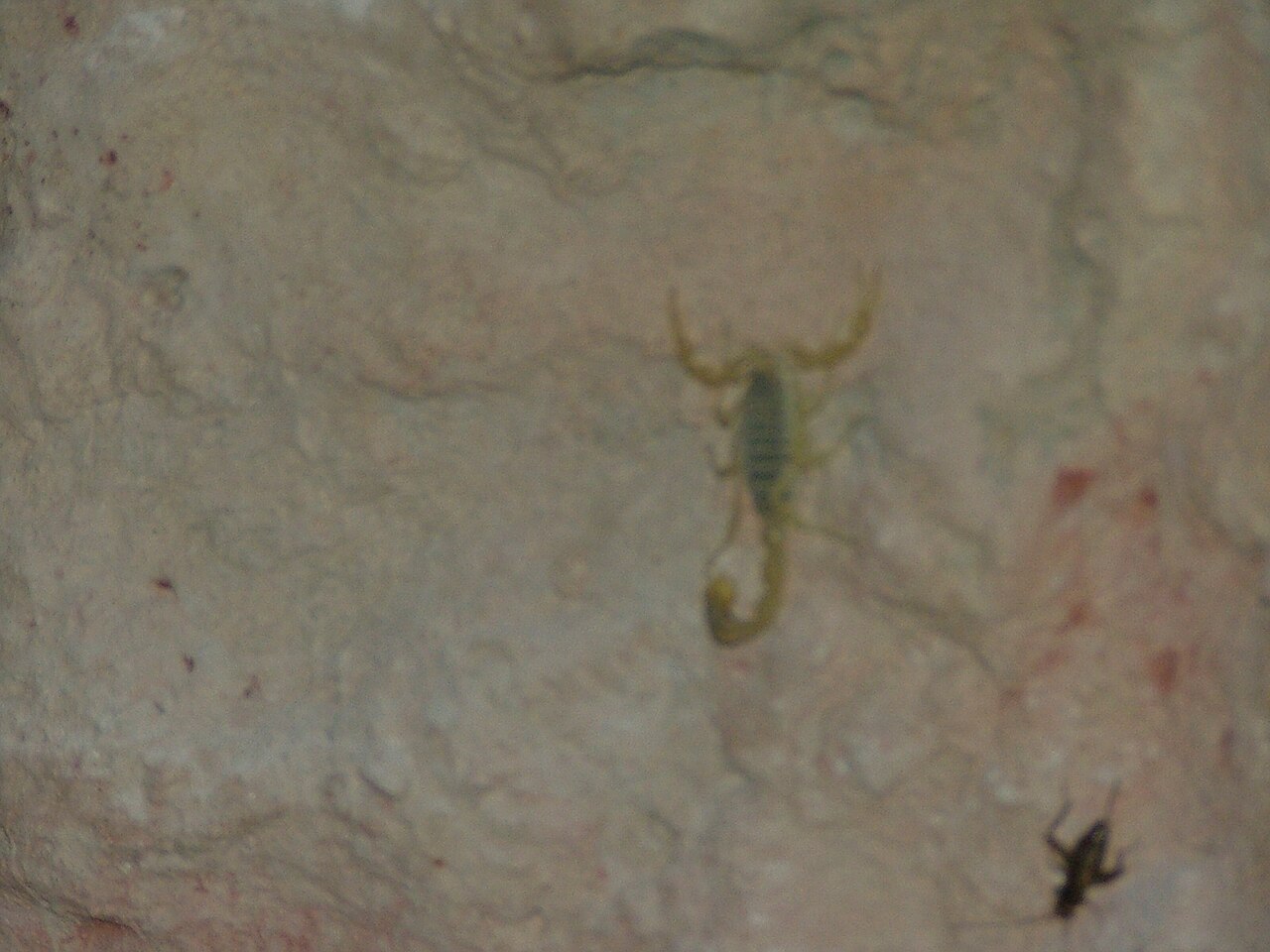
Deathstalker Scorpion
ScorpionLeiurus quinquestriatus
- Type
- Scorpion
- Location
- North Africa and the Middle East
- Habitat
- Deserts, arid scrub, and rocky dry country
- Venom delivery
- Telson (stinger)
- Why it is listed
- Classic high-potency scorpion in venom education
- Explanation
- A buthid scorpion frequently cited in “most venomous scorpion” educational lists for potent neurotoxic venom. Clinical risk still depends on dose, victim, and context.
- Human context
- Danger varies with species, dose, and who is stung
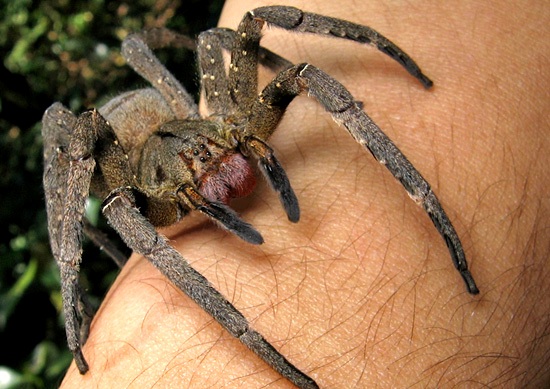
Brazilian Wandering Spider
SpiderPhoneutria nigriventer
- Type
- Spider
- Location
- South America
- Habitat
- Forests, plantations, and near dwellings
- Venom delivery
- Fang bite
- Why it is listed
- Neurotoxic venom + wandering behavior near people
- Explanation
- Large ctenid spiders of genus Phoneutria are often listed among the most medically significant spiders. They hunt actively and may shelter near homes, shoes, or produce.
- Human context
- May enter shoes, woodpiles, or banana bunches
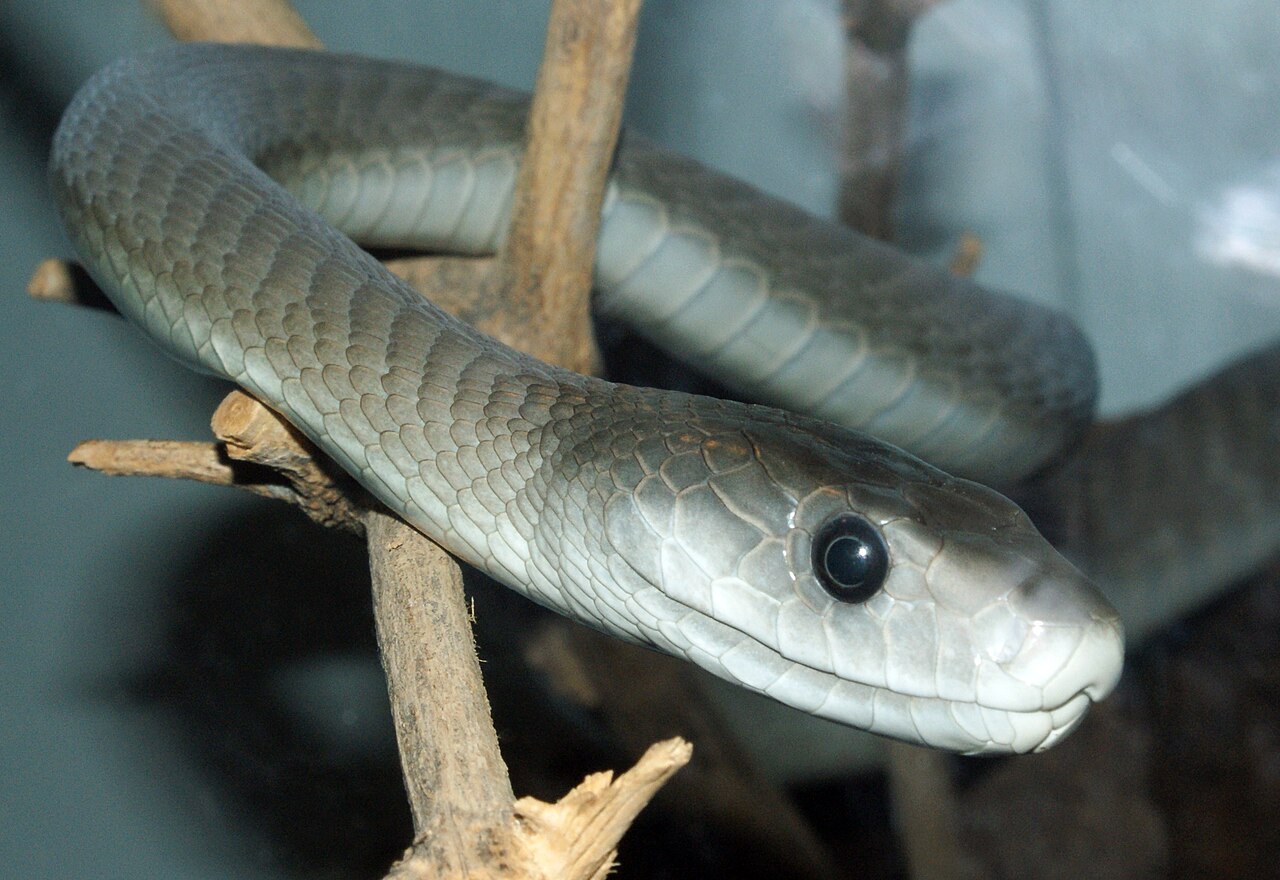
Black Mamba
SnakeDendroaspis polylepis
- Type
- Snake
- Location
- Sub-Saharan Africa
- Habitat
- Savanna, woodland, and rocky bushland
- Venom delivery
- Front-fang bite (elapid)
- Why it is listed
- High clinical reputation among African venomous snakes
- Explanation
- A fast African elapid with potent neurotoxic venom. Reputation combines speed, alertness, and clinical seriousness — not solely laboratory LD50 rank.
- Human context
- Speed and habitat overlap contribute to notoriety
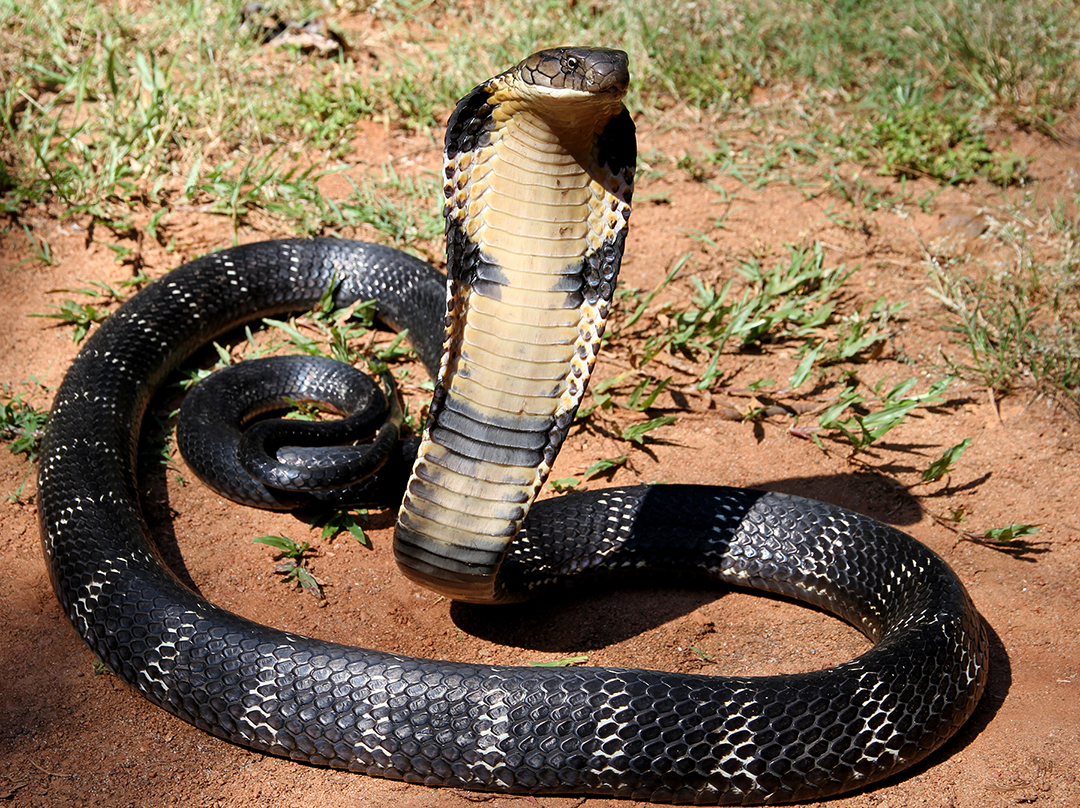
King Cobra
SnakeOphiophagus hannah
- Type
- Snake
- Location
- South and Southeast Asia
- Habitat
- Tropical forests and forest edges
- Venom delivery
- Front-fang bite (elapid)
- Why it is listed
- Large venom yield + iconic defensive display
- Explanation
- The longest venomous snake. Large body size means substantial venom yield; encounters are serious even when assay toxicity is debated relative to smaller elapids.
- Human context
- Size and volume matter alongside chemical potency
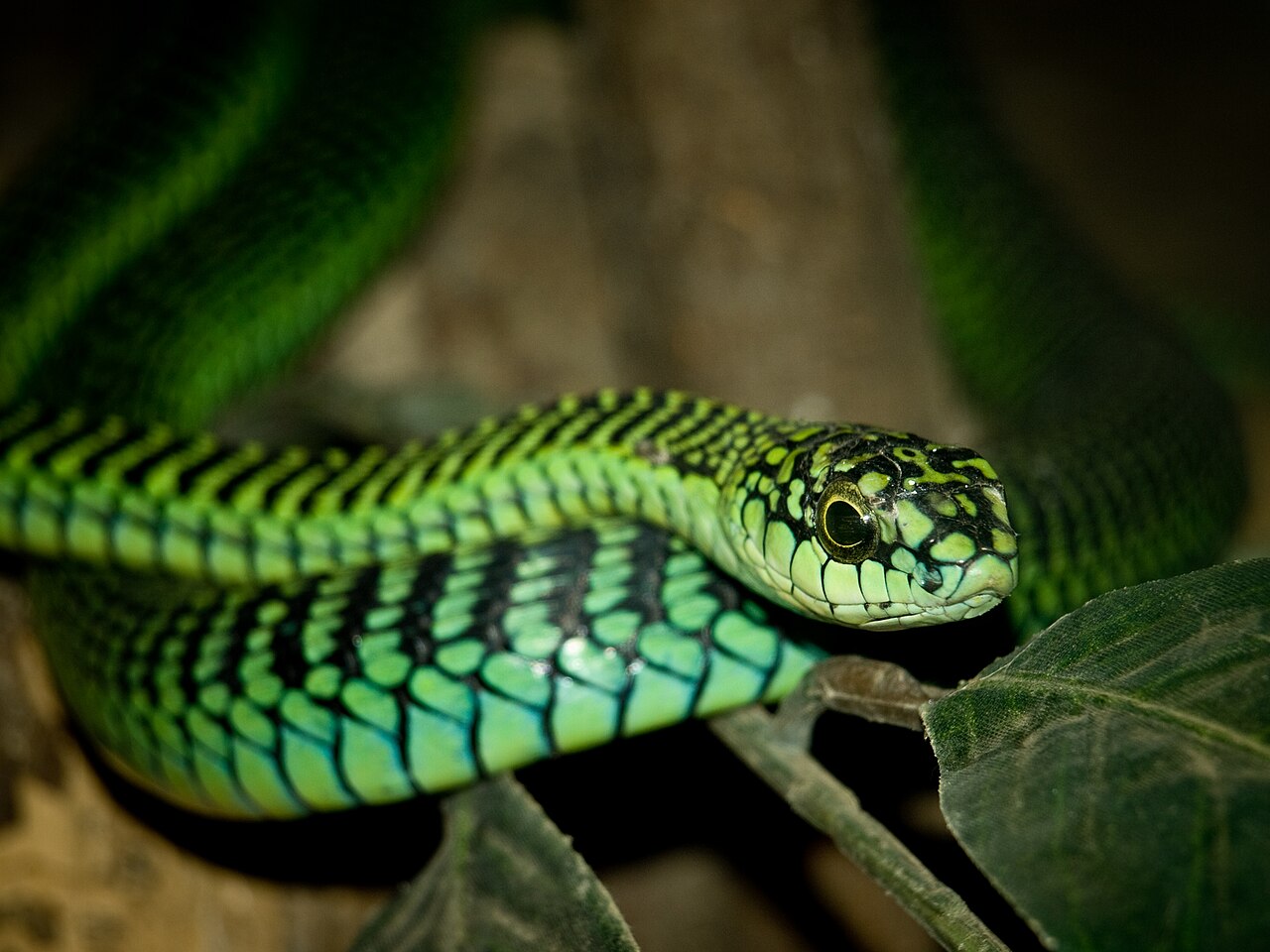
Boomslang
SnakeDispholidus typus
- Type
- Snake
- Location
- Sub-Saharan Africa
- Habitat
- Trees, bushveld, and savanna woodland
- Venom delivery
- Rear-fang bite
- Why it is listed
- Potent hemotoxin in a colubrid often overlooked by lay lists
- Explanation
- A rear-fanged African tree snake with potent hemotoxic venom. “Rear-fanged” does not mean harmless — delivery differs from elapids, but medical significance remains.
- Human context
- Less bite-prone than many front-fanged snakes, still serious
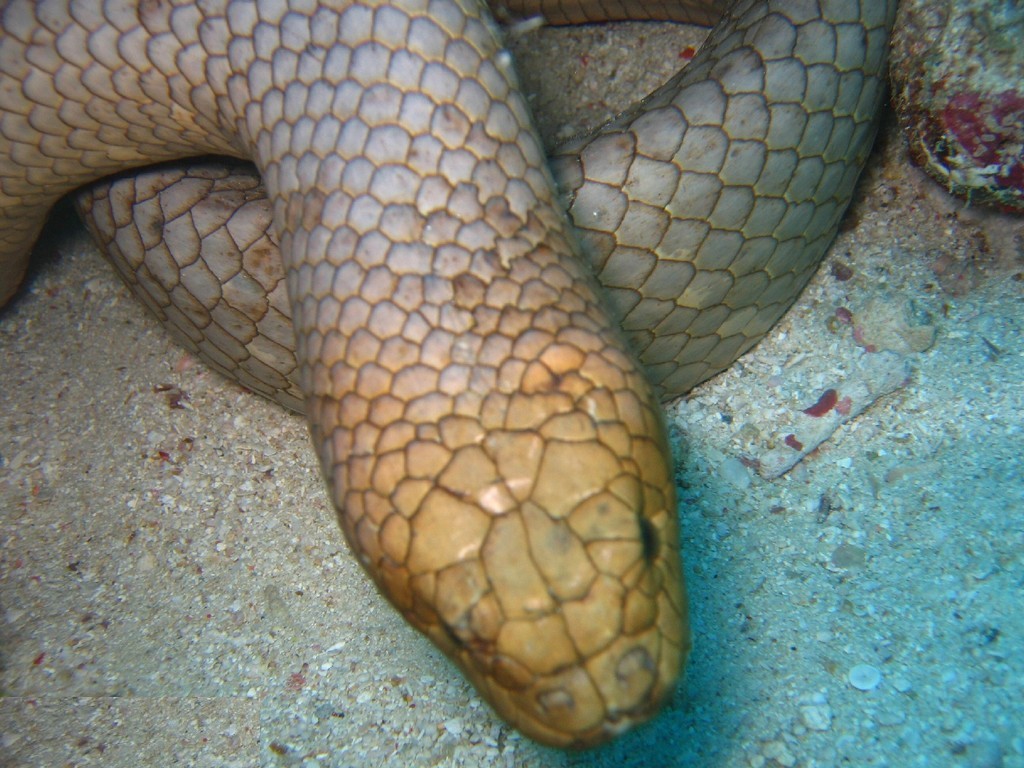
Sea Snakes
SnakeAipysurus laevis (Hydrophiinae group)
- Type
- Snake
- Location
- Indo-Pacific tropical seas and reefs
- Habitat
- Coral reefs, coastal seas, and tropical ocean waters
- Venom delivery
- Fang bite
- Why it is listed
- Group-level potent marine elapid venoms
- Explanation
- True sea snakes (Hydrophiinae) include many species with highly toxic marine elapid venoms. Most are shy; risk rises mainly with handling of animals in nets or washed ashore.
- Human context
- Generally low aggression; handling increases risk
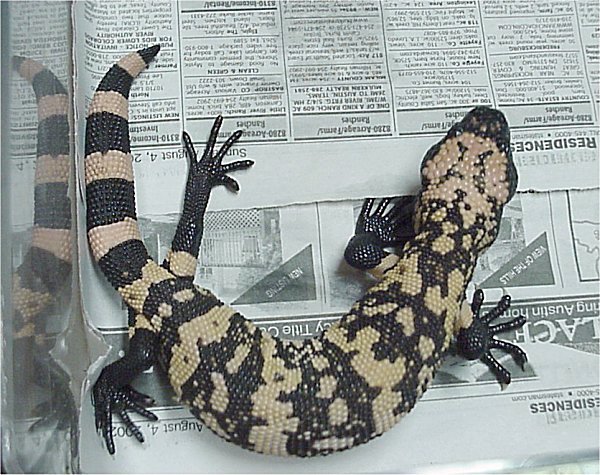
Gila Monster
LizardHeloderma suspectum
- Type
- Lizard
- Location
- Southwestern United States and northwestern Mexico
- Habitat
- Deserts, scrub, and rocky arid hillsides
- Venom delivery
- Venomous bite (helodermatid)
- Why it is listed
- Classic venomous lizard in field-guide education
- Explanation
- One of the few lizards commonly taught as venomous. Painful venomous bites are rare in everyday life compared with many snakes, but the species closes many educational land lists.
- Human context
- Rare encounters relative to many venomous snakes
Most venomous vs most dangerous
“Most venomous” answers a chemistry-and-delivery question. “Most dangerous” answers a human-risk question. They overlap, but they are not interchangeable labels.
| Factor | Why it matters |
|---|---|
| Potency | How powerful venom chemicals appear in laboratory assays (e.g. LD50). |
| Dose | How much venom is actually delivered in a real bite, sting, or spine puncture. |
| Delivery | Fang, stinger, spine, nematocyst, radular tooth, or other injection system. |
| Exposure | How often people encounter the animal in shared habitats. |
| Treatment availability | Whether specialized medical care or antivenom exists nearby — discussed educationally only, never as first-aid steps. |
An inland snake with extreme LD50 scores can be less dangerous overall than a camouflaged reef fish people step on — or a jellyfish in popular swimming waters — depending on exposure and medical context. AnimalIDFinder discusses treatment availability only as risk context, never as first-aid instructions.
Most venomous snake
Inland taipan
The inland taipan (Oxyuranus microlepidotus) of remote inland Australia is often considered the world’s most venomous snake based on venom toxicity testing. Its diet centers on mammals such as rodents; arid habitat and shy behavior reduce ordinary human contact.
Most venomous ≠ most dangerous. Snakes that live closer to people, or that figure more often in medical case series, can pose greater overall risk even with lower laboratory toxicity scores.
View Inland Taipan profileMost venomous fish
Reef stonefish
The reef stonefish (Synanceia verrucosa) is widely identified as the world’s most venomous fish. It sits motionless on reef rubble, matches rock and coral textures, and can inject venom through dorsal spines if stepped on — a classic Indo-Pacific field hazard.
View Reef Stonefish profileMost venomous spider
Sydney funnel-web (with measurement caveats)
The Sydney funnel-web spider (Atrax robustus) is a leading candidate in “most venomous spider” discussions, especially in Australian medical and museum education. Brazilian wandering spiders (Phoneutria) are another frequent contender in Neotropical lists.
Caveat: spider venom comparisons are not a single global championship. Assays, venom yield, bite circumstances, and which species is tested all shift the story. Treat “#1 spider” claims as educational shorthand, not settled taxonomy of danger.
View Sydney Funnel-Web profileMost venomous marine animals
Tropical seas concentrate several unrelated venom systems: cubozoan nematocysts, cephalopod bites, cone-snail harpoons, fish spines, and marine elapid fangs. Comparing them on one potency number is less useful than understanding delivery and exposure.
Most venomous on land — candidates
On land, educational lists usually mix snakes, spiders, scorpions, and the rare venomous lizard. Inland taipan leads many potency conversations; funnel-webs, deathstalkers, and large elapids such as king cobras and black mambas appear for clinical reputation or venom yield.
- 1.Inland TaipanSnake
- 6.Sydney Funnel-Web SpiderSpider
- 7.Coastal TaipanSnake
- 9.Deathstalker ScorpionScorpion
- 10.Brazilian Wandering SpiderSpider
- 11.Black MambaSnake
- 12.King CobraSnake
- 13.BoomslangSnake
- 15.Gila MonsterLizard
Venomous vs poisonous
This listicle is about venomous animals — species that actively inject or deliver toxin through fangs, stingers, spines, nematocysts, or similar tools. Poisonous animals (for example the golden poison frog) are a different category: toxins matter when eaten, touched, or absorbed without that injection apparatus.
Read: What Is the Most Poisonous Animal in the World?Frequently asked questions
What are the 15 most venomous animals in the world?+
There is no single scientific podium from #1 to #15. This AnimalIDFinder listicle compares fifteen frequently discussed venomous animals — snakes, jellyfish, spiders, octopuses, fish, cone snails, a scorpion, and a lizard — as an educational reading guide, not a definitive ranking.
Is there a definitive ranking of the most venomous animals?+
No. Different studies emphasize LD50 potency, clinical effects, venom yield, delivery system, or human encounter risk. Crossing from snakes to jellyfish to spiders on one numbered scale overclaims what science can standardize.
Does LD50 mean an animal is the most dangerous to humans?+
No. LD50 and similar potency measures describe laboratory toxicity under controlled conditions. Dose delivered, how venom is injected, how often people meet the animal, and treatment context all change real-world danger.
What is the most venomous snake?+
The inland taipan is often cited as the world’s most venomous snake based on laboratory toxicity testing. Most venomous is not the same as most dangerous: remote habitat and shy behavior reduce everyday human encounters.
What is the most venomous fish?+
The reef stonefish (Synanceia verrucosa) is widely identified as the most venomous fish. Its rock-like camouflage makes accidental contact a real risk on tropical reefs.
What is the most venomous spider?+
Sydney funnel-web spiders (Atrax robustus and relatives) and Brazilian wandering spiders (Phoneutria) are frequent candidates. Measurement caveats apply — spider “most venomous” claims are not a single standardized global assay.
What are the most venomous marine animals?+
Box jellyfish, Irukandji jellyfish, blue-ringed octopuses, geographer cone snails, reef stonefish, and sea snakes are major marine candidates depending on whether you emphasize potency, clinical history, or encounter risk.
What is the difference between venomous and poisonous?+
Venomous animals actively inject toxin through a bite, sting, spine, or similar apparatus. Poisonous animals are harmful when toxins are eaten, touched, or absorbed without that active delivery system. See AnimalIDFinder’s poisonous-animal guide for the full distinction.
Is the box jellyfish more venomous than the inland taipan?+
They are hard to compare on one scale. One is a marine cubozoan delivering nematocyst venom; the other is a terrestrial elapid snake. Sources highlight each for different reasons — potency metrics and ecological context are not interchangeable.
Are sea snakes more venomous than land snakes?+
Many sea snakes have highly toxic venoms, but aggression toward people is generally low. Comparing “more venomous” across marine and terrestrial elapids still depends on the assay and the species pair you choose.
Can ranking change depending on the metric used?+
Yes. Potency, dose, delivery efficiency, exposure, and medical infrastructure can reorder any educational list. That is why AnimalIDFinder presents numbered entries as a comparison aid, not a scientific championship.
Explore these venomous animals
Open encyclopedia profiles for species in the AnimalIDFinder catalog — then try photo identification tools if you have a picture from the field.
Identify by picture
Have a photo from the field? Use AnimalIDFinder’s AI identifiers — then compare habitat, range, and safety notes in the encyclopedia.
Sources
- Australian Museum — Inland Taipan
Documents inland taipan venom potency reputation and remote, shy ecology.
- Australian Museum — Box Jellyfish
Species overview for Chironex fleckeri and tropical Australian context.
- Australian Museum — Reef Stonefish
Identifies the reef stonefish as the world’s most venomous fish.
- Australian Museum — How do you rate danger?
Explains why danger is more than toxin potency alone (encounter, effect, treatment context).
- University of Melbourne — Australian venom research context
Academic framing for Australian venom research and medically significant species.
- Australian Geographic — venomous wildlife education
Public wildlife journalism covering Australian venomous animals and field context.