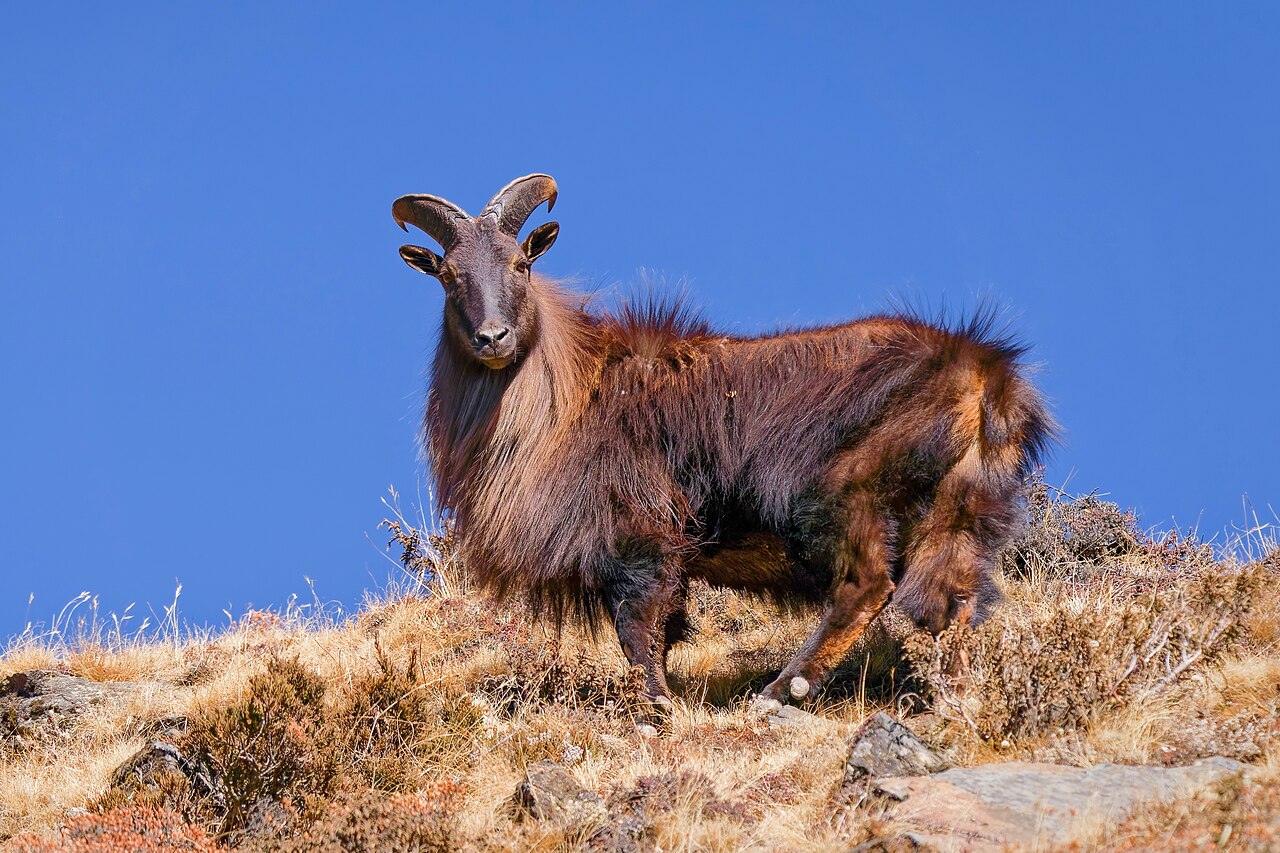
Native Biome: Steep rocky slopes, cliffs, and alpine/subalpine meadows of the Himalayas.
Himalayan Tahr
Hemitragus jemlahicus
Hemitragus means “half-goat”; jemlahicus refers to the Himalaya/Jemla region association of early descriptions.
Linnaean Taxonomic Tree
~60–100+ kg
Female: ~50–80 kgExplosive bursts on cliffs; sure-footed rather than open-plain fast
Burst Acceleration~10–15 years
Captivity: ~15+ years when known in managed settingsCompare Look-Alikes
vs Yak
🐣Growth & Lifespan
Birth to old age slider
🔍 Distinctive Diagnostic Markings & Anatomy
Critical morphological field marks naturalists use to verify species identification in the wild.
Reddish-brown to dark woolly coat; becomes long and shaggy in winter; stocky mountain ungulate build.
Goat-antelope skull with short curved horns in both sexes.
Lateral ungulate eyes for cliff-edge vigilance.
Specialized rubber-like hoof pads grip steep rock and ice.
Short ungulate tail; coat is the visual focus.
Males larger with heavier winter mane/ruff appearance.
🍖 Trophic Role & Hunting Strategy
Primary HerbivoreBrowser/grazer on steep meadows and rocky slopes.
🏕️ Social Behavior & Activity Rhythms
DiurnalGroups on cliffs and meadows; bachelor and female groups vary seasonally
Kid follows on steep terrain soon after gaining strength
Life Cycle, Growth & Lifespan Journey
| Age | Stage | Length/Height | Weight |
|---|---|---|---|
| Birth | Neonate | 18–35 cm | 2.5–8 kg |
| Juvenile | Juvenile | 49.50000000000001–91 cm | 17.5–45 kg |
| Young adult | Adult | 81–133 cm | 42.5–92 kg |
| Prime adult | Prime Adult | 90–140 cm | 50–100 kg |
How Big Will a Himalayan Tahr Get?
Calculate estimated adult weight, shoulder height, remaining growth timeline, and weekly development rate based on current age and biometrics.
Conservation Status & Population Dynamics
Native Himalayan populations under pressure; introduced herds elsewhere managed separately
Subject to ongoing wildlife telemetry monitoring
- •Habitat pressure
- •Hunting
- •Competition/disturbance
- •Climate impacts on alpine forage
- Protected areas
- Population monitoring
- Sustainable management where hunted
Field Intelligence & Diagnostic Hub for Himalayan Tahr
Short ungulate tail; coat is the visual focus.
Audio frequency analysis, territorial roar/call synthesis, and harmonic resonance measurements.
Ecosystem food web, trophic interactions, and cohabiting species in Himalayas.
⚖️ Look-Alike Species Differentiation Matrix
Instant one-click comparison tools to prevent common field misidentifications
Himalayan Tahr vs. Yak
Key DifferentiationYaks are huge shaggy bovines of open pasture; tahrs are smaller cliff-climbing goat-antelopes.
Himalayan Tahr vs. Snow Leopard
Key DifferentiationSnow leopards are spotted predators; tahrs are woolly herbivores that may become their prey.
How to Identify Himalayan Tahr from a Photograph
Standard operating procedures for photographers and field naturalists submitting sightings for verification.
- 📷Clear side profile
- 📷Head/face close-up
- 📷Full body showing coat length
- 🔍Winter-long shaggy woolly coat
- 🔍Reddish-brown to dark body
- 🔍Cliff specialist with rubbery hoof grip
- 🔍Short horns on a stocky goat-antelope frame
- ⚠️Calling them domestic goats
- ⚠️Confusing with ibex without checking horn/coat shape
- ⚠️Assuming New Zealand herds reflect Himalayan status
Frequently Asked Questions About Himalayan Tahr
Verified answers compiled by zoologists, wildlife biologists, and field guides.
Related Identification Tools
Identify similar animals with focused photo tools for dogs, cats, birds, reptiles, fish, bugs, and more.