Wie man ähnliche Tiere unterscheidet
Laden Sie ein Foto hoch, um eine gezielte visuelle Identifizierung zwischen Arten durchzuführen, Ihr Fachwissen mit interaktiven Tests zu testen und Anatomievergleiche nebeneinander zu erkunden.
Quokka vs. Red Kangaroo – Wie man sie auseinanderhält
Wichtige visuelle Unterschiede, Feldidentifikationsregeln, anatomische Hotspots und paarweise AI-Analyse.
If it is about domestic-cat sized with a short tail and a rounded “smiling” face in Western Australia, it is a quokka. If it is a large hopping marsupial of inland Australia with a long powerful tail, it is a red kangaroo.
| Funktion | 🦘 Quokka | 🦘 Red Kangaroo |
|---|---|---|
| Size | ~40–54 cm body; 1.5–5 kg | Males stand ~1.4–1.8 m; 40–90 kg |
| Tail | Short for a macropod | Long, thick, muscular |
| Face | Rounded “smiling” face | Smaller head relative to huge body |
| Range | SW Western Australia / islands | Inland mainland Australia |
| Habitat | Dense cover, shrubland, islands | Open arid plains and scrub |
Welches ist das?Quokka vs Red Kangaroo
Ein Tier auf einem Foto oder einer Feldbeobachtung entdeckt? Laden Sie es hier hoch und AI wird seine genauen visuellen Merkmale speziell zwischen diesen beiden Kandidatenarten bewerten!
Größen- und Maßstabsvergleich mit menschlichem Benchmark
Sehen Sie, wie Quokka und Red Kangaroo im Vergleich zu einem durchschnittlichen Menschen (👤 1,8 m / 80 kg) abschneiden.
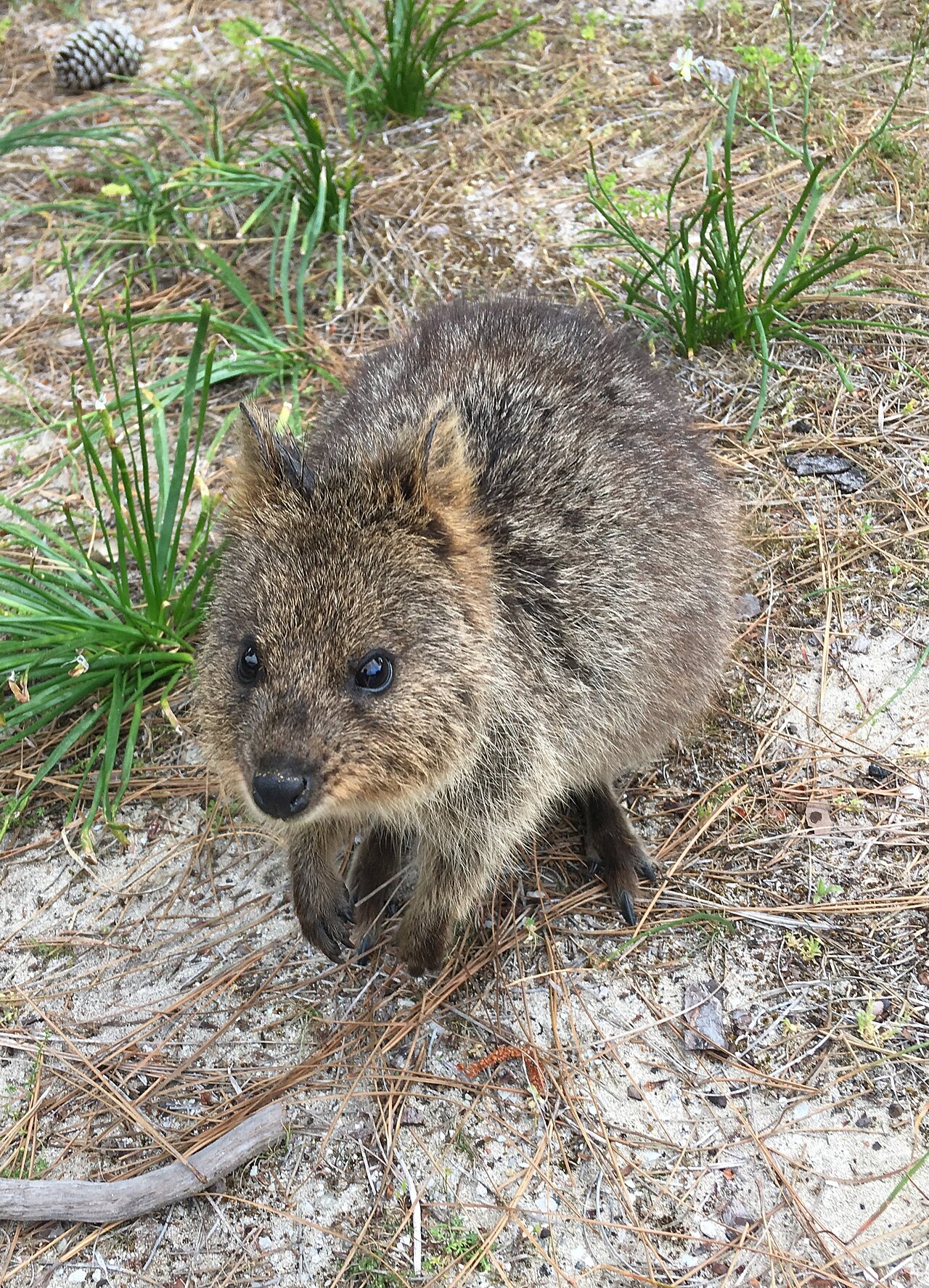
🦘Quokka
Setonix brachyurus
- Rounded “smiling” face
- Short tail
- Cat-sized compact body
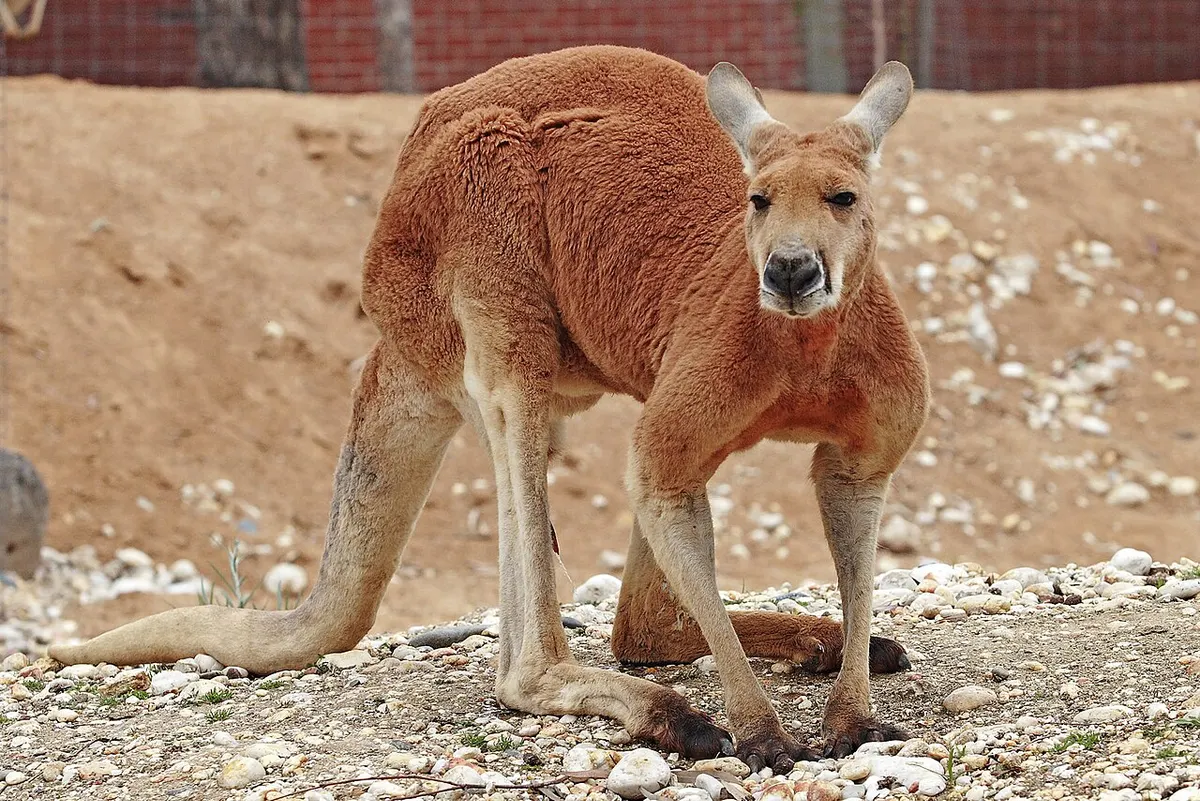
🦘Red Kangaroo
Osphranter rufus
- Huge hind legs
- Long muscular tail
- Male red / female blue-gray coats
14-Punkte-Artenvergleichsmatrix
Detaillierte Taxonomie, anatomische Abmessungen, Lebensraum und Verhaltensaufschlüsselung nebeneinander.
| Biologische Dimension | 🦘 Quokka | 🦘 Red Kangaroo |
|---|---|---|
| Size (Length) | ~40–54 cm body | Body + long tail; males stand ~1.4–1.8 m |
| Weight | ~1.5–5 kg | ~40–90 kg (males larger) |
| Body Shape | Compact, cat-sized | Tall, long-legged hopper |
| Coat/Skin | Brown/gray-brown | Male red; female often blue-gray |
| Markings | Rounded face “smile” | Sexual dichromatism common |
| Head Shape | Rounded cheeks | Smaller head on huge frame |
| Teeth/Jaw | Herbivore dentition | Herbivore dentition |
| Tail | Short | Long muscular fifth limb |
| Habitat | Forest/shrub/wetland/islands | Arid open country |
| Geographic Range | SW Western Australia | Central/mainland Australia |
| Diet | Grasses, leaves, shrubs | Grasses and forbs |
| Behavior | Mainly nocturnal; dense cover | Mobs; high-speed hopping |
| Lifespan | ~10 years wild | ~8–15 years wild |
| Conservation Status | Vulnerable | Least Concern |
Warum verwechseln Menschen Quokka und Red Kangaroo?
Oberflächliche Ähnlichkeiten täuschen Beobachter oft. Hier erfahren Sie, warum sie sich ähneln und wie Sie der Falle aus dem Weg gehen.
Oberflächliche gemeinsame Merkmale
- Both are Australian marsupial macropods that hop
- Both raise young (joeys) in a pouch
- Both are herbivores
Definitive Feldunterscheidungen
- Quokkas are tiny and short-tailed; red kangaroos are massive with long tails.
- Quokkas are tied to SW WA islands and dense vegetation; red kangaroos dominate inland open country.
- The viral “happiest animal” look is a quokka trait, not a red kangaroo trait.
Worauf sollte ich in freier Wildbahn achten?
Beobachten Sie wichtige Feldmarkierungen oder Verhaltensweisen und wählen Sie passende Merkmale aus, um eine Live-Diagnoseberechnung durchzuführen.
Check size: quokkas are domestic-cat sized; red kangaroos can stand taller than a person.
Check the tail: quokkas have a short tail; red kangaroos have a long thick balancing tail.
Check geography/habitat: SW WA islands and dense cover favor quokkas; inland open country favors red kangaroos.
Look at the face: the viral rounded “smile” is the quokka’s signature look.
Können Sie sie auseinander halten?
Testen Sie Ihre Beobachtungsfähigkeiten bei wichtigen anatomischen Merkmalen und verdienen Sie Rangabzeichen!
"Which animal is about the size of a domestic cat?"
Häufige Fragen zur Identifizierung
Are quokkas baby kangaroos?
No. Quokkas are a separate small macropod species (Setonix brachyurus), not juvenile red kangaroos.
Which is safer to approach?
Neither should be handled. Quokkas are often photographed on Rottnest but must not be touched or fed; large kangaroos can injure people with powerful kicks.
Do both have joeys?
Yes. Both are marsupials that raise joeys in a pouch and can use embryonic diapause.
Vergleich Fun Fact:
Quokkas are sometimes nicknamed the “world’s happiest animal” because of their facial anatomy and viral selfies — not because scientists measured happiness.
Sie haben ein Tier gefunden und sind sich immer noch nicht sicher, um welche Art es sich handelt?
Laden Sie ein beliebiges Foto hoch, damit AI seine genauen Rosetten, Schnabelform, Schnauze oder Schuppenmuster untersuchen kann!