Cómo diferenciar animales similares
Cargue una foto para realizar AI identificación visual específica entre especies, pruebe sus conocimientos de campo con cuestionarios interactivos y explore comparaciones de anatomía una al lado de la otra.
Quokka vs Red Kangaroo - Cómo diferenciarlos
Diferencias visuales clave, reglas de identificación de campos, puntos críticos anatómicos y análisis AI por pares.
If it is about domestic-cat sized with a short tail and a rounded “smiling” face in Western Australia, it is a quokka. If it is a large hopping marsupial of inland Australia with a long powerful tail, it is a red kangaroo.
| Característica | 🦘 Quokka | 🦘 Red Kangaroo |
|---|---|---|
| Size | ~40–54 cm body; 1.5–5 kg | Males stand ~1.4–1.8 m; 40–90 kg |
| Tail | Short for a macropod | Long, thick, muscular |
| Face | Rounded “smiling” face | Smaller head relative to huge body |
| Range | SW Western Australia / islands | Inland mainland Australia |
| Habitat | Dense cover, shrubland, islands | Open arid plains and scrub |
¿Cuál es este?Quokka vs Red Kangaroo
¿Viste un animal en una fotografía o observación de campo? ¡Cárguelo aquí y el AI evaluará sus rasgos visuales exactos específicamente entre estas dos especies candidatas!
Comparación de tamaño y escala con el punto de referencia humano
Vea cómo Quokka y Red Kangaroo están a la altura de un ser humano promedio (👤 1,8 m/80 kg).
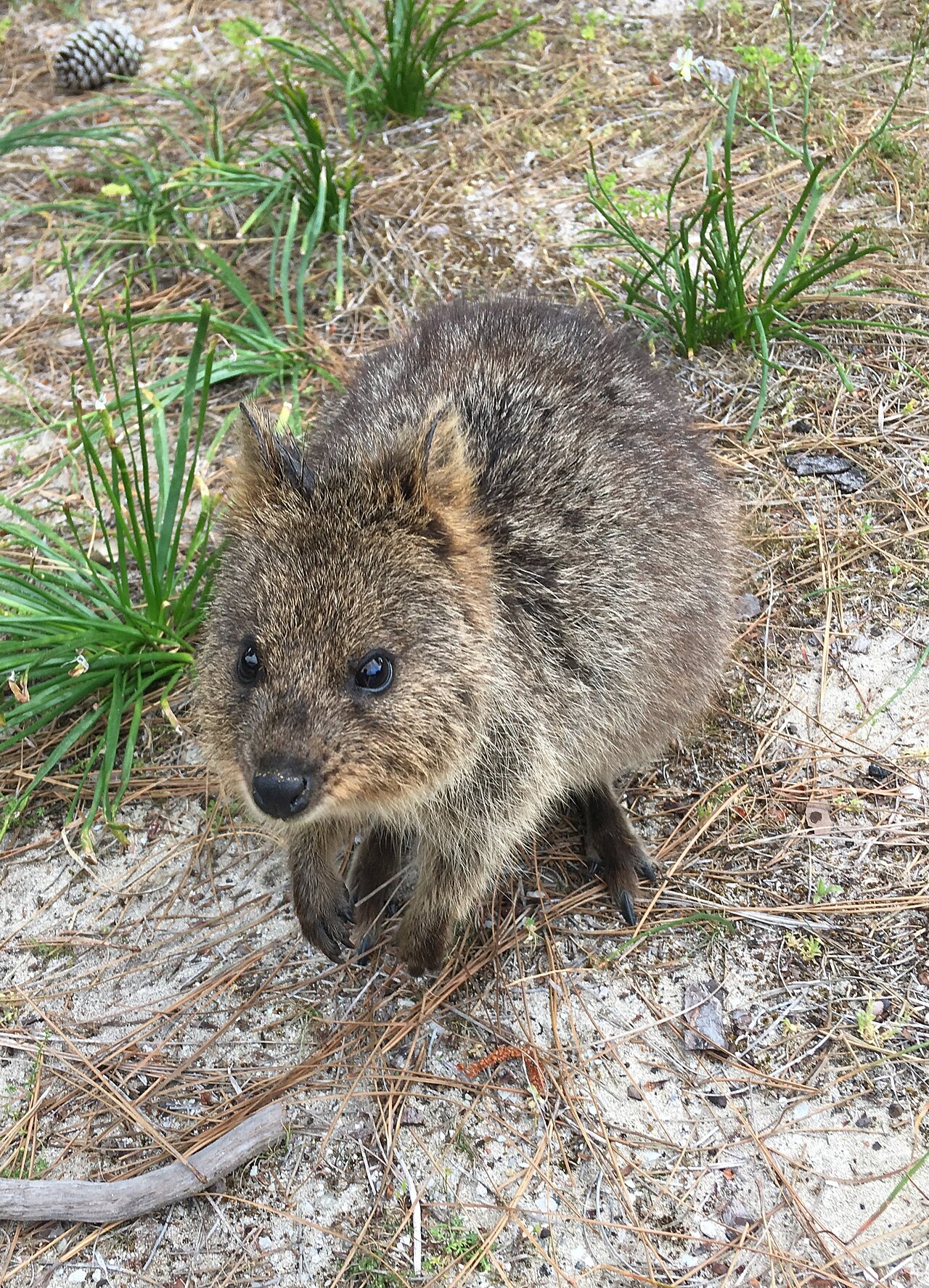
🦘Quokka
Setonix brachyurus
- Rounded “smiling” face
- Short tail
- Cat-sized compact body
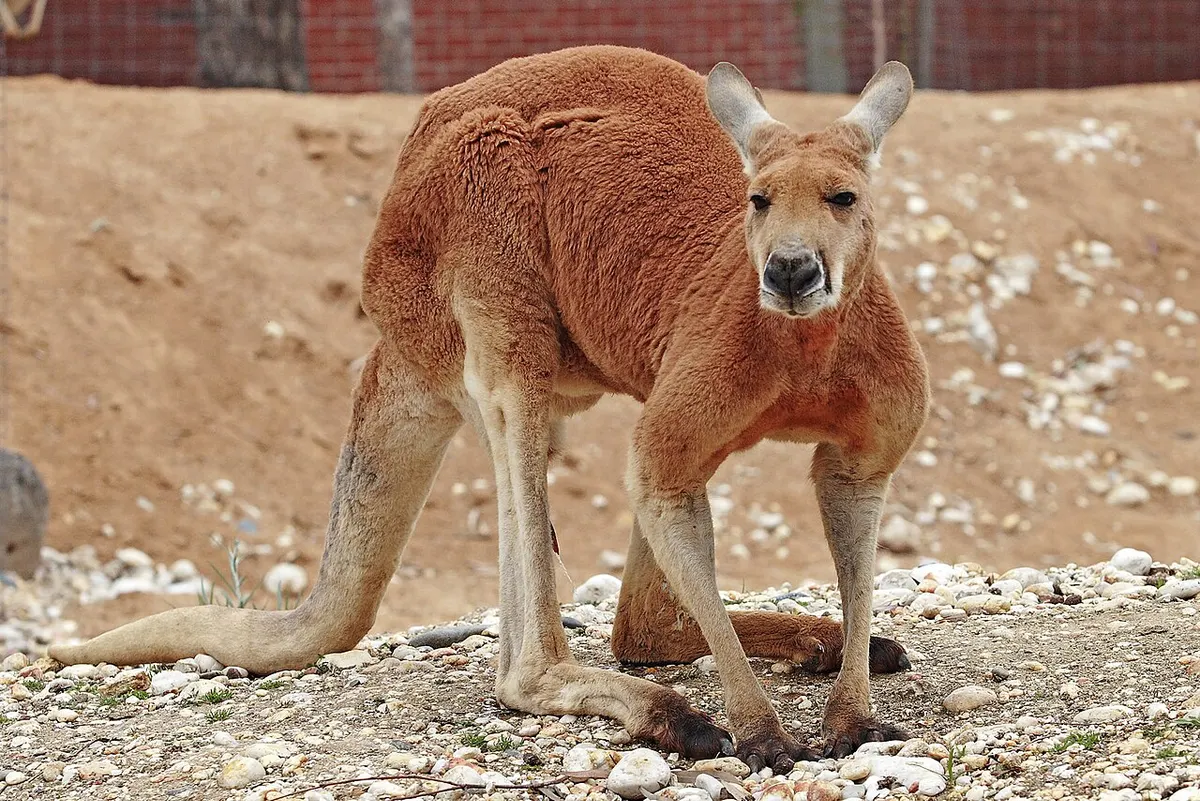
🦘Red Kangaroo
Osphranter rufus
- Huge hind legs
- Long muscular tail
- Male red / female blue-gray coats
Matriz de comparación de especies de 14 puntos
Taxonomía detallada, dimensiones anatómicas, hábitat y desglose del comportamiento.
| Dimensión biológica | 🦘 Quokka | 🦘 Red Kangaroo |
|---|---|---|
| Size (Length) | ~40–54 cm body | Body + long tail; males stand ~1.4–1.8 m |
| Weight | ~1.5–5 kg | ~40–90 kg (males larger) |
| Body Shape | Compact, cat-sized | Tall, long-legged hopper |
| Coat/Skin | Brown/gray-brown | Male red; female often blue-gray |
| Markings | Rounded face “smile” | Sexual dichromatism common |
| Head Shape | Rounded cheeks | Smaller head on huge frame |
| Teeth/Jaw | Herbivore dentition | Herbivore dentition |
| Tail | Short | Long muscular fifth limb |
| Habitat | Forest/shrub/wetland/islands | Arid open country |
| Geographic Range | SW Western Australia | Central/mainland Australia |
| Diet | Grasses, leaves, shrubs | Grasses and forbs |
| Behavior | Mainly nocturnal; dense cover | Mobs; high-speed hopping |
| Lifespan | ~10 years wild | ~8–15 years wild |
| Conservation Status | Vulnerable | Least Concern |
¿Por qué la gente confunde Quokka y Red Kangaroo?
Las similitudes superficiales a menudo engañan a los observadores. He aquí por qué se parecen y cómo evitar la trampa.
Rasgos superficiales compartidos
- Both are Australian marsupial macropods that hop
- Both raise young (joeys) in a pouch
- Both are herbivores
Distinciones de campo definitivas
- Quokkas are tiny and short-tailed; red kangaroos are massive with long tails.
- Quokkas are tied to SW WA islands and dense vegetation; red kangaroos dominate inland open country.
- The viral “happiest animal” look is a quokka trait, not a red kangaroo trait.
¿Qué debo buscar en la naturaleza?
Observe las marcas o comportamientos de los campos clave y seleccione los rasgos coincidentes para ejecutar un cálculo de diagnóstico en vivo.
Check size: quokkas are domestic-cat sized; red kangaroos can stand taller than a person.
Check the tail: quokkas have a short tail; red kangaroos have a long thick balancing tail.
Check geography/habitat: SW WA islands and dense cover favor quokkas; inland open country favors red kangaroos.
Look at the face: the viral rounded “smile” is the quokka’s signature look.
¿Puedes diferenciarlos?
¡Pon a prueba tus habilidades de observación en rasgos anatómicos clave y gana insignias de rango!
"Which animal is about the size of a domestic cat?"
Preguntas comunes de identificación
Are quokkas baby kangaroos?
No. Quokkas are a separate small macropod species (Setonix brachyurus), not juvenile red kangaroos.
Which is safer to approach?
Neither should be handled. Quokkas are often photographed on Rottnest but must not be touched or fed; large kangaroos can injure people with powerful kicks.
Do both have joeys?
Yes. Both are marsupials that raise joeys in a pouch and can use embryonic diapause.
Dato curioso sobre la comparación:
Quokkas are sometimes nicknamed the “world’s happiest animal” because of their facial anatomy and viral selfies — not because scientists measured happiness.
¿Encontraste un animal y aún no estás seguro de qué especie es?
¡Sube cualquier foto para que AI examine sus rosetas, forma de pico, hocico o patrones de escala exactos!