Comment distinguer des animaux similaires
Téléchargez une photo pour effectuer une identification visuelle AI ciblée entre les espèces, testez vos connaissances sur le terrain avec des quiz interactifs et explorez des comparaisons anatomiques côte à côte.
Quokka vs Red Kangaroo — Comment les distinguer
Différences visuelles clés, règles d'identification des champs, points chauds anatomiques et analyse AI par paire.
If it is about domestic-cat sized with a short tail and a rounded “smiling” face in Western Australia, it is a quokka. If it is a large hopping marsupial of inland Australia with a long powerful tail, it is a red kangaroo.
| Fonctionnalité | 🦘 Quokka | 🦘 Red Kangaroo |
|---|---|---|
| Size | ~40–54 cm body; 1.5–5 kg | Males stand ~1.4–1.8 m; 40–90 kg |
| Tail | Short for a macropod | Long, thick, muscular |
| Face | Rounded “smiling” face | Smaller head relative to huge body |
| Range | SW Western Australia / islands | Inland mainland Australia |
| Habitat | Dense cover, shrubland, islands | Open arid plains and scrub |
Lequel est-ce ?Quokka vs Red Kangaroo
Vous avez repéré un animal sur une photo ou une observation sur le terrain ? Téléchargez-le ici, et le AI évaluera ses traits visuels exacts spécifiquement entre ces deux espèces candidates !
Comparaison de taille et d'échelle avec une référence humaine
Découvrez comment Quokka et Red Kangaroo se mesurent par rapport à un humain moyen (👤 1,8 m / 80 kg).
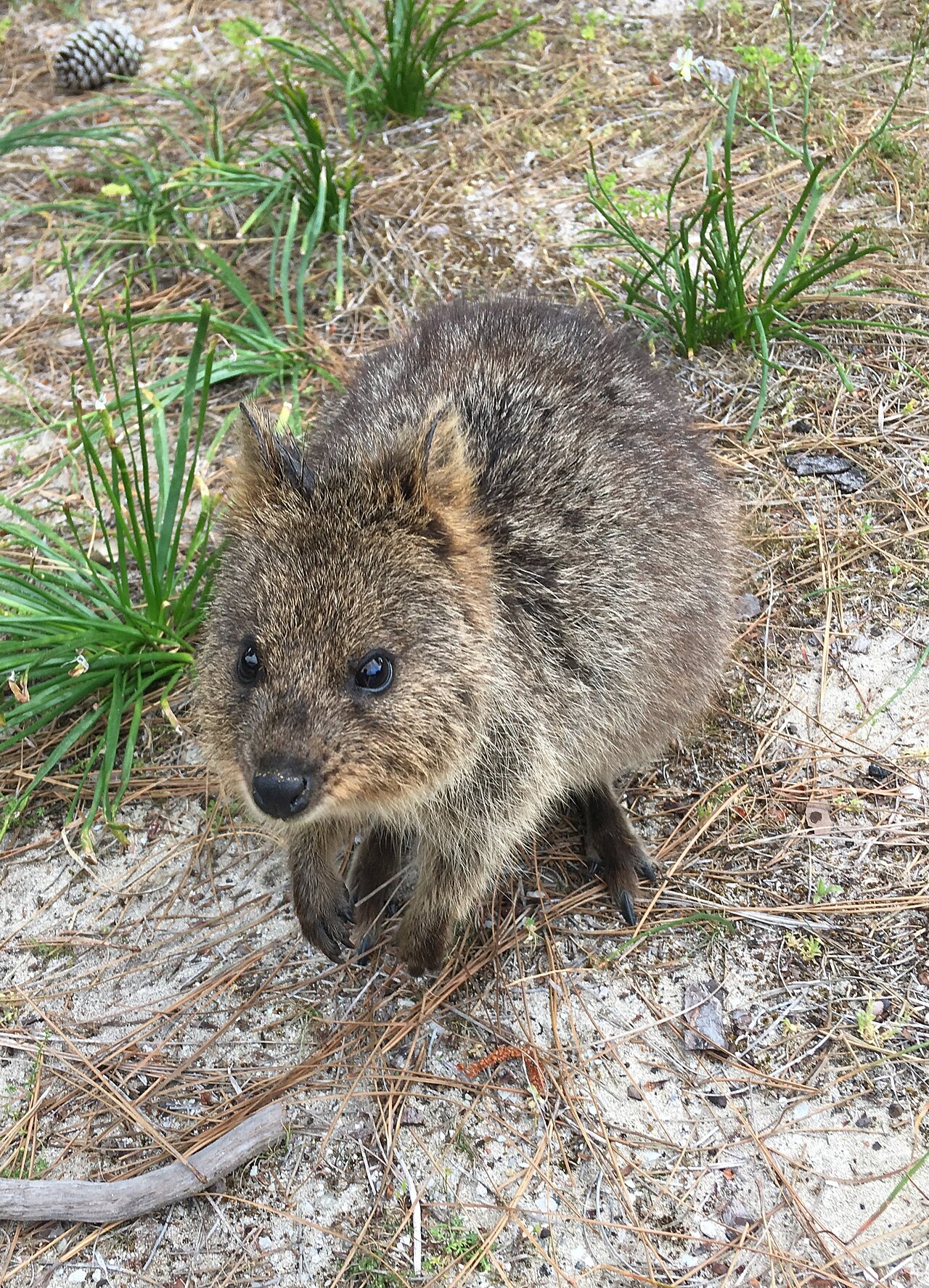
🦘Quokka
Setonix brachyurus
- Rounded “smiling” face
- Short tail
- Cat-sized compact body
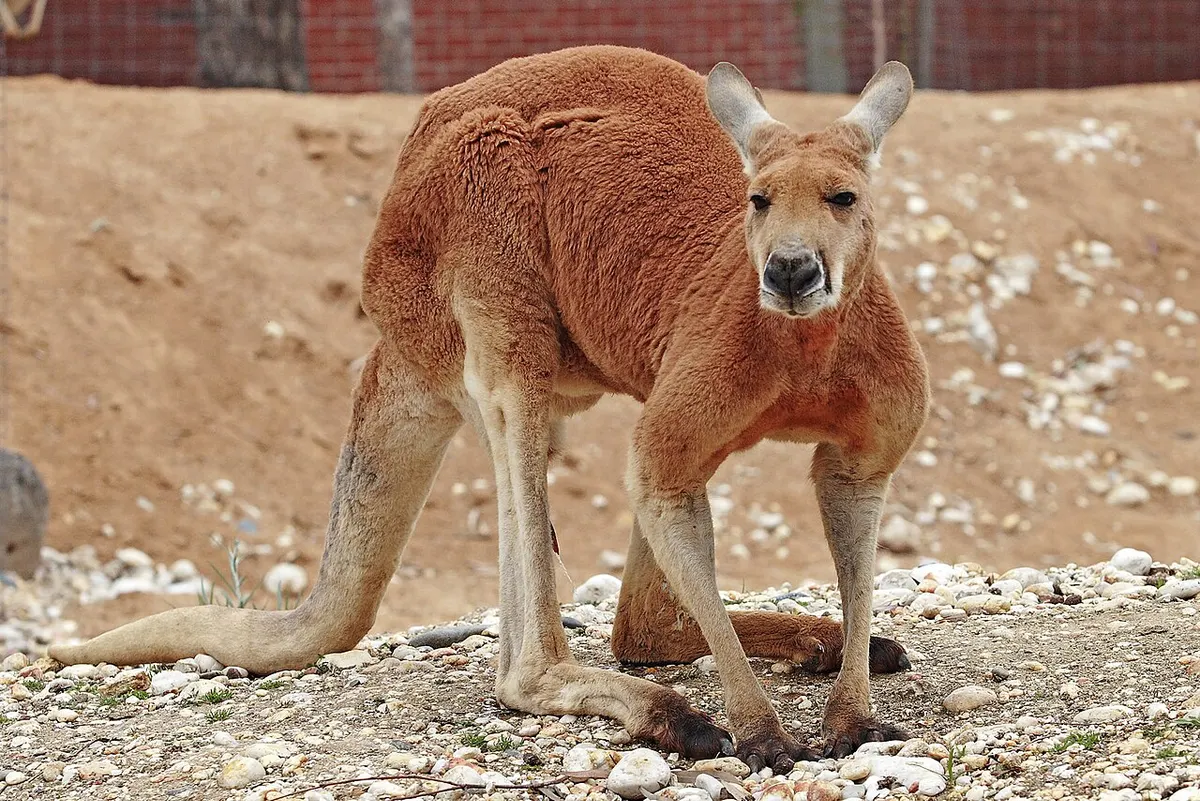
🦘Red Kangaroo
Osphranter rufus
- Huge hind legs
- Long muscular tail
- Male red / female blue-gray coats
Matrice de comparaison des espèces en 14 points
Taxonomie détaillée côte à côte, dimensions anatomiques, habitat et répartition comportementale.
| Dimension biologique | 🦘 Quokka | 🦘 Red Kangaroo |
|---|---|---|
| Size (Length) | ~40–54 cm body | Body + long tail; males stand ~1.4–1.8 m |
| Weight | ~1.5–5 kg | ~40–90 kg (males larger) |
| Body Shape | Compact, cat-sized | Tall, long-legged hopper |
| Coat/Skin | Brown/gray-brown | Male red; female often blue-gray |
| Markings | Rounded face “smile” | Sexual dichromatism common |
| Head Shape | Rounded cheeks | Smaller head on huge frame |
| Teeth/Jaw | Herbivore dentition | Herbivore dentition |
| Tail | Short | Long muscular fifth limb |
| Habitat | Forest/shrub/wetland/islands | Arid open country |
| Geographic Range | SW Western Australia | Central/mainland Australia |
| Diet | Grasses, leaves, shrubs | Grasses and forbs |
| Behavior | Mainly nocturnal; dense cover | Mobs; high-speed hopping |
| Lifespan | ~10 years wild | ~8–15 years wild |
| Conservation Status | Vulnerable | Least Concern |
Pourquoi les gens confondent-ils Quokka et Red Kangaroo ?
Les similitudes superficielles trompent souvent les observateurs. Voici pourquoi ils se ressemblent et comment éviter le piège.
Traits superficiels partagés
- Both are Australian marsupial macropods that hop
- Both raise young (joeys) in a pouch
- Both are herbivores
Distinctions définitives des champs
- Quokkas are tiny and short-tailed; red kangaroos are massive with long tails.
- Quokkas are tied to SW WA islands and dense vegetation; red kangaroos dominate inland open country.
- The viral “happiest animal” look is a quokka trait, not a red kangaroo trait.
Que dois-je rechercher dans la nature ?
Observez les marquages ou comportements clés des champs et sélectionnez les traits correspondants pour exécuter un calcul de diagnostic en direct.
Check size: quokkas are domestic-cat sized; red kangaroos can stand taller than a person.
Check the tail: quokkas have a short tail; red kangaroos have a long thick balancing tail.
Check geography/habitat: SW WA islands and dense cover favor quokkas; inland open country favors red kangaroos.
Look at the face: the viral rounded “smile” is the quokka’s signature look.
Pouvez-vous les distinguer ?
Testez vos capacités d'observation sur des traits anatomiques clés et gagnez des badges de classement !
"Which animal is about the size of a domestic cat?"
Questions d'identification courantes
Are quokkas baby kangaroos?
No. Quokkas are a separate small macropod species (Setonix brachyurus), not juvenile red kangaroos.
Which is safer to approach?
Neither should be handled. Quokkas are often photographed on Rottnest but must not be touched or fed; large kangaroos can injure people with powerful kicks.
Do both have joeys?
Yes. Both are marsupials that raise joeys in a pouch and can use embryonic diapause.
Fait amusant de comparaison :
Quokkas are sometimes nicknamed the “world’s happiest animal” because of their facial anatomy and viral selfies — not because scientists measured happiness.
Vous avez trouvé un animal et vous ne savez toujours pas de quelle espèce il s'agit ?
Téléchargez n'importe quelle photo pour permettre à AI d'examiner ses rosettes exactes, la forme de son bec, son museau ou ses motifs d'écailles !