What Is the Most Poisonous Animal in the World?
A field-guide style explainer of poisonous vs venomous animals, land and ocean candidates, and why “most toxic” is not the same as “most dangerous.”
Quick answer
What is the most poisonous animal in the world? There isn’t one universal winner — because poisonous and venomous describe different ways toxins affect humans, and because rankings change when you measure chemical potency, dose, delivery, or real-world danger.
| Term | How the toxin is delivered |
|---|---|
| Poisonous | Toxic when eaten, touched, or otherwise absorbed — the animal does not need to bite or sting for the toxin to matter. |
| Venomous | Actively injects or delivers venom through a bite, sting, spine, fang, or similar delivery system. |
Many pages use the words interchangeably. Wildlife educators — including Smithsonian — treat the delivery mechanism as the key distinction.
The most poisonous animals
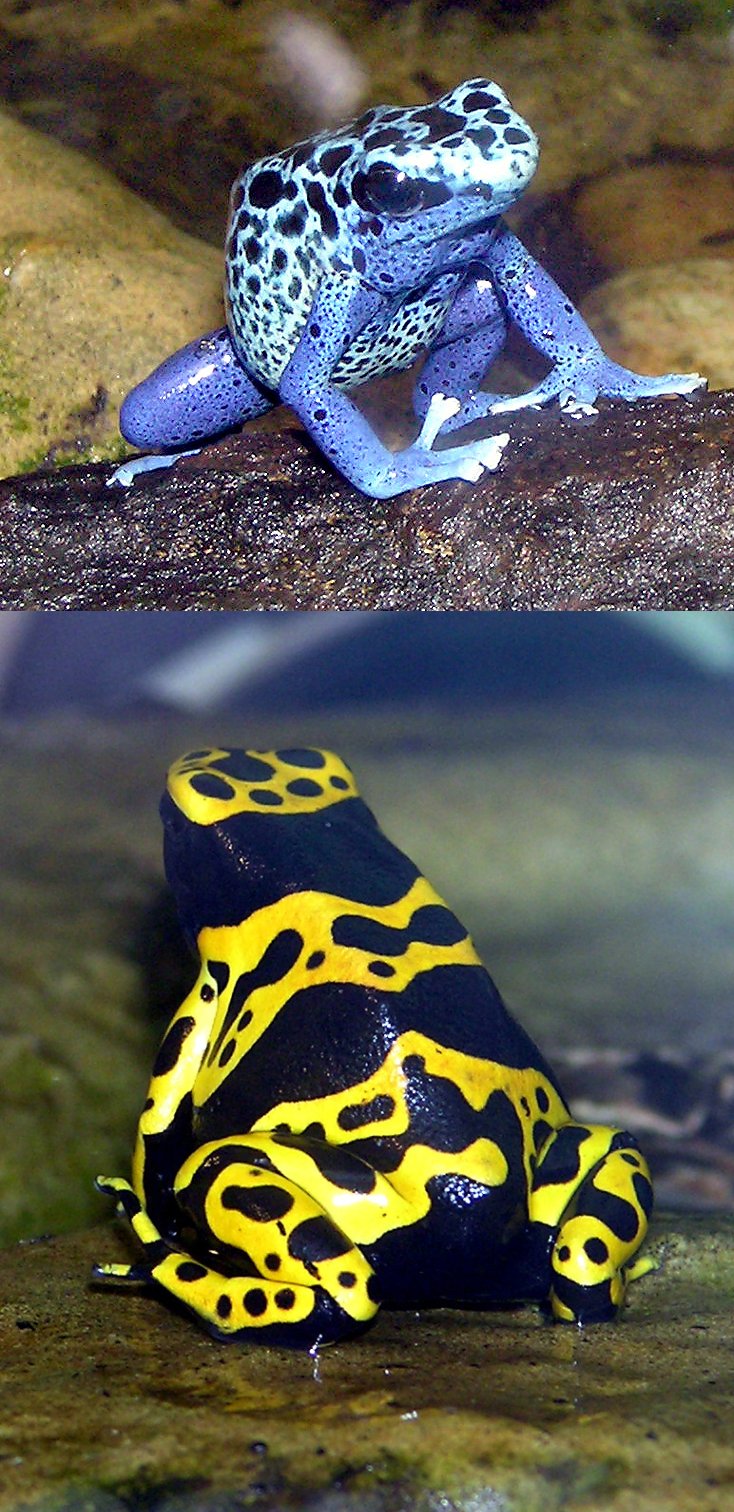
When people ask for the most poisonous animal, they are usually thinking of extreme chemical toxicity from skin secretions or glands — not a bite or sting. The poison dart frog group, especially the golden poison frog (Phyllobates terribilis), sits at the center of that conversation.
Golden poison frog
The golden poison frog is widely recognized as one of the most poisonous animals known, and is often cited as the most poisonous animal because of the extreme toxicity of its skin alkaloids. Wild frogs from Colombia’s Pacific rainforests advertise their chemical defenses with bright warning colors (aposematism).
Toxicity is tied to diet: alkaloid toxins can be acquired from prey such as certain ants and other arthropods. Captive-born frogs on different diets may be far less toxic than wild individuals — an important reason absolute rankings are tricky.
View Golden Poison Frog profileWhat is the difference between poisonous and venomous animals?
What does poisonous mean?
A poisonous animal’s toxin is encountered passively — by eating the animal, touching toxin-bearing skin or glands, or otherwise absorbing the chemical without an active injection apparatus.
What does venomous mean?
A venomous animal actively delivers toxin through a specialized system: fangs, stingers, spines, nematocysts, or similar tools.
Can an animal be both?
Most species fall cleanly into one category, but toxin strategies can overlap in unusual cases. For everyday identification, treating poisonous and venomous as different words still prevents the biggest misconceptions.
Why do people confuse the two?
Everyday speech collapses both into “poisonous.” Field guides and museums keep them separate so readers know whether risk comes from contact/ingestion or from a bite/sting.
What is the most venomous animal in the world?
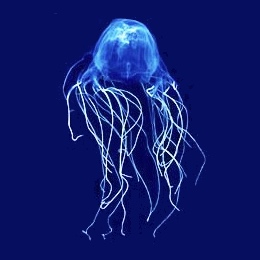
“Most venomous” is a different question from “most poisonous.” Among highly dangerous venomous animals, the box jellyfish — especially Chironex fleckeri — is a major candidate featured by sources such as the Australian Museum.
Box jellyfish
- Scientific name: Chironex fleckeri
- Habitat: tropical coastal waters and nearshore shallows
- Distribution: northern Australia and nearby tropical seas
- Appearance: cube-shaped, often nearly transparent bell with long tentacles
- Venom delivery: nematocyst stinging cells on tentacles
- Why encounters matter: invisibility in water plus potent venom make tropical swimming risk periods serious — always follow local beach warnings
What is the most poisonous or venomous animal on land?
Terminology matters on land too. The golden poison frog is a leading poisonous candidate. Highly venomous land animals include snakes and spiders with active injection systems.
Inland taipan
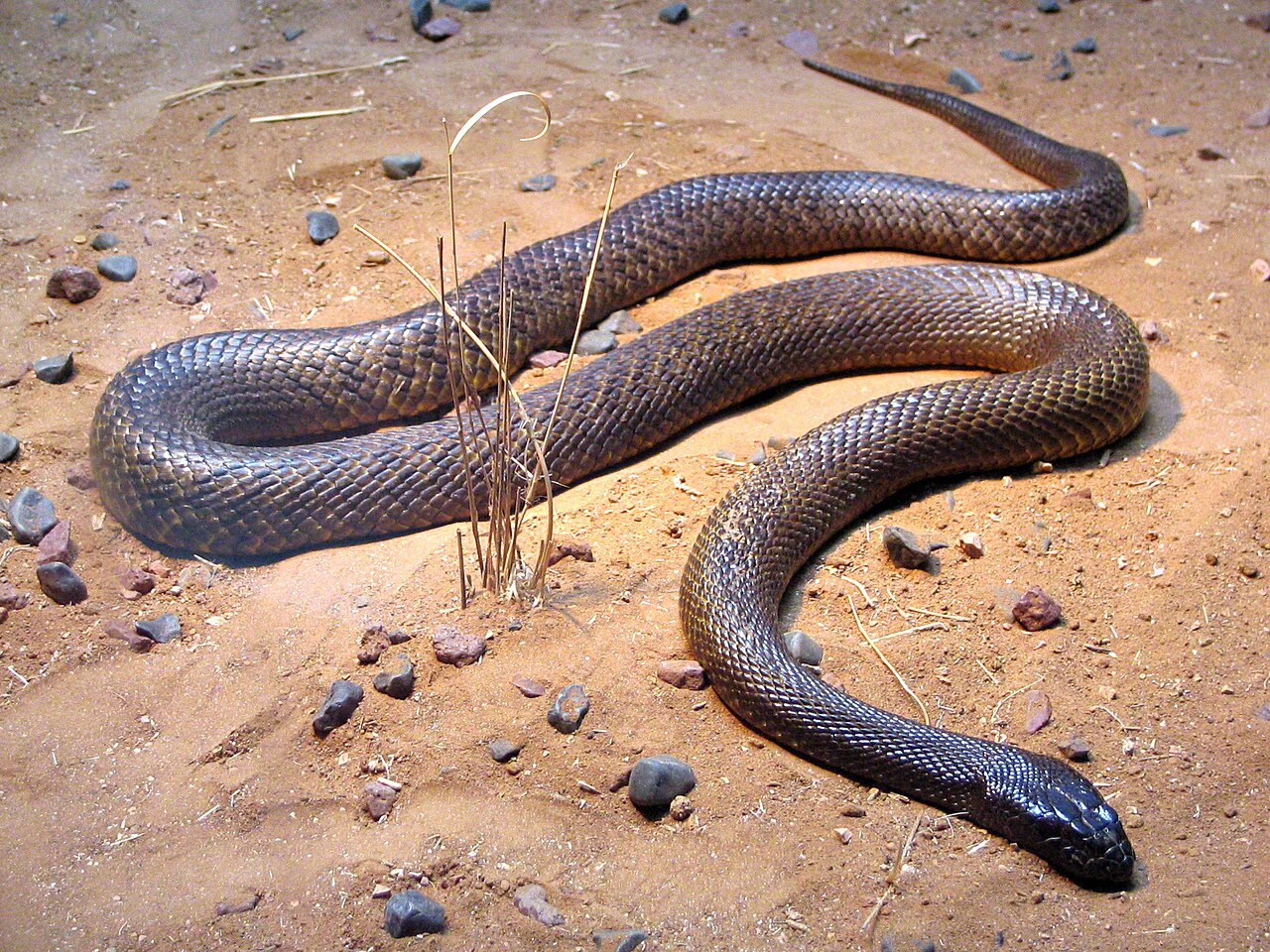
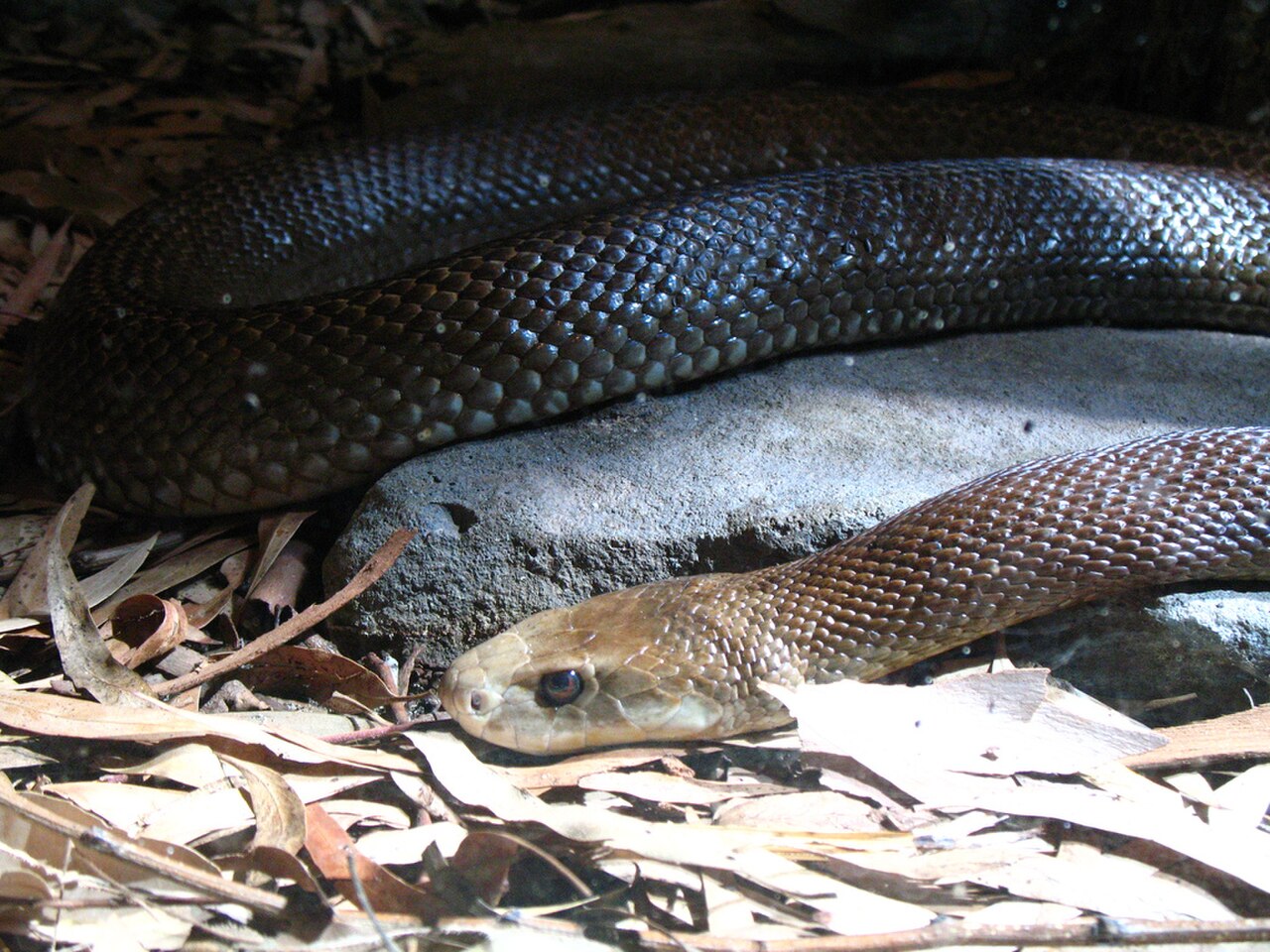
The inland taipan is often cited as the world’s most venomous snake based on laboratory LD50 testing. It lives in remote Australian arid country and is relatively shy — so extreme potency does not automatically equal everyday danger to people.
Golden poison frog
Remains a poisonous (not venomous) standout: skin alkaloids, not fangs.
Funnel-web spiders
Eastern Australian funnel-web spiders are another major terrestrial venomous group in safety education — medically significant, and a reminder that “on land” includes arthropods as well as snakes and frogs.
Other highly toxic terrestrial animals
Other snakes, poisonous frogs, spiders, scorpions, and some insects also appear in toxic wildlife discussions, depending on region and metric.
15 most venomous animals on Earth
This is a comparison list for education — not an absolute scientific ranking. Different measurements (venom potency, clinical significance, documented danger) produce different orders. Treat the numbers as a reading guide, not a podium.
15 Most Venomous Animals in the World
Dedicated species-by-species comparison with a comparison table, marine and land clusters, and FAQs — separate from this poisonous-animal pillar.
Box Jellyfish
VenomousChironex fleckeri
- Habitat
- Tropical coastal waters
- Where found
- Northern Australia and nearby tropical seas
- Toxin delivery
- Nematocyst stings from tentacles
- Main toxin effects
- Powerful venom affecting multiple body systems
- Danger to humans
- High when people swim in risk waters without warnings
- Interesting fact
- Often cited when people ask if the box jellyfish is the most venomous animal.
Inland Taipan
VenomousOxyuranus microlepidotus
- Habitat
- Arid inland plains
- Where found
- Remote inland Australia
- Toxin delivery
- Fang bite
- Main toxin effects
- Extremely potent venom in LD50 assays
- Danger to humans
- Potency is extreme; encounter rate is low due to remote range and shy behavior
- Interesting fact
- Often called the most venomous snake — not necessarily the snake people meet most often.
Coastal Taipan
VenomousOxyuranus scutellatus
- Habitat
- Coastal forests and farmland edges
- Where found
- Coastal Australia and New Guinea region
- Toxin delivery
- Fang bite
- Main toxin effects
- Highly toxic elapid venom
- Danger to humans
- Significant clinical importance in its range
- Interesting fact
- Closely related to the inland taipan but lives in wetter coastal habitats.
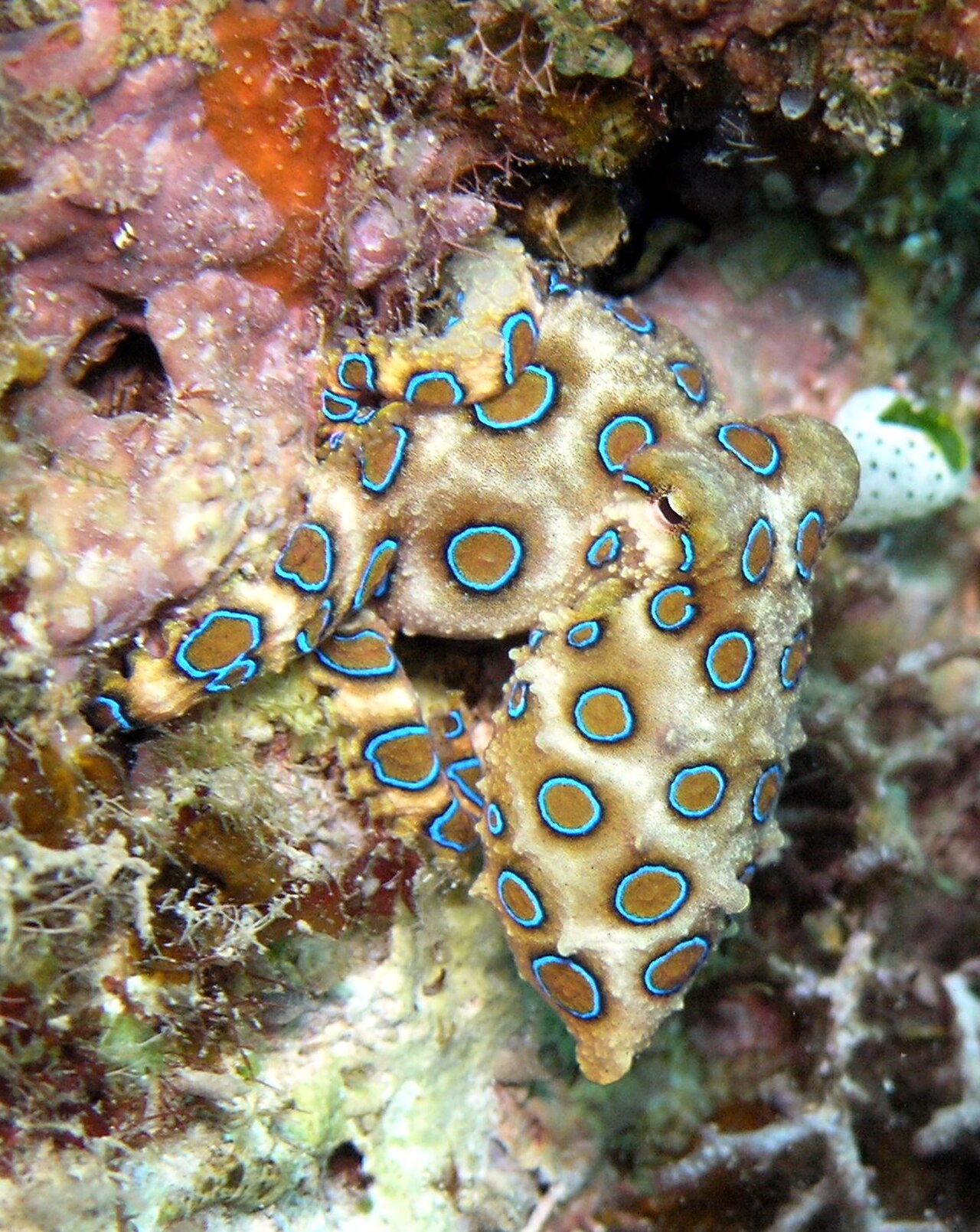
Blue-Ringed Octopus
VenomousHapalochlaena spp.
- Habitat
- Tide pools and shallow reefs
- Where found
- Indo-Pacific coasts
- Toxin delivery
- Bite
- Main toxin effects
- Neurotoxic venom including tetrodotoxin
- Danger to humans
- Small but medically serious if handled
- Interesting fact
- Bright blue rings appear as a warning display.
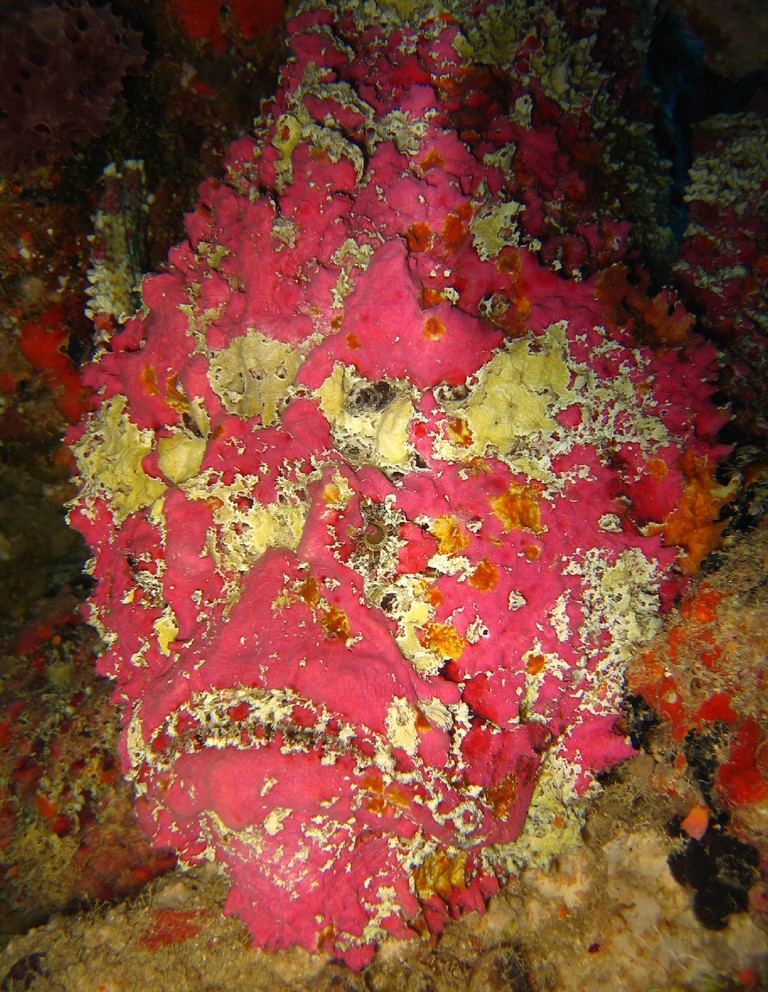
Reef Stonefish
VenomousSynanceia verrucosa
- Habitat
- Coral reefs and rocky shallows
- Where found
- Indo-Pacific
- Toxin delivery
- Dorsal spines
- Main toxin effects
- Extremely potent fish venom
- Danger to humans
- Easy to step on because of rock-like camouflage
- Interesting fact
- Widely identified as the most venomous fish.
Funnel-Web Spiders
VenomousAtracidae (e.g. Atrax)
- Habitat
- Burrows in moist soils and gardens
- Where found
- Eastern Australia
- Toxin delivery
- Fang bite
- Main toxin effects
- Neurotoxic venom of major medical interest
- Danger to humans
- Notable in urban and suburban eastern Australia
- Interesting fact
- A classic terrestrial venomous group in Australian safety education.
Deathstalker Scorpion
VenomousLeiurus quinquestriatus
- Habitat
- Deserts and arid scrub
- Where found
- North Africa and the Middle East
- Toxin delivery
- Stinger
- Main toxin effects
- Potent neurotoxic venom
- Danger to humans
- Highly studied medically; danger depends on species and victim
- Interesting fact
- Often appears on “most venomous scorpion” educational lists.
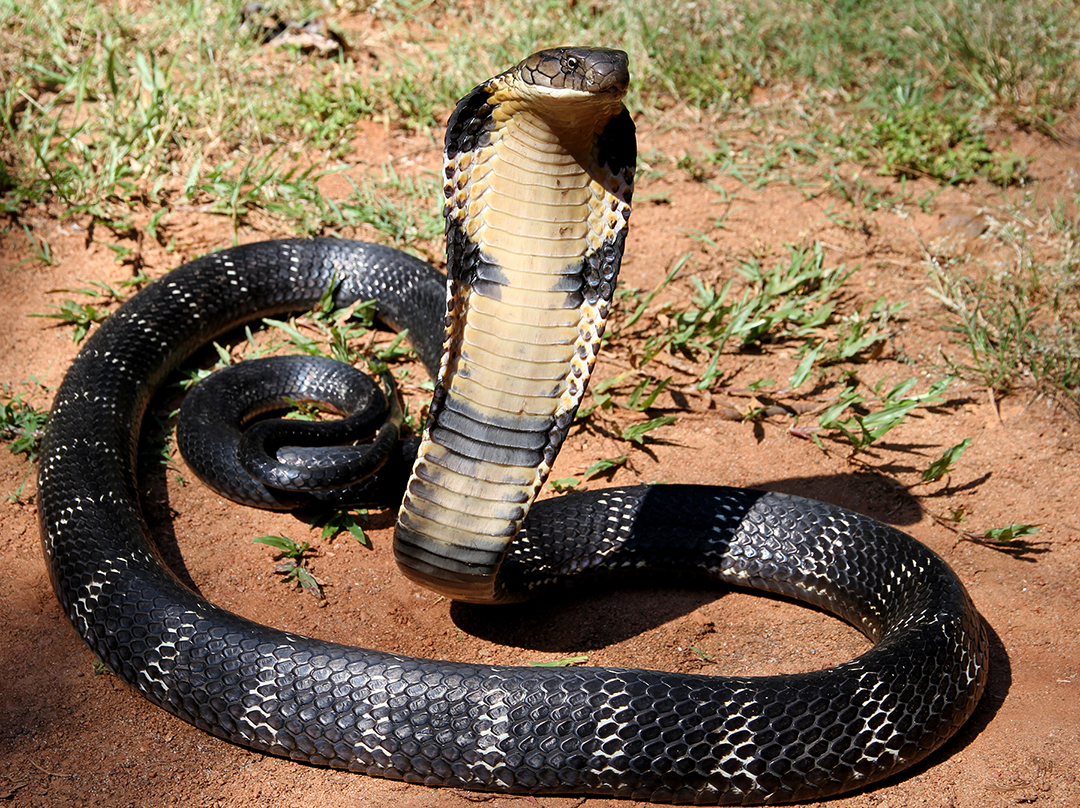
King Cobra
VenomousOphiophagus hannah
- Habitat
- Tropical forests and edges
- Where found
- South and Southeast Asia
- Toxin delivery
- Fang bite
- Main toxin effects
- Large venom yield with neurotoxic components
- Danger to humans
- Large size and venom volume make encounters serious
- Interesting fact
- The longest venomous snake — famous for raising a hooded threat display.
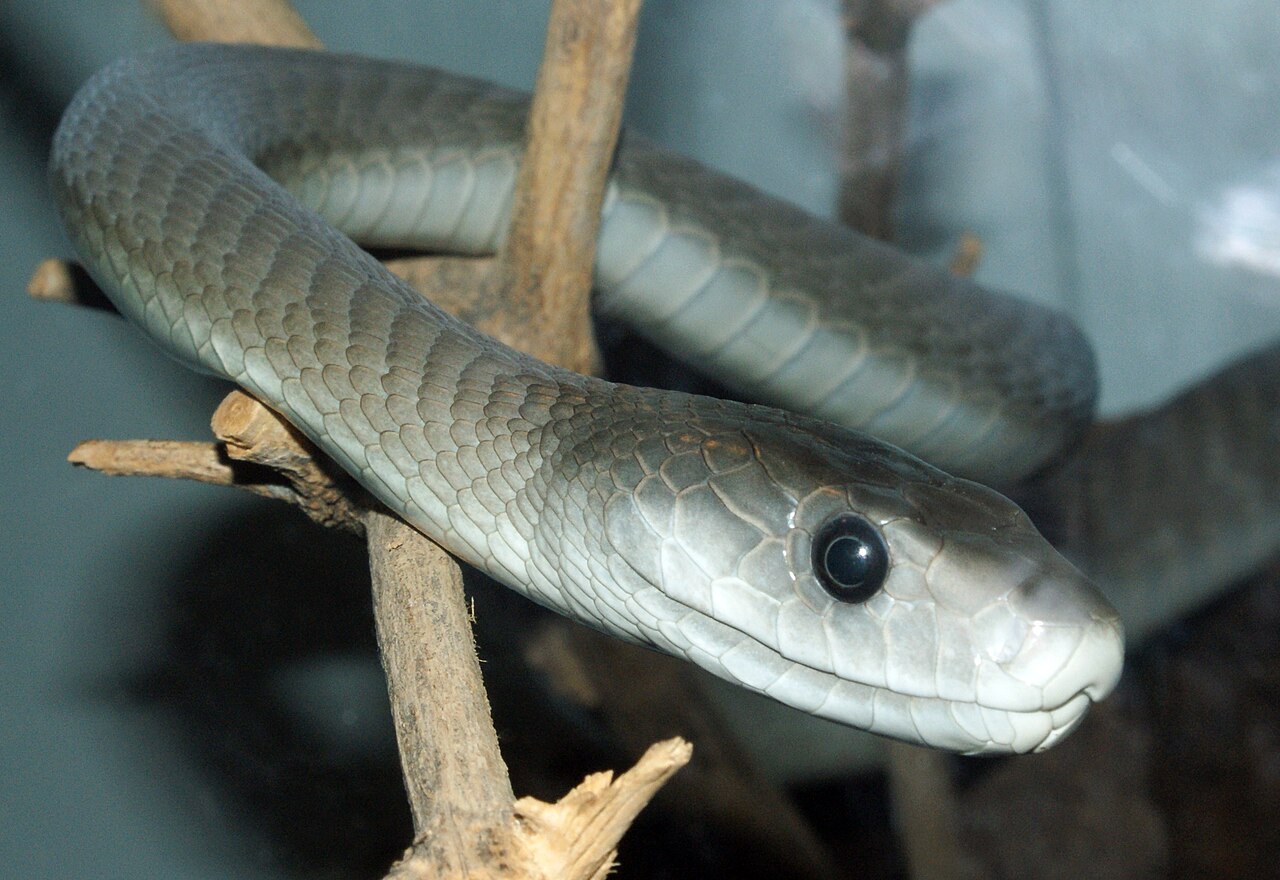
Black Mamba
VenomousDendroaspis polylepis
- Habitat
- Savanna and woodland
- Where found
- Sub-Saharan Africa
- Toxin delivery
- Fang bite
- Main toxin effects
- Fast-acting neurotoxic venom
- Danger to humans
- Speed and potency contribute to its reputation
- Interesting fact
- Named for the dark mouth lining, not a jet-black body.
Sea Snakes
VenomousHydrophiinae
- Habitat
- Tropical seas and reefs
- Where found
- Indo-Pacific oceans
- Toxin delivery
- Fang bite
- Main toxin effects
- Highly toxic marine elapid venoms
- Danger to humans
- Generally shy; risk rises with handling of caught fish or nets
- Interesting fact
- Many species have potent venom but low aggression toward divers.
Cone Snails
VenomousConus spp.
- Habitat
- Tropical reefs and sand
- Where found
- Indo-Pacific
- Toxin delivery
- Harpoon-like radular tooth
- Main toxin effects
- Complex peptide toxins (conotoxins)
- Danger to humans
- Some species are medically serious if handled
- Interesting fact
- Beautiful shells hide an active venom delivery system.
Irukandji Jellyfish
VenomousCarukia barnesi and relatives
- Habitat
- Tropical open and coastal waters
- Where found
- Northern Australia and tropical seas
- Toxin delivery
- Nematocyst stings
- Main toxin effects
- Intense systemic effects after tiny stings
- Danger to humans
- Hard to see; associated with tropical swimming risks
- Interesting fact
- Tiny size does not mean trivial venom.
Brazilian Wandering Spider
VenomousPhoneutria spp.
- Habitat
- Forests, plantations, and near homes
- Where found
- South America
- Toxin delivery
- Fang bite
- Main toxin effects
- Neurotoxic venom of medical importance
- Danger to humans
- May seek shelter in shoes, woodpiles, or bananas
- Interesting fact
- Often listed among the most medically significant spiders.
Boomslang
VenomousDispholidus typus
- Habitat
- Trees and bushveld
- Where found
- Sub-Saharan Africa
- Toxin delivery
- Rear-fang bite
- Main toxin effects
- Potent hemotoxic venom
- Danger to humans
- Less likely to bite than many front-fanged snakes, but venom is serious
- Interesting fact
- A reminder that “rear-fanged” does not mean harmless.
Gila Monster
VenomousHeloderma suspectum
- Habitat
- Deserts and scrub
- Where found
- Southwestern United States and northwestern Mexico
- Toxin delivery
- Venomous bite
- Main toxin effects
- Painful venomous lizard bite
- Danger to humans
- Rare encounters; still a classic venomous lizard
- Interesting fact
- One of the few venomous lizards commonly taught in field guides.
Top 5 most poisonous animals
Important: this is a poisonous-animal list, not a list of the world’s most venomous animals.
- 1.
Widely cited for extreme skin alkaloid toxicity in wild individuals.
- 2.
Other poison dart frogs
Several dendrobatid species carry potent skin toxins used in aposematic defense.
- 3.
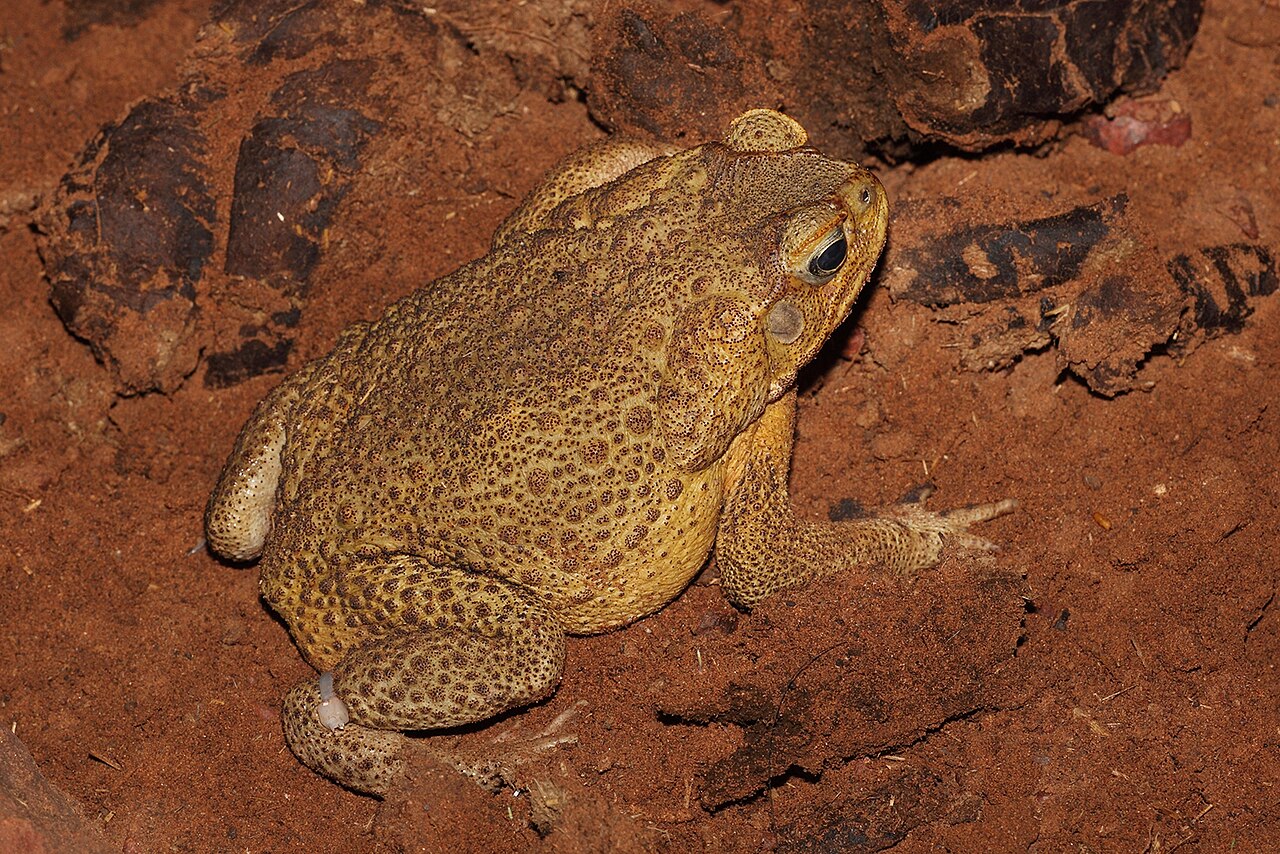
Large parotoid glands secrete bufotoxins — poisonous if mouthed or eaten.
- 4.
Certain newts
Some newts carry tetrodotoxin in skin and tissues.
- 5.
Other toxic amphibians
Various frogs and toads use chemical defenses rather than venom injection.
Which poisonous and venomous animals are most dangerous to humans?
Assessing danger requires more than toxin potency alone. Encounter likelihood, consequences, treatment availability in a region, and documented incidents all matter — a point emphasized in Australian Museum educational writing on rating danger.
Extreme toxin potency
Some animals produce extraordinarily potent chemicals (golden poison frog alkaloids, taipan venom, box jellyfish venom). Potency answers “how strong is the toxin?” — not “how often do people meet it?”
Likelihood of human encounter
A shy inland snake in remote desert country differs from a camouflaged reef fish on a popular snorkeling flat, even if laboratory numbers favor the snake.
Ability to deliver the toxin
Delivery routes include bite, sting, spine, ingestion, and skin contact. Venomous animals specialize in active delivery; poisonous animals rely on contact or ingestion.
Treatment context
Whether specialized medical care or antivenom exists in a region can change outcomes. AnimalIDFinder discusses this only as context for understanding risk — not as treatment or first-aid instructions.
What is the second most poisonous animal?
There is no universally accepted second-place animal because “poisonous” can be measured in different ways: toxicity of the chemical, amount produced, amount delivered, route of exposure, and effects on humans. Inventing a definitive #2 would overclaim the science.
Is the box jellyfish the most venomous animal in the world?
Box jellyfish (cubozoans) include Chironex fleckeri, a highly dangerous venomous marine animal of tropical Australian waters. Tentacles deliver venom through nematocysts. Whether any single species is “the most venomous on Earth” depends on the comparison method — marine vs terrestrial animals are hard to rank on one scale.
“Most venomous” also differs from “most dangerous.” Encounter frequency, habitat overlap with swimmers, and medical infrastructure all change the human-risk story.
What is the most venomous fish?
Reef stonefish
The reef stonefish (Synanceia verrucosa) is widely identified as the world’s most venomous fish. It relies on rock-and-coral camouflage, sits motionless on the seabed, and can inject venom through dorsal spines if stepped on — which is why barefoot reef walking is strongly discouraged in stonefish habitat.
View Reef Stonefish profileWhat is the most venomous snake?
Inland taipan
The inland taipan (Oxyuranus microlepidotus) of inland Australia is often considered the world’s most venomous snake based on venom toxicity testing. Its diet centers on mammals such as rodents; its arid habitat and shy behavior reduce ordinary human contact.
Most venomous ≠ most dangerous. Snakes that live closer to people or that deliver bites more often in human settings can pose greater overall risk even with lower laboratory toxicity scores.
Is the most poisonous animal also the most dangerous?
Usually not automatically. Toxicity and danger are related ideas, not interchangeable labels.
| Factor | Why it matters |
|---|---|
| Toxicity | How powerful the toxin is in laboratory or clinical terms. |
| Dose | How much toxin is actually delivered in a real encounter. |
| Delivery | Bite, sting, spine, ingestion, or skin contact. |
| Exposure | How likely humans are to encounter the animal. |
| Habitat overlap | Where people and animals share space (beaches, farms, suburbs). |
| Treatment context | Whether specialized medical care or antivenom exists in the region — discussed educationally only, not as first-aid steps. |
| Recorded incidents | Documented human effects and encounter history. |
Examples of poisonous and venomous animals
Poisonous
- • Golden poison frog
- • Other poison dart frogs
- • Cane toad
- • Certain newts
Venomous
- • Box jellyfish
- • Inland taipan
- • Stonefish
- • Cone snail
- • Blue-ringed octopus
- • Funnel-web spider
- • Scorpion
How do animal poisons and venoms affect humans?
Different toxins target different physiological systems. The labels below are educational categories — not a diagnosis guide, and not treatment advice.
Neurotoxins
Affect nerve signaling. Many elapid snake venoms and some marine toxins are discussed in this group.
Cardiotoxins
Affect heart muscle or cardiovascular function.
Hemotoxins
Disrupt blood clotting or damage blood cells and vessels.
Cytotoxins
Damage cells and tissues locally or systemically.
Muscle and nerve effects
Some toxins interfere with the junction between nerves and muscles, contributing to weakness or paralysis narratives in clinical literature. Always leave interpretation and care to medical professionals.
Where do the world’s most poisonous and venomous animals live?
Australia
A global hotspot for medically important venomous wildlife across land and sea — from remote inland snakes to tropical marine stingers.
- • Box jellyfish
- • Inland taipan
- • Coastal taipan
- • Reef stonefish
- • Funnel-web spiders
South America
Rainforest chemical ecology produces some of the world’s most famous poisonous amphibians, alongside medically significant spiders.
- • Golden poison frog
- • Other poison dart frogs
- • Brazilian wandering spider
Indo-Pacific
Reef and coastal habitats concentrate camouflaged venomous fish, cephalopods, and marine snakes.
- • Reef stonefish
- • Blue-ringed octopus
- • Cone snails
- • Sea snakes
Tropical oceans
Warm seas host cubozoan jellyfish that feature heavily in “most venomous marine animal” discussions.
- • Box jellyfish
- • Irukandji jellyfish
Frequently asked questions
What is the most poisonous animal in the world?+
There is no single universal winner. “Poisonous” and “venomous” mean different things, and rankings change depending on whether you measure toxicity, dose, delivery, or danger to humans. The golden poison frog is widely cited as one of the most poisonous animals because of extreme skin alkaloid toxicity in wild individuals.
What is the most venomous animal in the world?+
Sources disagree because venom potency, clinical effects, and encounter risk are different measures. The box jellyfish (Chironex fleckeri) is a major candidate among highly dangerous venomous marine animals, while the inland taipan is often cited as the most venomous snake.
What is the most poisonous animal on land?+
On land, the golden poison frog is widely recognized among the most poisonous animals. Highly venomous land animals such as the inland taipan and funnel-web spiders are different: they inject venom rather than relying on passive toxins.
What is the most poisonous animal in the ocean?+
People often mean “most venomous” when asking about the ocean. Box jellyfish and related cubozoans, blue-ringed octopuses, cone snails, and stonefish are frequent candidates depending on the metric used.
What is the most poisonous animal for humans?+
Danger to humans depends on toxin potency, how much toxin is delivered, how often people encounter the animal, and whether medical care is available. An extremely toxic animal that rarely meets humans can be less dangerous overall than a less toxic animal people meet often.
Is the golden poison frog the most poisonous animal?+
It is widely recognized as one of the most poisonous animals known and is often cited as the most poisonous because of the extreme toxicity of its skin alkaloids. Captive-raised frogs may be far less toxic because diet shapes alkaloid accumulation.
Is the box jellyfish the most venomous animal?+
It is one of the strongest candidates in marine “most venomous” discussions, especially Chironex fleckeri in tropical Australia. Whether it is “the” most venomous depends on how venom is measured and compared across unrelated animal groups.
What is the second most poisonous animal?+
There is no universally accepted second-place animal. Different studies emphasize chemical potency, amount produced, route of exposure, or effects on humans — so “#2” lists are not standardized science.
What is the most venomous snake?+
The inland taipan is often cited as the world’s most venomous snake based on laboratory toxicity testing. Most venomous is not the same as most dangerous: remote habitat and shy behavior reduce everyday human encounters.
What is the most venomous fish?+
The reef stonefish (Synanceia verrucosa) is widely identified as the most venomous fish. Its rock-like camouflage makes accidental contact a real risk on tropical reefs.
What is the most poisonous frog?+
The golden poison frog (Phyllobates terribilis) is the frog most often cited for extreme poison potency among amphibians.
What is the difference between poison and venom?+
Poison is typically encountered passively (eaten, touched, or absorbed). Venom is actively delivered through a bite, sting, spine, or similar apparatus. Smithsonian and museum educators emphasize this delivery distinction.
Can a poisonous animal kill a human?+
Some poisonous animals produce toxins potent enough to be lethal if enough toxin is absorbed or ingested. Real-world outcomes still depend on dose, exposure route, and medical context. This page is educational only and is not medical advice.
Are poisonous animals always dangerous?+
No. Toxicity and danger are related but not identical. Habitat isolation, behavior, dose, and human exposure all matter. Many toxic animals are rarely encountered by people.
Are venomous animals poisonous?+
Not by the usual definitions. Venomous animals inject venom; poisonous animals are harmful when their toxins are eaten or absorbed. A few species can blur the categories, but the terms are not interchangeable.
Explore these toxic and venomous animals
Open encyclopedia profiles for species in the AnimalIDFinder catalog — then try photo identification tools if you have a picture from the field.
Identify by picture
Have a photo from the field? Use AnimalIDFinder’s AI identifiers — then compare habitat, range, and safety notes in the encyclopedia.
Sources
- Smithsonian Magazine — What’s the Difference Between Poisonous and Venomous Animals?
Clear public explanation of poisonous vs venomous delivery, including poison dart frog toxin ecology.
- Australian Museum — Box Jellyfish
Species overview for Chironex fleckeri and tropical Australian context.
- Australian Museum — Inland Taipan
Documents inland taipan venom potency reputation and remote, shy ecology.
- Australian Museum — Reef Stonefish
Identifies the reef stonefish as the world’s most venomous fish.
- Australian Museum — How do you rate danger?
Explains why danger is more than toxin potency alone (encounter, effect, treatment context).