Why Do Cats Gag at the Sound of a Comb?
Viral videos show cats retching when someone scratches the teeth of a comb. Here is what is actually known about the reaction, what is not, and why you should not test it on your own cat.
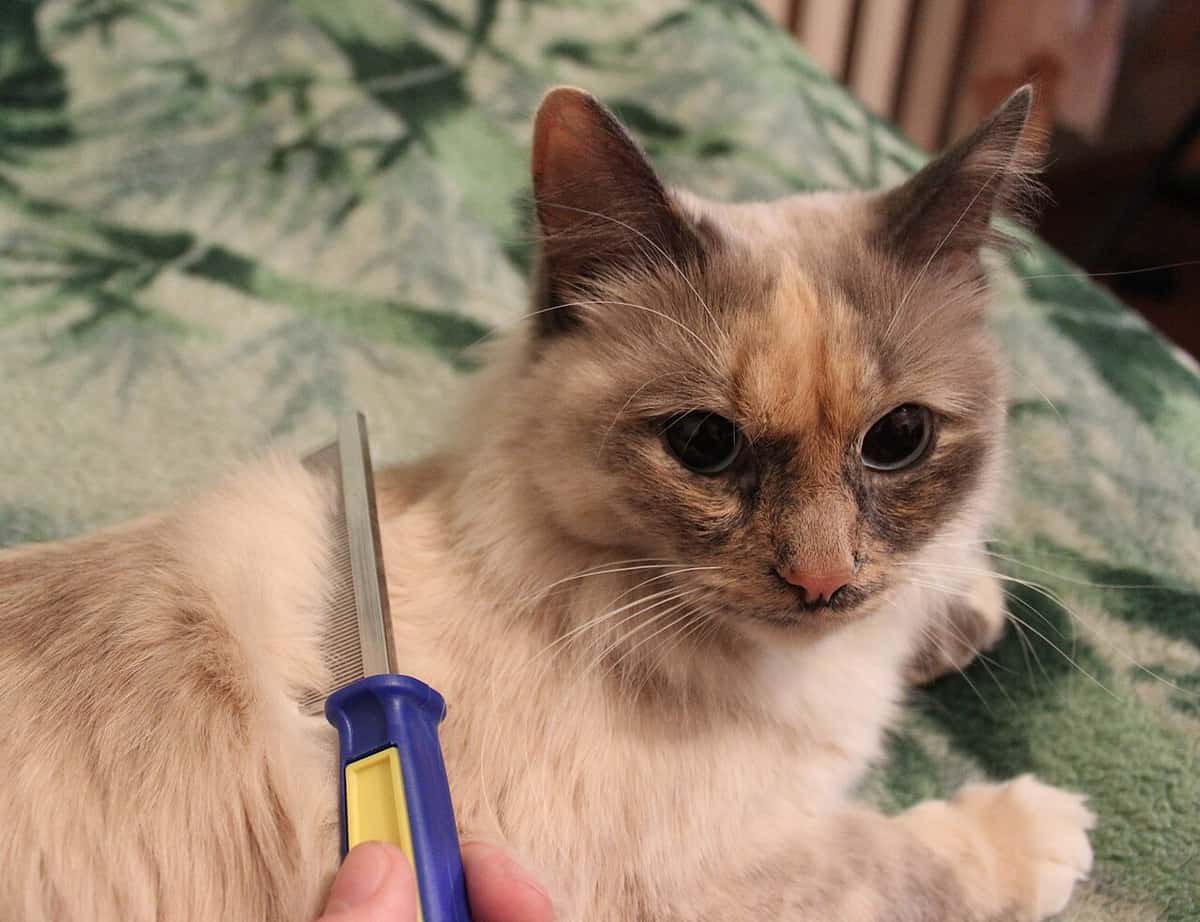
Quick answer
Some cats appear to gag, retch, or make an unusual facial reaction when they hear a comb being scratched or dragged across a surface. The exact reason isn't fully established, but the reaction may be related to the sound's frequency, unpleasantness, or an individual cat's sensitivity to certain sounds. A gagging response can also have other causes, so repeated or genuine gagging shouldn't automatically be attributed to the comb.
Do Cats Really Gag When They Hear a Comb?
Some cats do show a gagging- or retching-like reaction when a comb is scratched near them — enough that it became a well-known viral video trend. But the reaction is far from universal, and it varies a lot from one cat to the next.
It also helps to be precise about what you are seeing. What looks like gagging may be a facial, oral, or behavioral response to an unpleasant sound rather than true gagging from the throat or stomach. And a short reaction to a specific sound is very different from a cat that gags repeatedly for no obvious reason.
What Does the Reaction Look Like?
Owners describe a range of behaviors, and a cat may show only one or two of them:
- Opening the mouth
- Lip movement or lip licking
- Tongue movement
- A retching-like motion of the throat or body
- Head shaking
- Facial grimacing
- Drooling
- Moving away from the sound
"Looks like gagging" vs real gagging
A cat that briefly opens its mouth or grimaces at a sound and then carries on as normal is not the same as a cat that is physically gagging, bringing up fluid or food, or struggling to breathe. If you are not sure which you are seeing, a short video recorded when it happens naturally is the most useful thing to show your vet.
Why Does the Sound of a Comb Make Some Cats Gag?
Nobody has proven exactly why. The explanations below are the most reasonable ones based on what we know about feline hearing and behavior — they should be read as likely contributing factors, not a confirmed cause.
Certain Sounds May Be Unpleasant to Cats
Cats have exceptionally sensitive hearing. In a classic laboratory study, cats heard sounds from about 48 Hz up to roughly 85 kHz — far above the human upper limit of around 20 kHz. That helps them hunt small prey, but it also means they may perceive parts of a sound that people barely notice.
The scraping, rapid-clicking sound of a comb may contain frequencies or sound qualities that some cats find particularly unpleasant. However, there is no good evidence that one specific frequency reliably triggers gagging, so be cautious with any source that states an exact number.
It May Be a Sensory or Behavioral Reaction
The simplest way to picture it is: sound → sensory reaction → facial or oral response. People sometimes react to nails on a chalkboard with a wince, a shiver, or a grimace; a cat's reaction to a comb may be somewhat similar in spirit.
It is tempting to say "the comb activates the cat's gag reflex," but the exact mechanism behind the reaction isn't well established. It may be a startle-like or aversive response that happens to involve the mouth and throat.
Cats Have Individual Sound Sensitivities
Just as some people hate the sound of styrofoam, individual cats have their own sound dislikes. Some may react strongly to:
- Combs being scratched
- Tape being pulled off a roll
- Plastic or crinkling sounds
- Scratching or scraping noises
- High-pitched sounds
- Other unusual household noises
Why Do Cats Gag When They Hear a Comb Being Scratched?
Most cats do not react to a comb simply existing, or even to being gently groomed with one. The reaction in viral videos almost always follows a specific action: running a fingernail or finger along the comb's teeth, or dragging the comb across a surface.
That produces a rapid series of sharp, high-pitched clicks or a scraping buzz — a very different sound from normal combing. That particular scraping quality may be more likely to trigger an aversive response. The phenomenon is real enough to be widely observed, but the neurological explanation has not been studied, so it is best described as an unpleasant-sound reaction rather than a proven reflex.
Do All Cats Gag at the Sound of a Comb?
No. Many cats show no reaction at all. Others may:
- Look toward the sound or come over to investigate it
- Flatten their ears or flick their tail and leave
- Show a brief grimace without anything resembling a gag
- Individual hearing sensitivity, age, hearing loss, and previous experiences can all influence how a particular cat responds.
What Other Sounds Can Make Cats React This Way?
Combs are the famous example, but they are not the only sound that can produce a strong reaction.
Tape Being Pulled
Many owners ask why cats gag at the sound of tape. Pulling packing or adhesive tape off a roll makes a sharp, rasping, ripping sound that some cats clearly dislike. As with combs, the reaction varies and has not been formally studied.
Scraping or Scratching Sounds
Similar sounds that some cats react to include:
- Comb scraping
- Fingernails scratching a surface
- Certain plastic sounds
- Rough surfaces being rubbed together
Crinkling Sounds
Plastic bags, food wrappers, and foil can produce strong reactions — sometimes excitement, sometimes avoidance, and not necessarily anything like gagging. Notably, crinkling foil and paper or plastic bags were among the most common triggers reported in the feline audiogenic reflex seizure study, which is why a sudden strong reaction to these sounds in an older cat is worth mentioning to a vet.
Other Unusual Sounds
Cats have individual sound preferences and aversions. A sound that one cat ignores, another may find irresistible or intolerable. Watching your own cat's body language — ears, tail, posture, and whether it stays or leaves — tells you more than any general list.
Why Do Cats Gag at Random Things?
This question needs two very different answers, depending on the pattern you see:
- If it happens only in response to a particular sound (such as a comb or tape) and your cat returns to normal straight away, it could be a behavioral or sensory reaction.
- If your cat is genuinely gagging repeatedly — with or without an obvious trigger — consider physical causes rather than assuming it is a sound reaction. Hairballs, nausea, something stuck in the mouth or throat, and airway problems can all cause gagging.
- Coughing is easy to mistake for gagging. VCA notes that cats with asthma often crouch with the neck extended and gag after coughing, and owners frequently think the cat is vomiting or trying to bring up a hairball when it is actually coughing.
Can Smells Make Cats Gag?
Cats have a highly developed sense of smell, and strong or unpleasant odors can cause avoidance, head shaking, or unusual facial reactions. That is a different phenomenon from the comb-sound reaction, though.
One of the most common "weird face" moments is the flehmen response: a cat sniffs something interesting, opens its mouth, and curls its upper lip for a few seconds. It can look like grimacing, panting, or disgust, but it is a normal way of drawing scent toward the vomeronasal organ in the roof of the mouth.
Strong scents can matter medically too. VCA lists perfume, air fresheners, scented cleaning products, and essential oil diffusers among the triggers that can worsen airway signs in cats with asthma.
Why does my cat gag when smelling food?
An occasional reaction to a strong new food smell is not unusual. But if your cat repeatedly gags, drools, licks its lips, or walks away from food after smelling it — especially if it is eating less — that can be a sign of nausea, mouth or dental pain, or another health problem. Persistent gagging after eating or smelling food should not be treated as a normal quirk; have your cat checked by a vet.
Is a Cat Gagging at a Comb a Seizure?
A Gagging-Like Reaction Isn't Automatically a Seizure
A brief reaction to a specific sound does not, by itself, mean a seizure is happening. Seizures in cats can look very different from one cat to another — PetMD lists signs such as muscle jerks, falling over, leg paddling, drooling, and jaw chomping — and some overlap with other harmless or unrelated behaviors.
Sound-triggered seizures (FARS) do exist, mostly in older cats, and they most often show up as sudden, shock-like muscle jerks that can progress to a full seizure. The research did not examine comb gagging, so it would be wrong to say the viral comb reaction is a seizure — and equally wrong for an owner to rule a seizure out from an internet description. Only a veterinarian can assess this.
When the Behavior Deserves Veterinary Attention
Contact a veterinarian — urgently if the signs are severe — if you notice:
- Repeated episodes without the comb or any sound trigger
- Loss of consciousness or awareness (staring, not responding)
- Collapse
- Uncontrolled body movements, jerks, or paddling
- Repeated vomiting or retching
- Difficulty breathing or open-mouth breathing
- Excessive drooling
- Difficulty swallowing
- Sudden behavioral changes
Is It Safe to Make a Cat Gag With a Comb?
No — don't repeatedly expose a cat to an unpleasant sound just to make it gag or produce a funny reaction.
- The reaction may indicate distress or sensory discomfort.
- Don't use the sound as a prank or for social media videos.
- Don't repeatedly test the reaction to "see if it happens again."
- Don't put anything in the cat's mouth to trigger gagging.
- If the cat wants to move away, let it.
- Be especially careful with senior cats, since sharp sounds can trigger seizures in some susceptible older cats.
What Should You Do If Your Cat Gags at the Sound?
If it happens by accident, follow a simple process:
- 1
Stop the sound
Don't continue or repeat it to test the reaction.
- 2
Observe your cat
Check whether the reaction stops as soon as the sound stops and your cat goes back to normal.
- 3
Look for other symptoms
Especially repeated gagging, coughing, vomiting, drooling, breathing problems, or any jerking or unresponsiveness.
- 4
Record a video if it happens again naturally
A short clip can help a veterinarian understand exactly what you are seeing. Don't trigger it on purpose to film it.
- 5
Contact a veterinarian if it is persistent or unexplained
Particularly if there are other symptoms, if episodes happen without the sound, or if your cat is a senior.
Comb Sound vs. Actual Cat Gagging
Use this table as a rough guide to what a reaction may mean. It cannot diagnose anything — when in doubt, ask your vet.
Comb sound reaction vs actual cat gagging
| Situation | More likely interpretation |
|---|---|
| Brief reaction only when the comb sound occurs | A sound or sensory response may be involved |
| Cat immediately returns to normal | Less concerning — but avoid deliberately triggering it |
| Repeated gagging without any sound | Could have another cause; talk to your vet |
| Gagging plus vomiting | Possible physical problem |
| Gagging plus coughing or breathing difficulty | Veterinary attention warranted |
| Gagging plus neurological changes (jerks, collapse, unresponsiveness) | Prompt veterinary evaluation |
Frequently asked questions
Why do cats gag at the sound of a comb?+
Some cats appear to gag or retch when a comb's teeth are scratched. The exact reason isn't established, but the sharp, high-pitched scraping sound may be unpleasant to cats' very sensitive hearing, and individual cats vary in how strongly they react.
Why does a comb make my cat gag?+
Your cat may find the scraping or clicking sound of the comb aversive, producing a facial or oral reaction that looks like gagging. If your cat gags at other times too, or the gagging seems genuine and repeated, talk to your vet rather than assuming the comb is the cause.
Do cats really gag when they hear combs?+
Some do show a gagging- or retching-like reaction, but many cats show no reaction at all. What looks like gagging may be a brief grimace or mouth movement in response to an unpleasant sound.
Why do cats gag when you scratch a comb?+
Scratching a fingernail along a comb makes a rapid series of sharp, high-pitched clicks, which is very different from normal combing. That scraping sound seems to be what some cats react to, although the mechanism has not been scientifically studied.
Why do cats gag at the sound of tape?+
Tape being pulled off a roll makes a sharp ripping sound that some cats dislike, similar to a scratched comb. The reaction varies between cats and has not been formally studied.
What sounds make cats gag?+
Owners most often report scratched combs and tape. Some cats also react strongly to scraping, crinkling plastic, foil, and other sharp high-pitched sounds — though the reaction is not always gagging.
Why do cats gag at random things?+
If it only happens with a particular sound and your cat recovers immediately, it may be a sensory reaction. If your cat gags repeatedly or without a trigger, consider physical causes such as hairballs, nausea, mouth or throat problems, or coughing from airway disease, and see a vet.
Can cats gag from smells?+
Strong or unpleasant smells can cause avoidance or odd facial reactions. The flehmen response — an open-mouthed, lip-curled face when sniffing — can look like gagging but is normal. Strong scents can also worsen breathing signs in cats with asthma.
Why does my cat gag when smelling food?+
An occasional reaction to a strong smell can be normal, but repeated gagging, drooling, lip licking, or walking away from food can indicate nausea, dental pain, or another health issue. If it keeps happening or your cat eats less, contact your vet.
Is gagging at a comb a seizure?+
A brief reaction to a sound is not automatically a seizure. Sound-triggered seizures (FARS) do occur, mostly in older cats, usually as sudden muscle jerks. If your cat jerks, collapses, becomes unresponsive, or has episodes without a sound trigger, see a vet promptly.
Should I stop making the comb sound if my cat reacts?+
Yes. Stop the sound, let your cat move away, and don't repeat it to test or film the reaction. The response may reflect discomfort, and sharp sounds can trigger seizures in some susceptible cats.
Why does my cat gag at certain sounds?+
Cats hear a much wider range of frequencies than people and have individual sound sensitivities, so particular sounds may be unpleasant to your cat. Keep a note of which sounds cause it, avoid them, and ask your vet if the reactions are intense or come with other symptoms.
Final takeaway
Some cats show a gagging-like reaction to the sound of a comb, but the exact reason isn't firmly established. The sound may be unpleasant or particularly stimulating to some cats, but individual responses vary. Because genuine gagging can also have medical causes, repeated or unexplained episodes shouldn't be dismissed as a funny reaction to a sound.
Sources
Educational summary drawn from peer-reviewed research and veterinary references:
- Lowrie M, et al. (2016) Audiogenic reflex seizures in cats. Journal of Feline Medicine and Surgery 18(4):328–336 (open access)
- PetMD — Feline Audiogenic Reflex Seizures (FARS)
- Heffner RS, Heffner HE (1985) Hearing range of the domestic cat. Hearing Research 19:85–88
- VCA Animal Hospitals — Asthma and Bronchitis in Cats
- Cornell Feline Health Center — Feline Asthma: What You Need To Know
- PetMD — What Is the Flehmen Response in Cats?
Identify animal sounds & explore guides
Curious what made a noise? Try the animal sound identifier, browse the animals encyclopedia, or return to the guides hub.