Animal ID
🌲
North American Boreal & Temperate Forests
🌲Boreal & Temperate ForestNorth America
Biodiversity Index: 92/100
What Animals Live in North American Forests?

North American Boreal & Temperate Forests

The vast coniferous taiga and old-growth hardwood wilderness stretching from the Pacific Northwest across Canada and the Rockies.

Temperature Range

-35Β°C in winter to 28Β°C in summer (-31Β°F - 82Β°F)

Annual Precipitation

500 to 2,500 mm (20 - 98 in) annually

Humidity & Seasonality

Distinct four seasons with heavy winter snowpack and warm lush summers

Countries & Territories

United States, Canada

Ecological Profile

Ecosystem Structure & Biodiversity

Spanning temperate rainforests in the Pacific Northwest, Rocky Mountain alpine ranges, and the circumpolar Boreal belt, this ecosystem supports robust populations of large carnivores, migratory waterfowl, and ancient temperate conifers.

Key Wildlife Facts:
  • βœ“The Boreal forest contains 85% of Canada’s remaining pristine wilderness.
  • βœ“Beaver dams create wetland habitats that reduce flood peaks, clean water, and sequester carbon.
  • βœ“Pacific salmon transport millions of pounds of marine ocean nitrogen into old-growth forest canopies via bear and eagle foraging.
Apex Predators

Rulers of the Food Chain

⚑ Grizzly Bear⚑ Gray Wolf⚑ Cougar⚑ Bald Eagle
Threats & Conservation

Wildfires driven by climate warming, habitat fragmentation by highways and resource pipelines, and mountain pine beetle infestations.

Wildlife Inhabiting North American Boreal & Temperate Forests

Browse profiled species, adaptations, canopy layers, and conservation status
🐾
Grizzly Bear
Apex PredatorLeast Concern

Grizzly Bear

Ursus arctos horribilis

Habitat Stratum: Forest Floorβ€’Cathemeral
Key Evolutionary Adaptation: Distinct shoulder muscle hump powering forelimbs to excavate glacier lily bulbs, dig out rodents, and sprint up to 56 km/h.
🐾
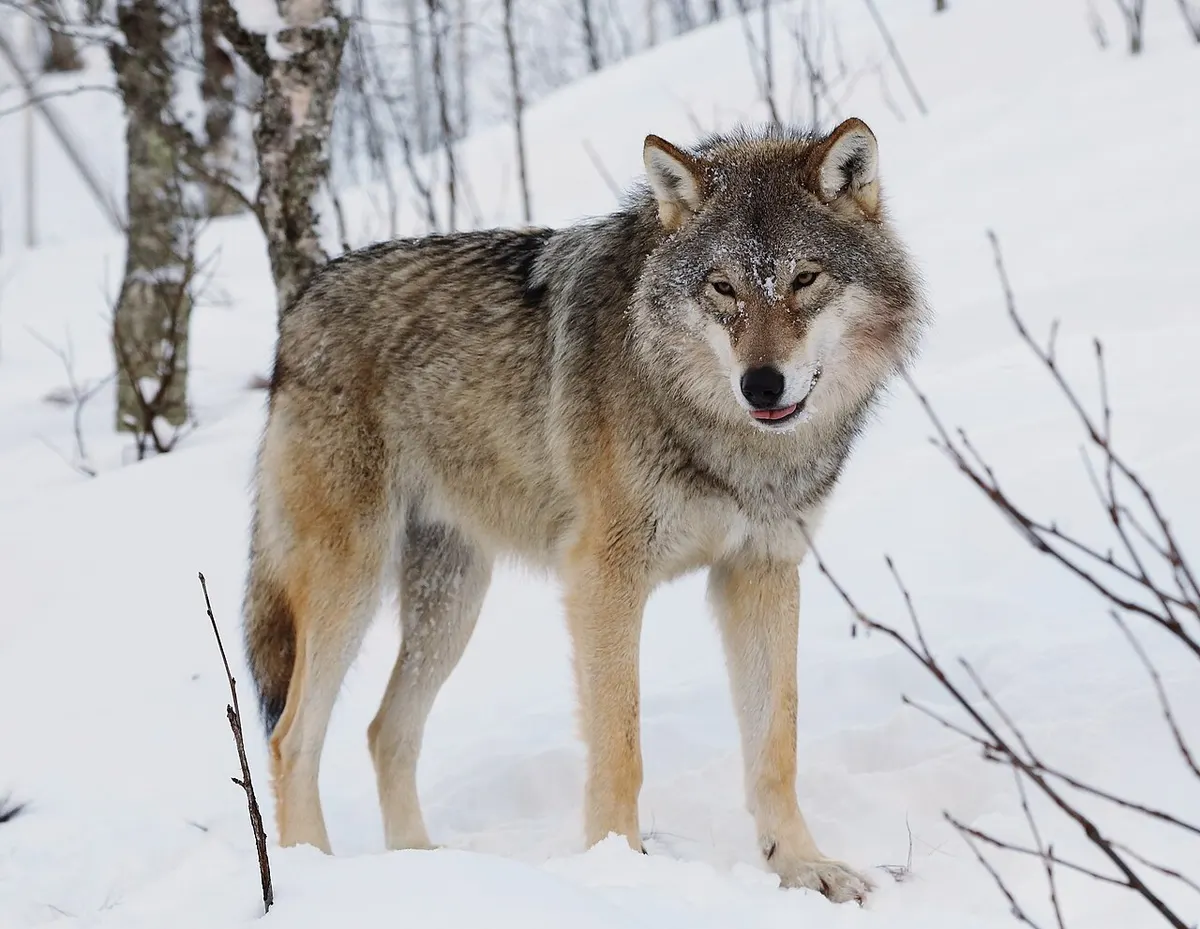
Gray Wolf
Apex PredatorLeast Concern

Gray Wolf

Canis lupus

Habitat Stratum: Forest Floorβ€’Crepuscular
Key Evolutionary Adaptation: Exceptional endurance running to exhaust elk over dozens of miles, supported by acute howling acoustic communication.
🐾
Moose
Keystone SpeciesLeast Concern

Moose

Alces alces

Habitat Stratum: Forest Floorβ€’Crepuscular
Key Evolutionary Adaptation: Long stilted legs to navigate 1.5-meter snowdrifts and inflatable nasal valves allowing it to graze submerged aquatic plants underwater.
Endemic Wildlife Summary
🐾
Cougar (Mountain Lion)
Apex PredatorLeast Concern

Cougar (Mountain Lion)

Puma concolor

Habitat Stratum: Forest Floorβ€’Nocturnal
Key Evolutionary Adaptation: Enormous muscular hind legs enabling horizontal leaps of 12 meters (40 ft) and vertical leaps of 5.5 meters into trees.
🐾
North American Beaver
Keystone SpeciesLeast Concern

North American Beaver

Castor canadensis

Habitat Stratum: River/Aquaticβ€’Nocturnal
Key Evolutionary Adaptation: Self-sharpening iron-infused orange incisors and flattened rudder tail used to construct wetlands that store continental fresh water.
Endemic Wildlife Summary
🐾
Bald Eagle
Apex PredatorLeast Concern

Bald Eagle

Haliaeetus leucocephalus

Habitat Stratum: Airβ€’Diurnal
Key Evolutionary Adaptation: 2-meter wingspan, acute binocular telescopic eyesight (4-8x human vision), and curved yellow beak built for tearing salmon flesh.
🐾
Great Horned Owl
Apex PredatorLeast Concern

Great Horned Owl

Bubo virginianus

Habitat Stratum: Canopyβ€’Nocturnal
Key Evolutionary Adaptation: Serrated wing feather fringes that eliminate aerodynamic turbulence for totally silent nocturnal swoops.
Endemic Wildlife Summary
🐾
Timber Rattlesnake
Apex PredatorLeast Concern

Timber Rattlesnake

Crotalus horridus

Habitat Stratum: Forest Floorβ€’Diurnal
Key Evolutionary Adaptation: Keratin tail rattle alerting large hoofed mammals to avoid being stepped on; communal winter brumation dens in rocky talus.
Endemic Wildlife Summary
🐾
Wood Frog
Indicator SpeciesLeast Concern

Wood Frog

Lithobates sylvaticus

Habitat Stratum: Forest Floorβ€’Diurnal
Key Evolutionary Adaptation: Accumulates high concentrations of glucose and urea in organs, allowing up to 65% of its total body water to freeze solid over winter.
Endemic Wildlife Summary
🐾
Sockeye Salmon
Keystone SpeciesLeast Concern

Sockeye Salmon

Oncorhynchus nerka

Habitat Stratum: River/Aquaticβ€’Diurnal
Key Evolutionary Adaptation: Anadromous life cycle navigating thousands of miles of ocean using magnetic imprinting to spawn and die in natal mountain creeks.
Endemic Wildlife Summary
🐾
Monarch Butterfly
PollinatorEndangered

Monarch Butterfly

Danaus plexippus

Habitat Stratum: Airβ€’Diurnal
Key Evolutionary Adaptation: Multi-generational 4,000 km migration from Canada to Mexican oyamel fir forests using solar magnetic antennae clocks.
Regional Wildlife Matchups

Related Animal Comparisons

Compare similar looking predators or ecological counterparts living in or around North American Boreal & Temperate Forests:

Field Comparison

Wolf vs Coyote

Compare β†’
Field Comparison

Grizzly Bear vs Black Bear

Compare β†’
Explore Other High-Biodiversity Ecosystems:
North American Boreal & Temperate Forests Animals β€” Species & Wildlife Guide | AnimalIDFinder