Can Dogs Eat Grapes? No — Here’s Why
Grapes and raisins are one of the most dangerous foods a dog can eat, because the harmful amount cannot be predicted. Here is what veterinary sources say about the risk, the symptoms and what to do.
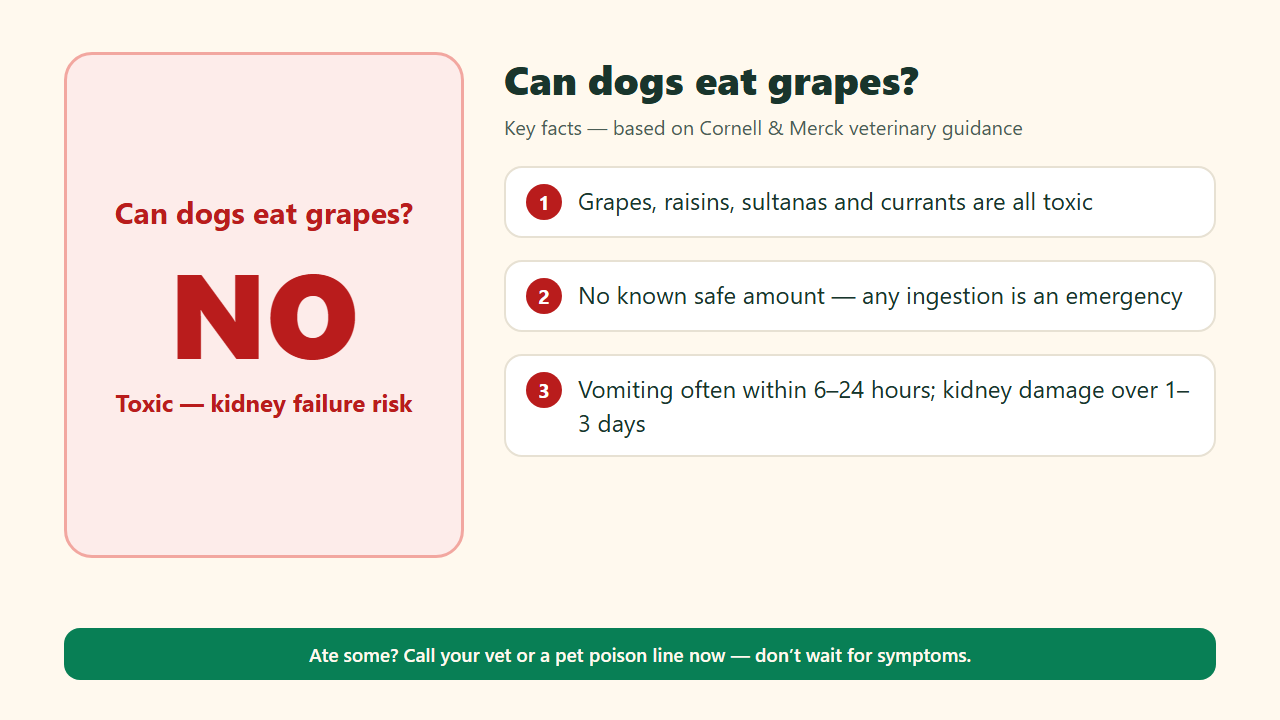
Quick answer
No. Dogs should never eat grapes, raisins, sultanas or currants. They can cause sudden, life-threatening kidney failure (Cornell).
There is no known safe amount — sensitivity differs between dogs and the suspected toxin varies between fruits, so Cornell’s veterinary college advises treating any ingestion as an emergency.
If your dog ate grapes or raisins, call your vet or a pet poison line now. Don’t wait for symptoms: prompt treatment greatly improves the chance of preventing kidney damage.
Grapes and Dogs at a Glance
Grapes and dogs at a glance
| Question | Answer |
|---|---|
| Safe for dogs? | No — grapes, raisins, sultanas and currants are all toxic |
| Main risk | Acute kidney injury and kidney failure |
| Safe amount | None known; treat any amount as potentially toxic |
| First signs | Often vomiting within 6–24 hours; some dogs show no early signs |
| What to do | Call your vet or a poison control line immediately |
Why Are Grapes Toxic to Dogs?
The exact cause is not fully understood, but research points to tartaric acid and its salt, potassium bitartrate, which are concentrated in grapes, raisins, sultanas, Zante currants, tamarinds and cream of tartar (Cornell). Levels vary from fruit to fruit, and dogs vary in sensitivity, so the dangerous amount cannot be predicted.
The Merck Veterinary Manual notes that in general, more than one grape or raisin per 4.5 kg (10 lb) of body weight may contain enough tartaric acid to pose a risk of kidney injury — which is why even a handful can be serious for a small dog.
Symptoms of Grape Poisoning in Dogs
Some dogs show no signs early on. When signs appear, they often start within 6–24 hours (Cornell):
- Vomiting (the most common sign) and diarrhoea
- Loss of appetite, lethargy and dehydration
- Abdominal pain or swelling, and excessive drooling
- Over 1–3 days: increased thirst and urination, weakness, limb swelling, tremors or seizures
- In severe cases, the kidneys stop producing urine
My Dog Ate Grapes — What Should I Do?
Call your veterinarian or nearest emergency hospital immediately, and tell them what your dog ate, roughly how much, and when (Cornell). For a recent ingestion, your vet will usually make your dog vomit; this can still help hours later because the fruit can stay in the stomach.
There is no antidote. Treatment is supportive — typically hospitalisation on intravenous fluids for at least two days, with repeated kidney blood tests, because results can be normal in the first few hours. Dogs treated promptly that never develop kidney damage generally have an excellent prognosis; once kidney damage develops, the outlook is serious.
Where Grapes and Raisins Hide
- Raisins, sultanas and currants in fruit cake, hot cross buns, mince pies, cookies, granola, cereal bars and trail mix
- Fruit salads and snack packs
- Grape vines in gardens, and fallen grapes
- Bins and compost heaps — keep them secured
Frequently asked questions
How many grapes can kill a dog?+
No one can say, because the toxic amount varies between dogs and between grapes. Cornell’s veterinary college says any ingestion should be treated as potentially toxic, and that even a few grapes or raisins can be dangerous for some dogs. Call your vet straight away.
My dog ate one grape. Will they be OK?+
It is not possible to predict how an individual dog will react, even to a single grape. Cornell advises treating any grape or raisin ingestion as an emergency, so contact your vet or a pet poison control line for advice based on your dog’s size.
Are seedless, peeled or green grapes safe for dogs?+
No. The suspected toxin, tartaric acid, is in the fruit itself. All grapes, and dried forms such as raisins, sultanas and currants, should be treated as toxic.
How long after eating grapes will a dog get sick?+
Signs such as vomiting often appear within 6–24 hours, and kidney problems can develop over 1–3 days. Some dogs show no early signs at all, so do not wait for symptoms before calling your vet.
How This Page Was Prepared
This page was researched and written by the AnimalIDFinder editorial team using veterinary school, veterinary manual, poison control and regulatory sources, all linked below. It has not been individually reviewed by a veterinarian and does not replace professional advice. Last reviewed against sources: October 2026.
Related dog guides
25 Human Foods That Are Bad for Dogs
Toxic foods, choking and blockage hazards, and what to do if your dog eats one.
Read guideCan Dogs Eat Chocolate?
No. Which chocolate is most dangerous, symptoms, timing, and what to do.
Read guideCan Dogs Eat Onions?
No. Raw, cooked and powdered onion and garlic, delayed anaemia, and hidden sources.
Read guideSources
Veterinary and regulatory references used on this page:
Explore more dog guides
Nutrition guides are educational only. Browse related dog articles, calculators and the photo identifier, or return to the guides hub.