25 Human Foods That Are Bad for Dogs (and What to Do If Your Dog Eats One)
Some of the most dangerous foods for dogs are everyday kitchen staples. Here are 25 human foods that veterinary and poison-control sources warn about, grouped by the kind of harm they cause, with hidden sources to check and the steps to take if your dog gets into one.
Quick answer
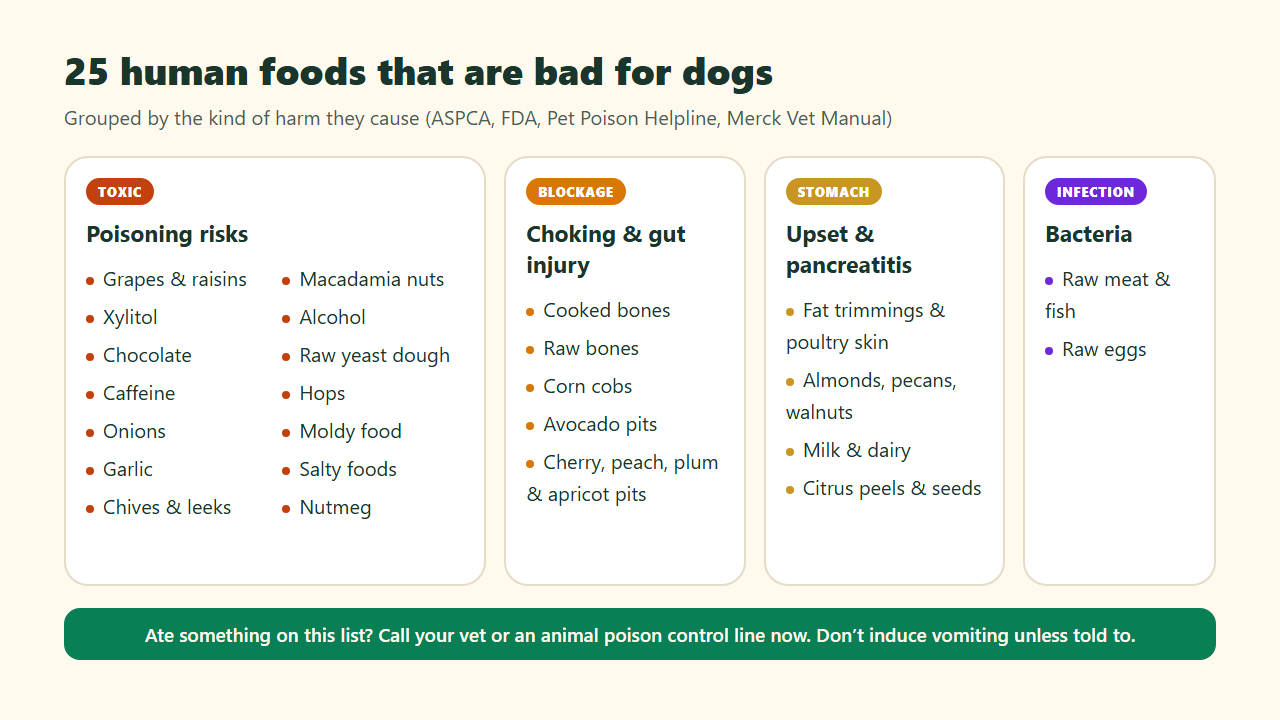
The human foods most likely to seriously harm dogs are grapes and raisins, xylitol, chocolate and caffeine, onions and garlic, macadamia nuts, alcohol and raw yeast dough, hops, and moldy food. These can cause kidney failure, dangerously low blood sugar, heart and nervous-system problems, or red blood cell damage (ASPCA, FDA).
Other foods are dangerous for physical reasons: cooked bones, corn cobs, avocado pits and fruit pits can choke a dog or block the gut. Fatty scraps can trigger pancreatitis, and raw meat and eggs can carry Salmonella and E. coli.
If your dog eats something on this list, call your veterinarian or an animal poison control line straight away — do not wait for symptoms, and do not make your dog vomit unless a veterinary professional tells you to.
All 25 Human Foods That Are Bad for Dogs at a Glance
This list combines guidance from ASPCA Animal Poison Control, the U.S. FDA, Pet Poison Helpline, the Merck Veterinary Manual and university veterinary schools. Foods are grouped by the kind of harm they cause rather than ranked, because how serious an exposure is depends on the amount eaten and the size of the dog.
25 human foods that are bad for dogs
| # | Food | Type of harm | Main concern |
|---|---|---|---|
| 1 | Grapes, raisins, sultanas, currants | Toxic | Kidney injury or kidney failure |
| 2 | Xylitol (sugar-free gum, mints, some peanut butters) | Toxic | Rapid low blood sugar; liver damage |
| 3 | Chocolate and cocoa | Toxic | Vomiting, hyperactivity, abnormal heart rhythm, seizures |
| 4 | Coffee, tea, energy drinks (caffeine) | Toxic | Same methylxanthine effects as chocolate |
| 5 | Onions | Toxic | Red blood cell damage and anaemia |
| 6 | Garlic | Toxic | Red blood cell damage and anaemia |
| 7 | Chives, leeks and other alliums | Toxic | Red blood cell damage and anaemia |
| 8 | Macadamia nuts | Toxic | Weakness, tremors, vomiting, overheating |
| 9 | Alcohol | Toxic | Incoordination, breathing problems, coma |
| 10 | Raw yeast bread dough | Toxic + bloat | Painful bloat; alcohol produced in the stomach |
| 11 | Hops (home brewing) | Toxic | Life-threatening high body temperature |
| 12 | Moldy food and compost | Toxic | Tremors and seizures from mycotoxins |
| 13 | Very salty foods | Toxic in excess | Vomiting, tremors, seizures |
| 14 | Nutmeg (large amounts) | Toxic in excess | Disorientation, fast heart rate, seizures |
| 15 | Cooked bones | Blockage / injury | Splinters, choking, gut perforation |
| 16 | Raw bones | Blockage / injury | Gut injury or obstruction |
| 17 | Corn on the cob | Blockage | Intestinal obstruction, often needing surgery |
| 18 | Avocado (especially the pit) | Blockage / upset | Pit obstruction; flesh may upset the stomach |
| 19 | Cherry, peach, plum and apricot pits | Blockage / toxic | Obstruction; cyanide if many are chewed |
| 20 | Fat trimmings and poultry skin | Pancreas / stomach | Vomiting, diarrhoea, pancreatitis |
| 21 | Almonds, pecans, walnuts and other nuts | Pancreas / stomach | Vomiting, diarrhoea, possible pancreatitis |
| 22 | Milk and dairy | Stomach | Diarrhoea and digestive upset |
| 23 | Citrus peels, stems and seeds | Stomach | Irritation; upset stomach |
| 24 | Raw or undercooked meat and fish | Infection | Salmonella, E. coli and other bacteria |
| 25 | Raw eggs | Infection | Bacteria; may interfere with a B vitamin |
Toxic Foods: Poisoning Risks (1–14)
These foods contain substances that dogs cannot process safely. Some cause harm in small amounts, so call for advice even if your dog seems fine.
1. Grapes, raisins, sultanas and currants
Grapes and dried grapes can cause kidney injury and kidney failure in dogs. Tartaric acid is the most likely cause. The Merck Veterinary Manual reports vomiting or diarrhoea within 6–12 hours, with kidney failure developing within 1–3 days. Because sensitivity varies, Cornell advises treating any ingestion as potentially toxic.
2. Xylitol
Xylitol is a sugar substitute that triggers a rapid insulin release in dogs. According to the FDA, blood sugar can drop dangerously within 10 to 60 minutes, causing vomiting, weakness, staggering, collapse and seizures. Higher doses can damage the liver. It is found in sugar-free gum and mints, some peanut and nut butters, baked goods, chewable vitamins, toothpaste and mouthwash.
3–4. Chocolate, coffee and caffeine
Chocolate, coffee, tea and energy drinks contain compounds called methylxanthines. ASPCA lists vomiting, diarrhoea, panting, excessive thirst, hyperactivity, abnormal heart rhythm, tremors, seizures and even death. The darker the chocolate, the greater the risk — baking chocolate and cocoa powder are the most concentrated; white chocolate has the least.
5–7. Onions, garlic, chives and leeks
These belong to the Allium family, which can irritate the gut and damage red blood cells, leading to anaemia (ASPCA). Risk depends on the amount eaten, so watch for onion and garlic in seasoned leftovers, gravies and broths as well as in whole vegetables.
8. Macadamia nuts
Macadamia nuts can cause weakness, incoordination, vomiting, tremors and overheating in dogs. ASPCA notes that signs usually appear within 12 hours, with recovery typically expected within 24–72 hours.
9–10. Alcohol and raw yeast dough
Alcohol is absorbed quickly and can cause vomiting, incoordination, difficulty breathing, tremors, coma and death. Raw bread dough is a double risk: it can rise in the stomach and cause painful, potentially life-threatening bloat, and the yeast produces alcohol as it ferments (ASPCA).
11. Hops
Hops used in home brewing — fresh, pelleted or spent — can trigger malignant hyperthermia, a rapid, life-threatening rise in body temperature with panting, racing heart rate, vomiting and seizures. ASPCApro advises monitoring any exposed dog for at least 12 hours. Pet Poison Helpline notes that Greyhounds, Labrador Retrievers and several other breeds may be at higher risk.
12. Moldy food and compost
Moldy bread, pasta, cheese, nuts and compost can contain tremorgenic mycotoxins. Pet Poison Helpline lists vomiting, agitation, incoordination, tremors, seizures and fever. Keep bins and compost heaps out of reach.
13. Very salty foods
Excess salt can cause thirst, vomiting, diarrhoea and, in severe cases, tremors, seizures and death (ASPCA). Salty snacks, cured meats and seasoned scraps add up quickly for a small dog.
14. Nutmeg
Nutmeg contains myristicin. Pet Poison Helpline explains that the small amount in a recipe is very unlikely to cause serious poisoning, though it may upset the stomach. A large amount — for example, a dog getting into the spice jar — can cause disorientation, increased heart rate, high blood pressure and possibly seizures.
Choking and Blockage Risks (15–19)
These foods are not necessarily poisonous, but they can get stuck in the throat, stomach or intestines. Cornell lists corn cobs and bones among common causes of gut obstruction, and most obstructions need surgery.
15–16. Cooked and raw bones
The FDA warns that turkey, chicken and steak bones can lodge in the oesophagus, stomach or windpipe, and that sharp fragments can injure the mouth and gut. ASPCA also advises against raw bones because of the risk of injury or obstruction that may need surgery.
17. Corn on the cob
Corn kernels are fine for most dogs, but the cob does not break down and is a well-known cause of intestinal blockage (FDA, Cornell).
18. Avocado
Avocado is far more dangerous to birds, rabbits and horses than to dogs. For dogs, the main hazard is the pit, which can cause a life-threatening obstruction. The flesh may cause vomiting or diarrhoea, and its high fat content can contribute to pancreatitis (Pet Poison Helpline).
19. Cherry, peach, plum and apricot pits
Stone-fruit pits contain cyanide-producing compounds, but the FDA notes that poisoning is rare unless a dog crushes and eats many pits. Gut obstruction is the bigger risk, especially for small dogs. The ripe fruit flesh, without stones, stems or leaves, is a different matter.
Stomach and Pancreas Upsets (20–23)
These foods are less likely to be life-threatening in small amounts, but they commonly cause vomiting and diarrhoea, and fatty foods can trigger a serious illness.
20. Fat trimmings and poultry skin
The FDA warns that fat trimmings and roast turkey or chicken skin can cause pancreatitis — a painful, potentially life-threatening inflammation of the pancreas. Signs include vomiting, stomach pain, restlessness, shaking, diarrhoea, fever and weakness. The Merck Veterinary Manual lists eating trash or large amounts of table scraps as a common risk factor.
21. Almonds, pecans, walnuts and other nuts
Apart from macadamias, most nuts are not poisonous, but they are high in fat and can cause vomiting, diarrhoea and potentially pancreatitis (ASPCA). Moldy nuts carry the extra mycotoxin risk described above.
22. Milk and dairy
Dogs do not produce much lactase, the enzyme that digests milk sugar, so milk and dairy products can cause diarrhoea and digestive upset (ASPCA). Tolerance varies between dogs.
23. Citrus peels, stems and seeds
The stems, leaves, peels and seeds of citrus plants contain citric acid and essential oils that can cause irritation if eaten in significant amounts. ASPCA notes that small amounts of the fruit are unlikely to cause more than a minor stomach upset.
Raw Meat, Fish and Eggs: Infection Risks (24–25)
Raw meat and raw eggs can carry bacteria such as Salmonella and E. coli that can make both dogs and people ill (ASPCA). The AVMA discourages feeding raw or undercooked animal-source protein because dogs can shed these bacteria even when they look healthy.
ASPCA adds that raw eggs contain an enzyme that can interfere with the absorption of a B vitamin, which may lead to skin and coat problems. Plain, fully cooked eggs avoid both issues.
Hidden Sources: Where These Foods Turn Up Unexpectedly
Many poisonings happen through ingredients rather than whole foods. Check labels and recipes for:
- Xylitol (also sold as birch sugar) in sugar-free gum, mints and desserts, some peanut and nut butters, chewable vitamins, cough syrup, toothpaste and mouthwash (FDA). Always check the label before using peanut butter to hide a pill.
- Onion and garlic in stock, gravy, seasoned meats, pizza and many ready meals.
- Raisins and currants in fruit cake, hot cross buns, granola, trail mix and cookies.
- Chocolate and cocoa in brownies, cakes, hot chocolate mix and protein bars.
- Caffeine in tea bags, coffee grounds, energy drinks and some pre-workout supplements.
- Macadamia nuts in cookies and nut mixes.
- Nutmeg in baked goods and holiday dishes — usually only a stomach upset in small amounts.
- Bones and fat in bins after roasts and barbecues — secure the trash.
What to Do If Your Dog Eats Something on This List
Acting quickly makes treatment simpler, safer and often cheaper. Pet Poison Helpline and the FDA recommend these steps:
- Remove your dog from the food and keep any remaining packaging.
- Check your dog is breathing and acting normally. If they are collapsed, seizing or struggling to breathe, go straight to an emergency vet.
- Note what was eaten, roughly how much, and when.
- Call your veterinarian or a pet poison control line immediately, even if your dog seems fine. Some foods, such as xylitol and grapes, cause delayed or rapid problems that are easier to treat early.
- Do not induce vomiting or give home remedies unless a veterinary professional tells you to.
- If your dog swallowed a bone, cob or pit, contact your vet for advice. The FDA notes that signs of blockage can take hours to days to appear.
Warning Signs to Watch For
Signs vary by food, but contact a veterinarian promptly if your dog shows any of the following after eating something unusual:
- Vomiting, diarrhoea or drooling
- Weakness, wobbliness or collapse
- Tremors, twitching or seizures
- Restlessness, hyperactivity, panting or a racing heart
- Unusually high body temperature
- Abdominal pain, a hunched posture, or a swollen, tight belly
- Refusing food, repeated retching, or straining without passing stool
- Tiredness, weakness or reduced urination in the days after
Safer Treats and the 10% Rule
Tufts University’s veterinary nutritionists recommend that treats and table food make up no more than 10% of your dog’s daily calories, with the rest coming from a complete and balanced diet (Tufts Petfoodology). For example, a fairly active 25 lb dog needing about 600 calories a day should get no more than about 60 calories from treats.
Tufts lists foods that work well as treats for healthy dogs in small, measured portions, including carrots, green beans, cucumber, apple (without seeds), banana, blueberries, strawberries, plain cooked chicken or turkey breast, hard-boiled egg and plain canned pumpkin (Tufts). Serve them plain — no butter, sauces, salt or seasoning — and check with your vet first if your dog has a medical condition.
If you cook regularly for your dog, read our veterinarian warning about homemade dog food for why home-cooked diets need careful balancing.
Frequently asked questions
What is the most toxic human food for dogs?+
There is no single answer because harm depends on the amount and the dog’s size. Xylitol, grapes and raisins, dark or baking chocolate, macadamia nuts, alcohol and hops are among the most dangerous, because small amounts can cause severe illness. Call your vet or a poison control line for any of them.
How many grapes can kill a dog?+
No safe number is known. Cornell’s veterinary college says the toxic amount is unknown and cannot be predicted, so any grape, raisin, sultana or currant ingestion should be treated as potentially toxic. Contact your veterinarian straight away.
Is a small piece of chocolate dangerous for dogs?+
It depends on the type of chocolate and the size of the dog. Dark and baking chocolate and cocoa powder contain the most methylxanthines, while white chocolate has the least. Because it is hard to judge at home, call your vet or a poison control line with the type, the amount and your dog’s weight.
Can dogs eat peanut butter?+
Plain peanut butter without xylitol is generally fine as an occasional treat in small amounts. The FDA warns that some peanut and nut butters contain xylitol, which can be life-threatening, so always check the ingredient list first.
Are cooked chicken bones safe for dogs?+
No. The FDA warns that bones can lodge in the throat, stomach or windpipe and that sharp fragments can injure the mouth and gut. If your dog swallows one, call your vet for advice and watch for vomiting, lack of appetite, lethargy or stomach pain over the following days.
Is a little garlic or onion OK for dogs?+
It is best avoided. Onions, garlic, chives and leeks can damage red blood cells, and the risk depends on the amount eaten. Watch for them in gravies, broths and seasoned leftovers too. If your dog has eaten a significant amount, contact your vet.
Can dogs drink milk?+
Many dogs do not digest milk sugar well because they produce little lactase, so milk and dairy can cause diarrhoea. Some dogs tolerate small amounts, but milk is not needed in a complete and balanced diet.
Should I make my dog throw up after eating something toxic?+
Not unless a veterinarian or poison control expert tells you to. Inducing vomiting at home can cause harm and is not appropriate for every substance. Call for advice first.
What human foods are safe for dogs?+
Tufts University’s nutritionists list carrots, green beans, cucumber, apple without seeds, banana, blueberries, plain cooked chicken or turkey breast, hard-boiled egg and plain canned pumpkin as treat options for healthy dogs. Keep treats under 10% of daily calories and serve them plain.
How This Guide Was Prepared
This guide was researched and written by the AnimalIDFinder editorial team using published guidance from animal poison control centres, the U.S. FDA, the Merck Veterinary Manual, the AVMA and university veterinary schools, all linked below. It has not been individually reviewed by a veterinarian and does not replace urgent veterinary advice.
Foods are grouped by type of harm rather than ranked, because severity depends on the amount eaten and the individual dog. Last reviewed against sources: October 2026.
Related dog guides
Sources
Poison control, regulatory and veterinary references used in this guide. If your dog has eaten something concerning, contact a veterinarian rather than relying on this page:
- ASPCA Animal Poison Control — People foods to avoid feeding your pets
- U.S. FDA — Potentially dangerous items for your pet
- U.S. FDA — Paws off xylitol; it’s dangerous for dogs
- U.S. FDA — Keep your dogs and cats safe from holiday hazards
- Cornell University College of Veterinary Medicine — Grape and raisin toxicity
- Merck Veterinary Manual — Food hazards (pet owner version)
- Merck Veterinary Manual — Pancreatitis in dogs (pet owner version)
- Cornell University College of Veterinary Medicine — Gastrointestinal foreign body obstruction in dogs
- Pet Poison Helpline — Hops
- ASPCApro — The rising danger of hops ingestion in pets
- Pet Poison Helpline — Moldy food (mycotoxins)
- Pet Poison Helpline — Nutmeg and cinnamon toxicity
- Pet Poison Helpline — Cherry
- Pet Poison Helpline — Can dogs eat avocado?
- Pet Poison Helpline — What to do if your pet is poisoned
- AVMA — Policy on raw or undercooked animal-source protein in cat and dog diets
- Tufts Petfoodology — Treat options for dogs and cats without unbalancing their diet
- Tufts Petfoodology — Popular holiday foods your pet should avoid
Explore more dog guides
Nutrition guides are educational only. Browse related dog articles, calculators and the photo identifier, or return to the guides hub.