How to Tell Similar Animals Apart
Upload a photo to run targeted AI visual identification between species, test your field knowledge with interactive quizzes, and explore side-by-side anatomy comparisons.
In-depth comparison guides: Hawk vs Eagle vs Falcon: size, speed and strength
Leopard vs Jaguar — How to Tell Them Apart
Key visual differences, field identification rules, anatomical hotspots, and pairwise AI analysis.
The easiest way to distinguish a leopard from a jaguar is that jaguars have larger rosettes with dark spots inside them and a stockier, more muscular build, while leopards have smaller rosette rings without central spots and a leaner frame.
| Feature | 🐆 Leopard | 🐆 Jaguar |
|---|---|---|
| Build | Slender, athletic frame | Stocky, barrel-chested build |
| Rosettes | Hollow rings (no central spots) | Large rings containing central black spots |
| Head & Jaw | Smaller, sleeker head | Broad, muscular head with deep jaw |
| Geographic Range | Africa & Asia | Central & South America |
| Swimming | Capable, prefers trees | Strong swimmer, loves deep water |
Which One Is This?Leopard vs Jaguar
Spotted an animal in a photo or field observation? Upload it here, and the AI will evaluate its exact visual traits specifically between these two candidate species!
Anatomical Field Feature Spotter
Click specific body parts or markings below to inspect side-by-side anatomical contrast traits.
Leopard
Coat Rosettes TraitEmpty rings with no central dots.
Jaguar
Coat Rosettes TraitLarger rosettes containing 1-3 small black dots.
Size & Scale Comparison with Human Benchmark
See how Leopard and Jaguar measure up relative to an average human (👤 1.8m / 80kg).
💡 Field Note: Jaguar is noticeably stockier & heavier
💡 Field Note: Jaguar can crush turtle shells with ease
💡 Field Note: Leopard hauls heavy prey high up trees
💡 Field Note: Jaguar hunts underwater caimans & fish
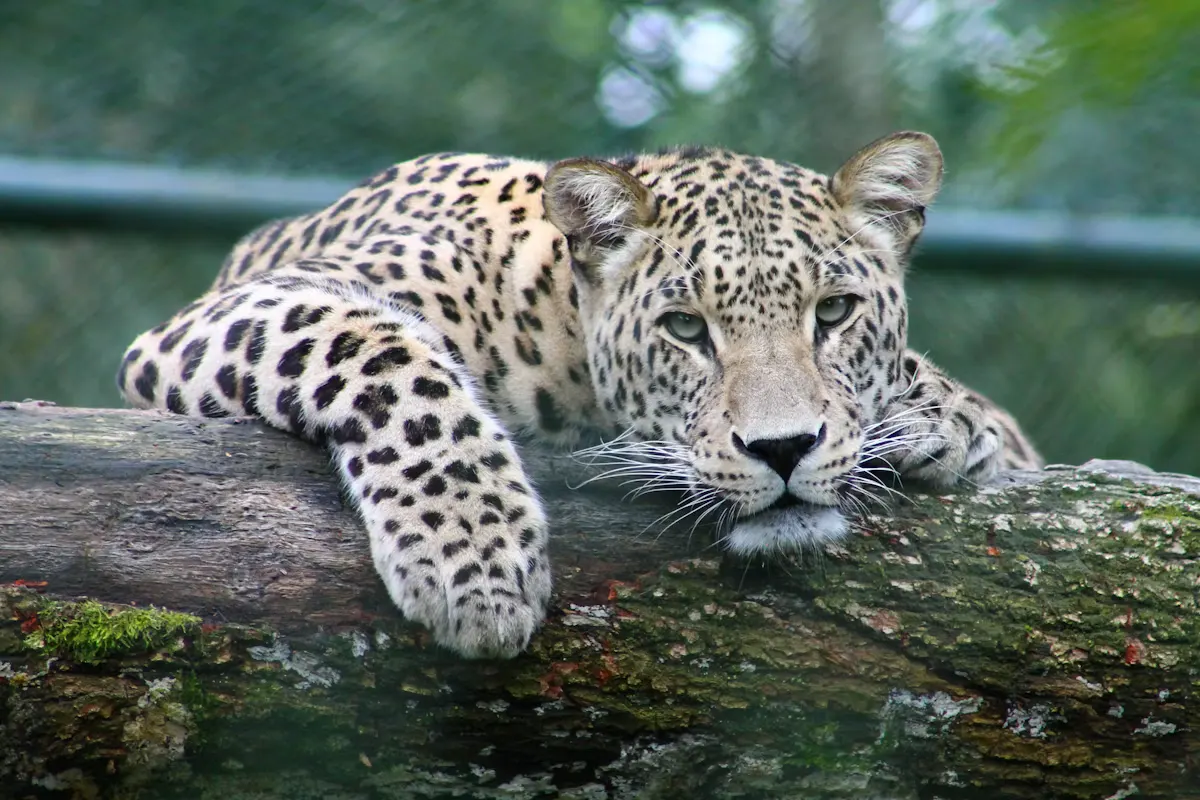
🐆Leopard
Panthera pardus
- Empty rosettes without central spots
- Slender body with longer tail
- Native to Africa & Asia

🐆Jaguar
Panthera onca
- Rosettes have small black spots inside
- Stockier, stocky muscular jaw
- Native to the Americas
Attribute Comparison
14-Point Species Comparison Matrix
Detailed side-by-side taxonomy, anatomical dimensions, habitat, and behavioral breakdown.
| Biological Dimension | 🐆 Leopard | 🐆 Jaguar |
|---|---|---|
| Size (Length) | 1.6 – 2.1 meters | 1.8 – 2.4 meters |
| Weight | 30 – 90 kg | 56 – 100+ kg |
| Body Shape | Lean, long, athletic | Stocky, broad, compact |
| Coat/Skin | Tawny yellow with black rosettes | Golden yellow with large rosettes |
| Markings | Hollow rosette rings | Rosettes with central dark spots |
| Head Shape | Narrower, sleeker skull | Broad skull with heavy temporal muscles |
| Teeth/Jaw | 310 PSI bite force | 1,500 PSI bite force (pierces shells) |
| Tail | Very long (up to 1m) for tree balance | Shorter, thicker tail |
| Habitat | Savannah, woodland, desert | Rainforests, swamps, riverbanks |
| Geographic Range | Sub-Saharan Africa, Asia | South & Central America |
| Diet | Antelopes, monkeys, deer | Capybaras, caimans, turtles, fish |
| Behavior | Tree climbing, hoists kills up trees | Water loving, dives to ambush caimans |
| Lifespan | 12 – 17 years | 12 – 15 years |
| Conservation Status | Vulnerable | Near Threatened |
Why Do People Confuse Leopard and Jaguar?
Superficial similarities often trick observers. Here is why they look alike and how to avoid the trap.
Superficial Shared Traits
- Golden-yellow coats adorned with dark rosette spot patterns
- Solitary apex predators with sharp retractable claws
- Master stalkers with excellent night vision and tree climbing ability
Definitive Field Distinctions
- Jaguars have dark spots inside their rosettes; leopards have hollow rings.
- Jaguars live strictly in the Americas; leopards inhabit Africa and Asia.
- Jaguars are significantly stockier with broader skulls and much stronger bite force.
- Leopards have noticeably longer tails for balancing high in tree branches.
What Should I Look For in the Wild?
Observe key field markings or behaviors and select matching traits to run a live diagnostic calculation.
Look inside the rosettes: Jaguars have small black dots inside their spot rings; Leopards have empty rings.
Check the body build: Jaguars are bulkier with short muscular legs and broad heads; Leopards are sleeker.
Consider the geography: If it is in the wild in South America, it is a Jaguar. If in Africa or Asia, it is a Leopard.
Look at the tail length: Leopards have noticeably longer tails for balancing in trees.
Can You Tell Them Apart?
Test your observational skills on key anatomical traits and earn rank badges!
"Which cat usually has small black spots inside its rosette ring patterns?"
Mystery Animal Clue Revealer🔎
Can you identify which species this is based on step-by-step field clues? Guess earlier for higher points!
This apex predator stalks dense tropical rainforests, flooded swamps, and river basins exclusively across South and Central America.
Reveal stage 2 clue to read location, coat markings, or anatomical secrets...
Reveal stage 3 clue to read location, coat markings, or anatomical secrets...
Reveal stage 4 clue to read location, coat markings, or anatomical secrets...
Ready to Guess?
Select which candidate animal matches these field clues right now (100 pts):
Common Identification Questions
Do leopards and jaguars ever cross paths in the wild?
No. Leopards are native exclusively to Africa and Asia, whereas Jaguars live only in Central and South America. They do not share any natural geographic overlap.
How do jaguar rosettes differ from leopard rosettes?
Jaguar rosettes are larger and feature small black dots inside the center of the ring. Leopard rosettes are smaller, closer together, and completely empty in the center.
Which big cat has a stronger bite?
The jaguar has a drastically stronger bite force (up to 1,500 PSI), allowing it to bite directly through turtle shells and caiman skulls. Leopards have a bite force around 310 PSI.
Comparison Fun Fact:
Jaguars have the most powerful bite force relative to size among all big cats — strong enough to pierce turtle shells and caiman skulls!
Found an animal and still not sure which species it is?
Upload any photo to let AI examine its exact rosettes, beak shape, snout, or scale patterns!