Hawk vs Eagle vs Falcon: Size, Speed, Strength, and Key Differences
Eagles are the biggest, falcons are the fastest, and hawks sit in between, but the real differences are in wing shape, killing tools and family tree. This guide compares size, speed, strength, talons, diet, sounds and documented encounters, with every number traced to a source.
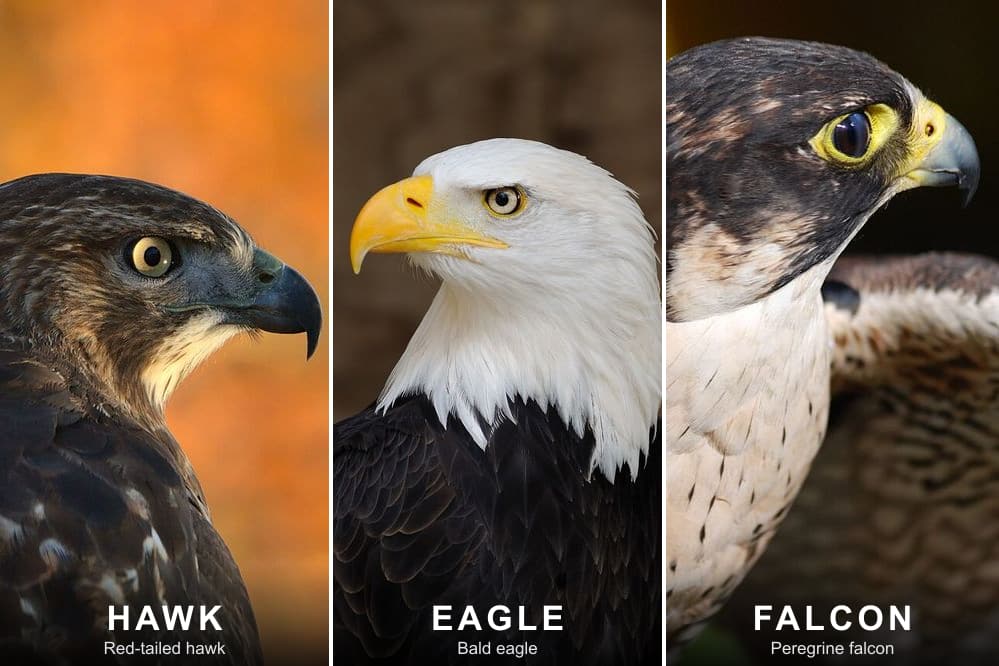
Quick answer: eagles are the largest and most powerful of the three, falcons are the fastest and have long, pointed wings, and hawks are mid-sized hunters with broad, rounded wings. Hawks and eagles belong to the same family (Accipitridae) and kill with their talons. Falcons belong to a separate family (Falconidae), are more closely related to parrots than to hawks, and finish prey with a bite from a notched beak (Jarvis et al. 2014).
People search this topic in every word order, from “eagle vs hawk vs falcon” to “falcon vs hawk vs eagle”, but the questions behind it are the same: which is bigger, which is faster, which is stronger, who would win in a fight, and how do you tell them apart? This guide answers each one in its own section, then covers the birds most often confused with them: vultures, kites and ospreys.
All size numbers are ranges from the Cornell Lab of Ornithology unless noted. We use common North American species as examples (red-tailed hawk, bald eagle, peregrine falcon), with the harpy eagle and others for scale.
Hawk vs Eagle vs Falcon: Quick Comparison
| Feature | Hawk | Eagle | Falcon |
|---|---|---|---|
| Family | Accipitridae | Accipitridae (same family as hawks) | Falconidae (a separate family) |
| Closest relatives | Eagles, kites, harriers | Hawks, kites | Parrots and songbirds |
| Number of species | Many “hawks” across several genera | About 68 (BirdLife) | About 40 true falcons (genus Falco) |
| Length | 24–65 cm (sharp-shinned to red-tailed hawk) | 70–105 cm (golden eagle to harpy eagle) | 22–64 cm (kestrel to gyrfalcon) |
| Weight | 87 g–1.5 kg | 3–9 kg | 80 g–2.1 kg |
| Wingspan | 43–133 cm | About 1.7–2.4 m | 51–123 cm |
| Wing shape | Broad and rounded | Very long and broad, with “fingered” tips | Long, narrow and pointed |
| Main killing tool | Talons | Talons | Strike with feet, then a bite with the notched beak |
| Signature skill | Soaring (buteos) or ambush through trees (accipiters) | Power, long soaring flights; fishing in sea eagles | Speed: the high-speed dive called a stoop |
| Top measured speed | No reliable dive measurement | No reliable dive measurement | 389 km/h experimental dive; 184 km/h measured by radar in the wild |
| Example species | Red-tailed hawk, Cooper’s hawk | Bald eagle, golden eagle, harpy eagle | Peregrine falcon, American kestrel, gyrfalcon |
How to Tell a Hawk, Eagle and Falcon Apart in 10 Seconds
Short answer
Look at the wings first. Broad and rounded = hawk. Huge, long and plank-like = eagle. Long, narrow and pointed = falcon. Then check size and the face: eagles dwarf everything else, and many falcons have a dark “mustache” stripe below the eye.
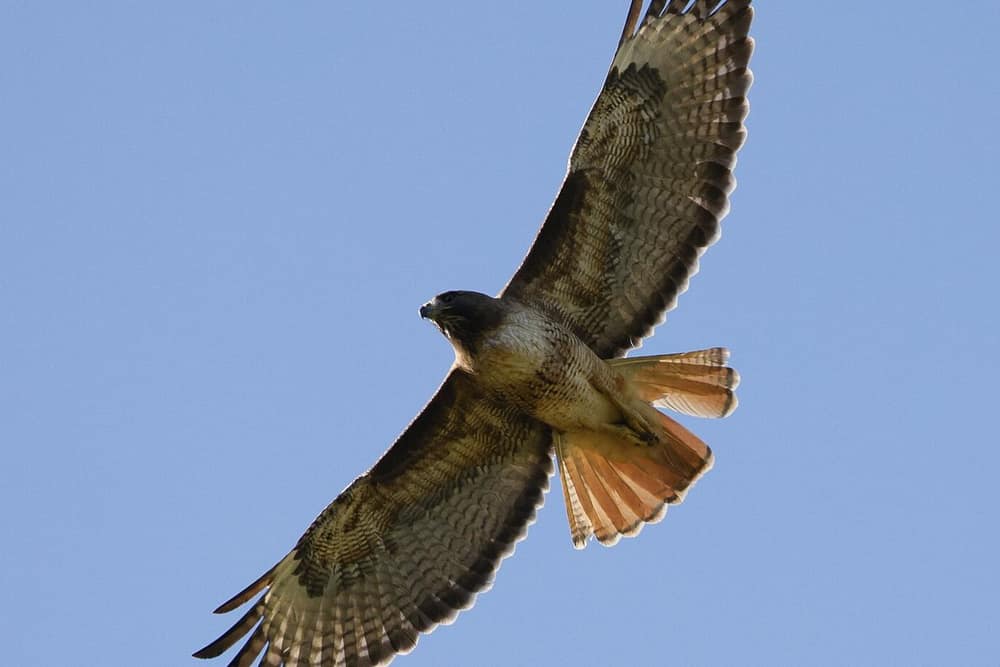 Hawk: broad, rounded wings
Hawk shape: broad, rounded wings and a short, wide tail, built for soaring in circles.
Photo: CautiousHabliut, CC0, via Wikimedia Commons
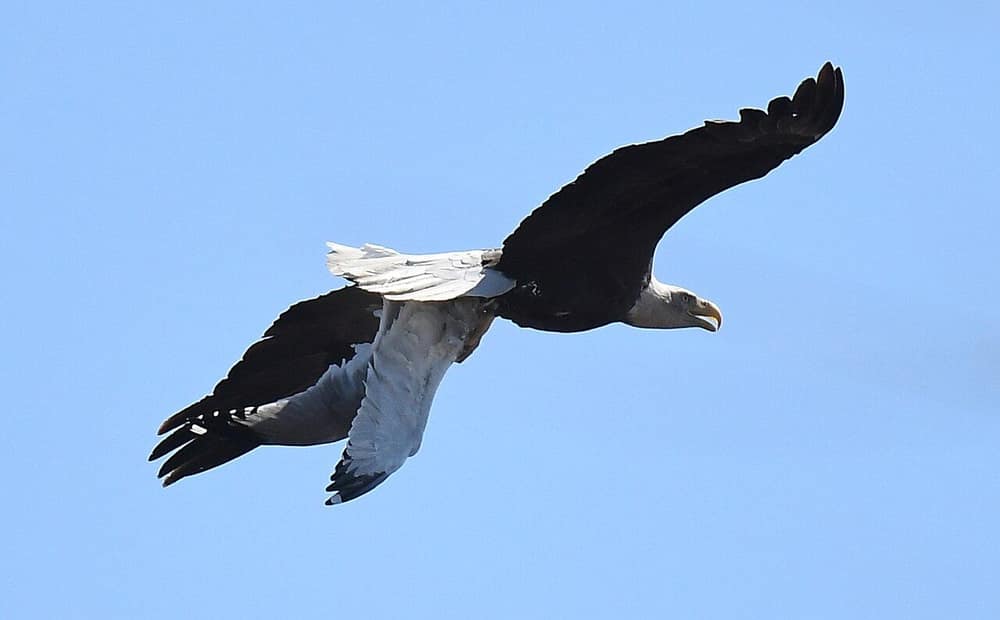
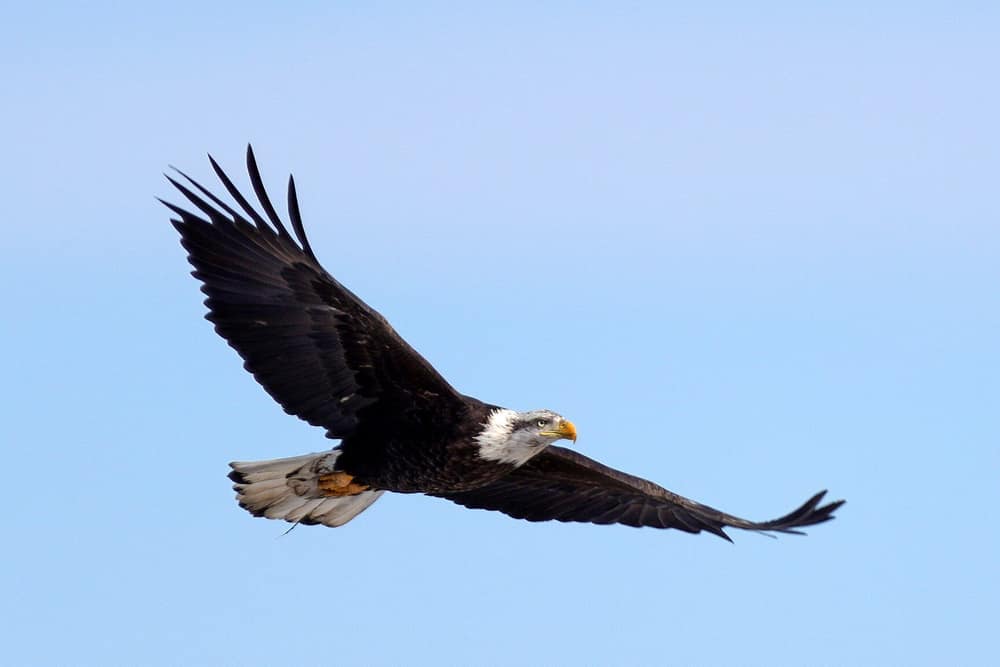 Eagle: long, plank-like wings
Eagle shape: very long, broad “plank” wings held flat, with spread fingertip feathers.
Photo: U.S. Fish and Wildlife Service, public domain, via Wikimedia Commons
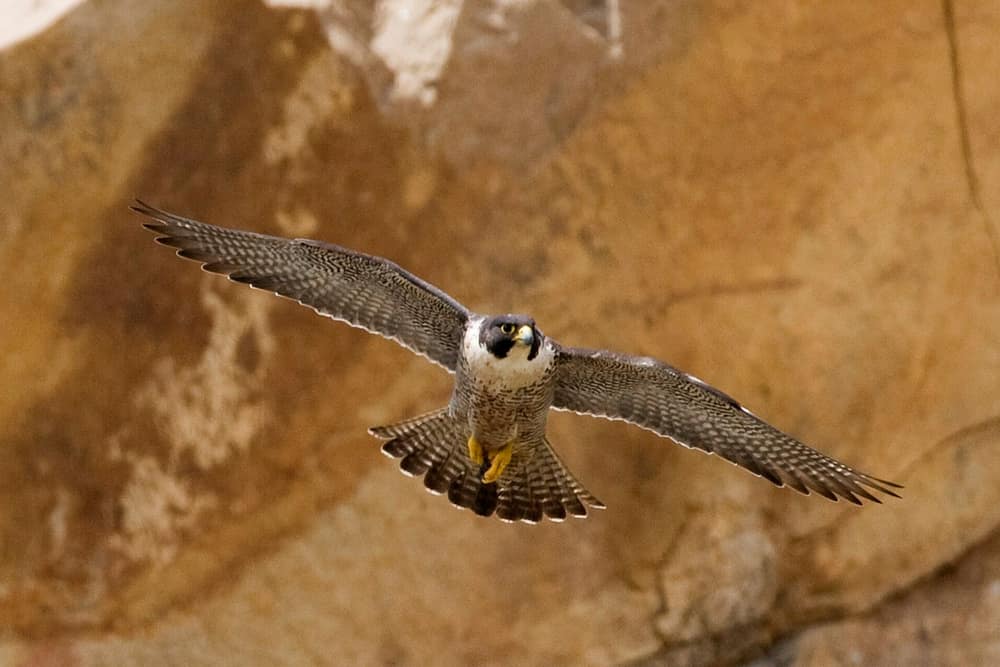 Falcon: narrow, pointed wings
Falcon shape: long, narrow, pointed wings and a tapered tail, built for speed.
Photo: Kevin Cole, CC BY 2.0, via Wikimedia Commons
| Clue | Hawk | Eagle | Falcon |
|---|---|---|---|
| Overall size | Crow-sized to a little bigger | Very large; often twice a hawk’s length | Dove-sized to crow-sized (gyrfalcon bigger) |
| Wings | Broad and rounded (buteos) or short and rounded (accipiters) | Long, broad “planks” with spread fingertip feathers | Long, slim and pointed, like a swept-back jet |
| Tail | Wide fan (buteos) or long and narrow (accipiters) | Fairly short and broad for the wings | Medium-long and tapered |
| Flight style | Lazy circles on rising air, or flap-flap-glide through trees | Slow, steady soaring with flat wings | Fast, powerful wingbeats; steep dives; kestrels hover |
| Head and face | Rounded head, hooked beak | Huge head and very deep beak that juts forward | Dark eyes, dark “mustache” stripe under the eye on many species |
| Beak | Hooked, smooth cutting edge | Hooked and massive | Short, with a tooth-like notch (tomial tooth) |
| Where you see it | Roadside poles, woodland edges, backyard feeders | Near big lakes, rivers and coasts, or open mountains | Cliffs, tall buildings, open fields, wires |
Have a photo? Our bird identifier by picture can suggest likely species from a single image, which helps with young birds and tricky angles.
What Is a Hawk?
Short answer
A hawk is a small to medium-sized bird of prey in the family Accipitridae, the same family as eagles and kites. Hawks kill with their talons and usually have broad, rounded wings.
“Hawk” is a common name, not a single scientific group. In North America it covers two main types (Cornell Lab):
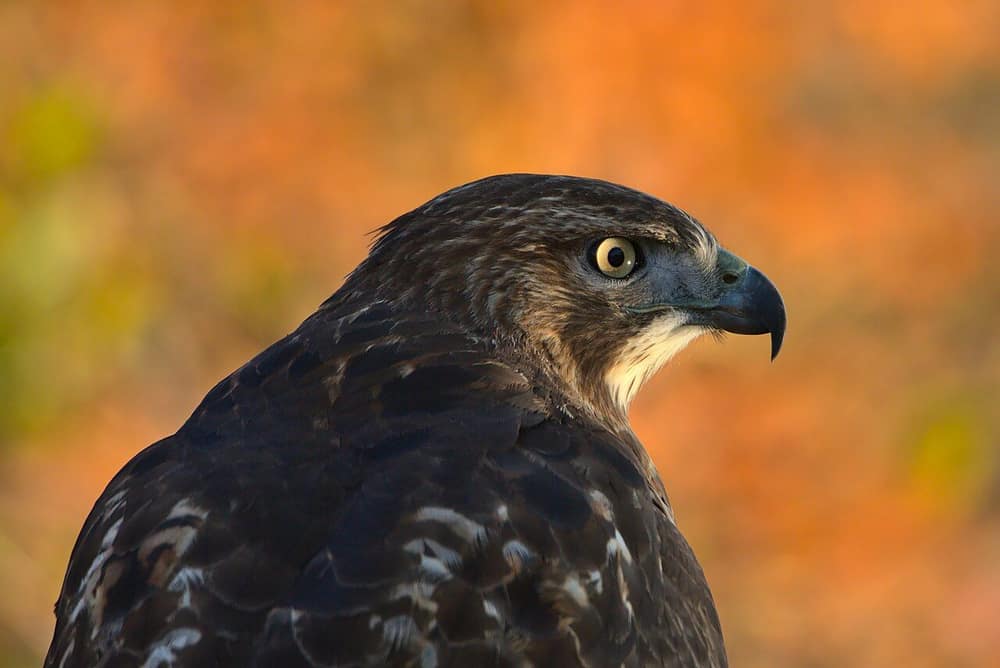
Red-tailed hawk, the classic North American “buteo” hawk: brown, stocky and broad-headed.
Photo: AMMuench, CC BY 4.0, via Wikimedia Commons
- Buteos such as the red-tailed hawk: stocky, broad-winged hawks that soar in circles and drop onto rodents and rabbits. In the UK these are called buzzards.
- Accipiters such as Cooper’s and sharp-shinned hawks: short wings and long tails for fast, twisting chases through trees after songbirds and doves (Cornell Lab).
Learn how hawks grow from egg to adult in our hawk life cycle guide, or read the red-tailed hawk species guide.
What Is an Eagle?
Short answer
An eagle is a large, powerful bird of prey in the family Accipitridae. There are about 68 eagle species, grouped by their size and ability to hunt large prey rather than by close relationship (BirdLife International).
In other words, an eagle is roughly “a very big hawk”. Eagles come from several separate lineages: sea and fish eagles such as the bald eagle, booted eagles such as the golden eagle (feathered all the way down to the toes), and forest eagles such as the harpy eagle.
Eagles have the largest heads and deepest beaks of the three groups, long and broad wings for soaring, and the biggest feet and talons. Most species live in Africa and Asia; only two, the bald and golden eagle, occur in the United States and Canada (BirdLife International).
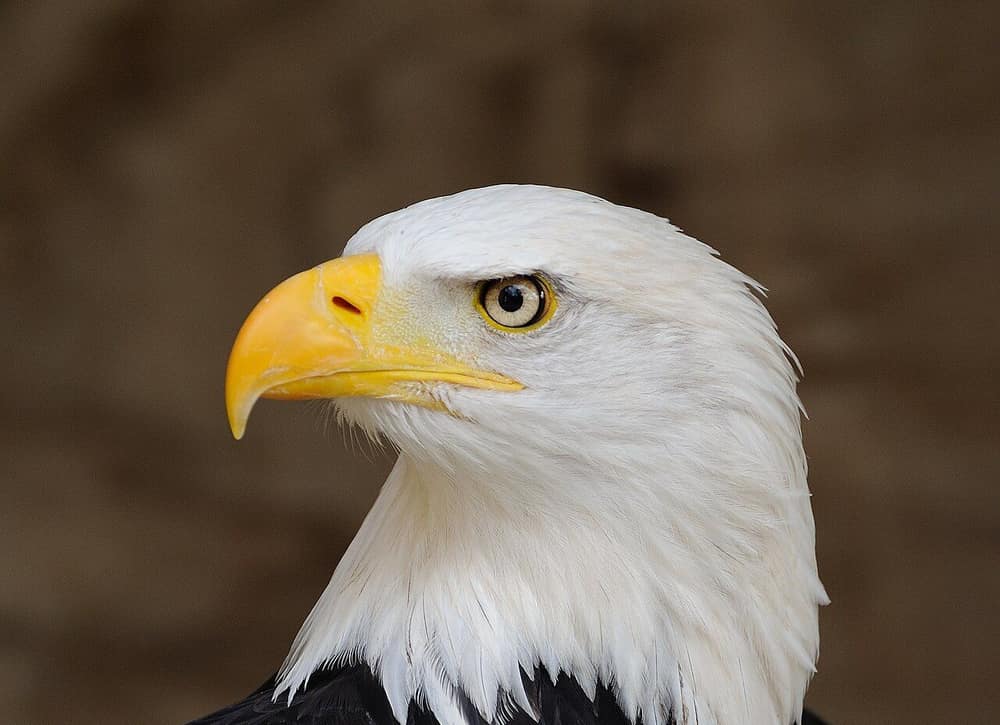
Bald eagle: a huge head and deep yellow bill. Adults take about five years to get the white head.
Photo: Saffron Blaze, CC BY-SA 3.0, via Wikimedia Commons
Compare the two North American eagles in bald eagle vs golden eagle, or meet one of the heaviest eagles on Earth in our harpy eagle guide.
What Is a Falcon?
Short answer
A falcon is a bird of prey in the genus Falco (family Falconidae), with about 40 species. Falcons have long, pointed wings for fast flight and a notched beak used to kill prey with a bite.
The peregrine falcon is the best-known species and the fastest animal in a dive (Guinness World Records). Small falcons that hover are called kestrels, and slim, agile species are called hobbies. Falcons are also famous in falconry, the ancient practice of hunting with trained birds of prey.
Old American names show how often falcons were mistaken for hawks: the peregrine was once the “duck hawk” and the American kestrel the “sparrow hawk”. Neither is a hawk.
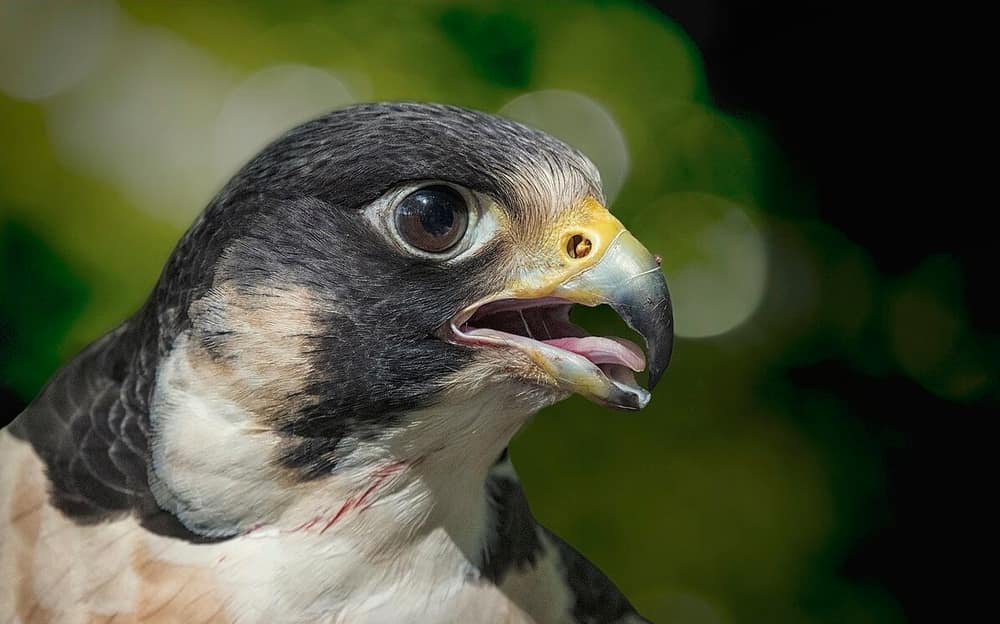
A falcon’s beak has a tooth-like point on each side of the upper bill, the tomial tooth, used to bite through the neck of prey.
Photo: Christian Fritschi, CC BY 2.0, via Wikimedia Commons
Falconry questions: why do falcons wear hoods?, are falconry hoods cruel?, why do falconers wear gloves? and why are falcons so expensive?. For growth and breeding, see the falcon life cycle.
Are Falcons Related to Hawks and Eagles?
Short answer
Hawks and eagles are close relatives in the same family. Falcons are not: genome studies place them closer to parrots and songbirds than to hawks.
For most of the 20th century, falcons, hawks and eagles were grouped together in one order. A whole-genome study of 48 bird species in 2014 showed that falcons belong to a branch called Australaves, with seriemas, parrots and songbirds, while hawks and eagles sit in Afroaves with owls, woodpeckers and others (Jarvis et al. 2014; EurekAlert!).
Hooked beaks and sharp talons evolved separately in the two groups because both took up the same job: catching live animals. Biologists call this convergent evolution.
| Group | Order | Family | Branch of the bird tree | Close relatives |
|---|---|---|---|---|
| Hawks | Accipitriformes | Accipitridae | Afroaves | Eagles, kites, harriers, Old World vultures |
| Eagles | Accipitriformes | Accipitridae | Afroaves | Hawks and kites (eagles are not one single lineage) |
| Falcons | Falconiformes | Falconidae | Australaves | Caracaras, then parrots and songbirds |
| Osprey | Accipitriformes | Pandionidae | Afroaves | Hawks and eagles |
| New World vultures | Accipitriformes or Cathartiformes (varies by authority) | Cathartidae | Afroaves | Hawks and eagles |
Size Comparison: Which Is Bigger, a Hawk, Eagle or Falcon?
Short answer
Eagles are by far the biggest. A bald eagle is about 71–96 cm long and weighs 3–6.3 kg, roughly four times as heavy as a red-tailed hawk (0.69–1.46 kg) and a peregrine falcon (0.53–1.6 kg). Hawks and falcons overlap: the largest falcon, the gyrfalcon, is as long as a red-tailed hawk.
Sources: Cornell Lab of Ornithology (all species except harpy), San Diego Zoo (harpy eagle). The largest falcon, the gyrfalcon, is as long as a red-tailed hawk.
Sources: Cornell Lab (both sexes combined), San Diego Zoo (harpy: males 3.8–5.4 kg, females 6.3–9 kg). In all of these species the female is usually the larger bird.
Sources: Cornell Lab (bald eagle typical ~204 cm, with a published range of 168–244 cm; others as listed), San Diego Zoo (harpy). Lighter bars show figures published only as a maximum or typical value.
Why female raptors are bigger than males
In hawks, eagles and falcons the female is usually larger than the male, sometimes by a lot. A female peregrine can weigh much more than her mate, and the old falconry word “tiercel” for a male comes from the idea that he is about a third smaller. Read more in do female falcons eat male falcons?
Speed: Which Is Fastest, a Hawk, Eagle or Falcon?
Short answer
The falcon. A trained peregrine named Frightful was clocked at 389 km/h (242 mph) diving from an airplane in 1999, and Guinness estimates a hunting stoop at about 320 km/h (200 mph). The fastest stoop measured by radar in a wild peregrine was 184 km/h (114 mph).
Frightful’s speed was recorded with a tiny altimeter attached to her tail feathers while she dived alongside her owner, a skydiver, after release from a Cessna at 17,000 ft (Air & Space). Tracking radar in Switzerland measured two wild peregrine stoops at 130 and 184 km/h (Peter & Kestenholz 1998). Both are real; they measure different situations.
In level flight, raptors are not especially fast. Radar measurements of 138 bird species found typical cruising airspeeds of about 29–83 km/h (Alerstam et al. 2007). A peregrine’s extreme speed comes from gravity plus a streamlined, tucked body shape (Ponitz et al. 2014).
Falcon shape: long, narrow, pointed wings and a tapered tail, built for speed.
Photo: Kevin Cole, CC BY 2.0, via Wikimedia Commons
Sources: Guinness World Records (389 km/h experimental and ~320 km/h estimate), Peter & Kestenholz 1998 (radar stoops), Alerstam et al. 2007 (cruising airspeeds of 138 species, 8–23 m/s). No comparable measured dive speeds exist for hawks or eagles. Lighter bars show single figures rather than ranges.
Strength: Which Is Strongest?
Short answer
The eagle, simply because it is so much bigger: a bald eagle can weigh four times as much as a red-tailed hawk and has the largest feet. Pound for pound, studies show hawks have the stronger grip and falcons the stronger bite.
The best direct data come from Sustaita and Hertel, who had live accipiter hawks and falcons bite and grip a force sensor. After adjusting for body weight, falcons bit harder and accipiters gripped harder, which matches how each kills (Sustaita & Hertel 2010). They also found that the forces were much lower than predicted from muscle anatomy, and low compared with seed-eating birds.
| Bird group | How it kills | Measured force | Source |
|---|---|---|---|
| Accipiter hawks (Cooper’s, sharp-shinned) | Mainly with the feet | Relatively stronger grip than falcons of the same weight | Sustaita & Hertel 2010 |
| Falcons (peregrine, kestrel and others) | Feet to catch, beak to kill | Relatively stronger bite than accipiters of the same weight | Sustaita & Hertel 2010 |
| Peregrine falcon | Bite to the neck | Bite about 3.0–4.6 N in an earlier study cited by Sustaita & Hertel | Sustaita & Hertel 2010 |
| American kestrel | Grip | Average grip about 2.6 N (another study found about 7.7 N) | Sustaita & Hertel 2010 |
| Eagles | Talons | No comparable published live measurement found | — |
Talons and Beaks: How Each One Kills
Short answer
Hawks and eagles kill with their talons, squeezing and piercing prey. Falcons usually strike or grab prey with their feet, then kill it with a bite using the tomial tooth on the beak.
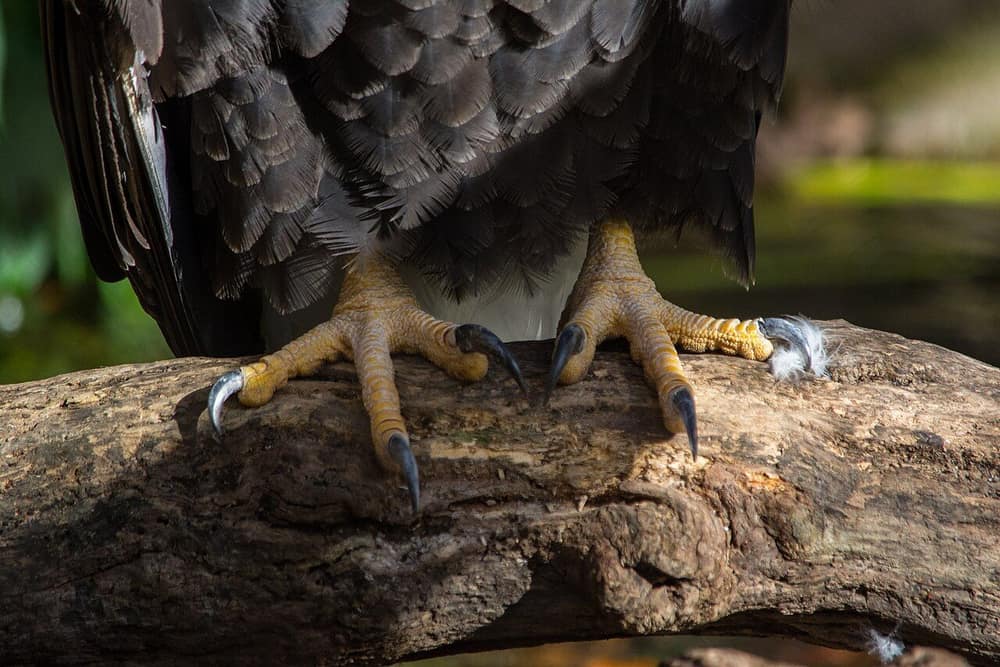 Eagle talons
Bald eagle feet: thick yellow toes with long, curved black talons that grip and pierce prey.
Photo: Tim Evanson, CC BY-SA 2.0, via Wikimedia Commons
Falcon beak with tomial toothA falcon’s beak has a tooth-like point on each side of the upper bill, the tomial tooth, used to bite through the neck of prey.
Photo: Christian Fritschi, CC BY 2.0, via Wikimedia Commons
| Feature | Hawk | Eagle | Falcon |
|---|---|---|---|
| Talons | Sharp, curved; accipiters have long toes for grabbing birds | Largest and thickest; the rear talon is the biggest | Long toes for snatching birds in the air, but relatively weaker grip |
| Beak | Hooked for tearing | Very deep and hooked for tearing large prey | Short and hooked, with a tomial tooth |
| How prey dies | Squeezed and pierced by the talons | Squeezed and pierced by the talons | Stunned or knocked down, then a bite breaks the neck |
Raptors also see detail far better than we do. Try our animal vision simulator to compare eagle, hawk and falcon eyesight with human vision.
What Do Hawks, Eagles and Falcons Eat?
Short answer
Hawks eat mostly rodents (buteos) or small birds (accipiters). Eagles eat fish, mammals and birds, and many scavenge. Falcons mostly catch birds in flight, while kestrels eat insects and small rodents.
A bald eagle carrying a gull. Eagles kill and carry prey with their feet.
Photo: Wildreturn, CC BY 2.0, via Wikimedia Commons
| Hawks | Eagles | Falcons | |
|---|---|---|---|
| Main prey | Buteos: rodents, rabbits, snakes. Accipiters: songbirds and doves | Bald eagle: fish and waterbirds. Golden eagle: rabbits, hares, ground squirrels. Harpy: sloths and monkeys | Peregrine: pigeons, ducks, shorebirds. Kestrel: insects, voles, small birds. Gyrfalcon: ptarmigan |
| Where it catches prey | On the ground (buteos) or among trees (accipiters) | On water, on the ground or in the canopy | Mostly in the air (peregrine) or on the ground below a hover (kestrel) |
| Carrion | Occasionally | Often (bald eagles especially in winter) | Rarely |
| Stealing food | Sometimes | Common: bald eagles rob ospreys, hawks and falcons | Peregrines rob smaller falcons such as merlins |
How They Hunt
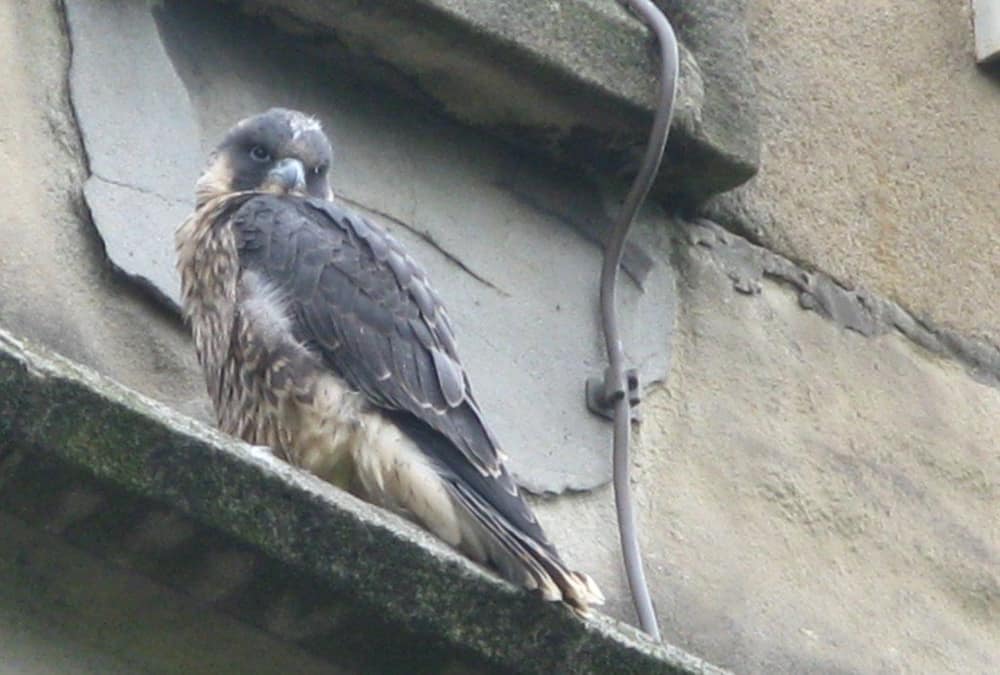
Peregrines nest on tall buildings and bridges in many cities, where pigeons are plentiful.
Photo: Dave Pickersgill, CC BY-SA 2.0, via Wikimedia Commons
Hawks: soar, perch and ambush
Red-tails watch from poles and trees or circle on rising air, then drop onto prey. Cooper’s hawks use cover to surprise birds with short, fast chases.
Eagles: power, patience and piracy
Bald eagles snatch fish from the surface and often steal from other birds. Golden eagles glide low over hills to surprise rabbits and ground squirrels.
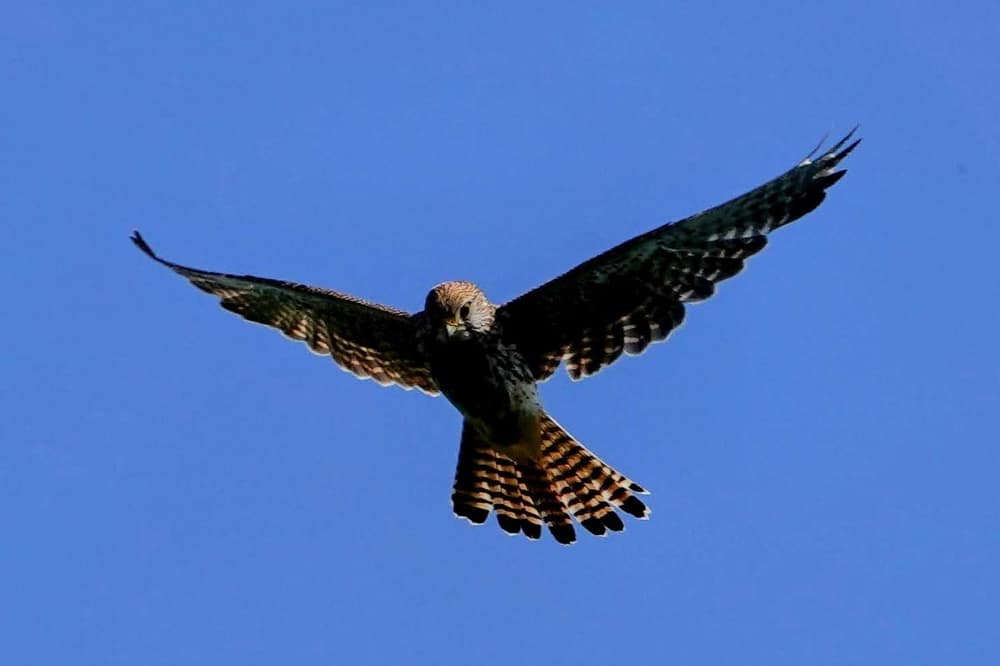
Falcons: speed and the stoop
Peregrines climb high and dive onto flying birds. Kestrels hover over fields and drop onto insects and voles.
Hawk vs Eagle: Key Differences
Short answer
An eagle is much bigger than a hawk, with a heavier body, a bigger head and beak, and longer, broader wings. Both are in the same family and kill with their talons, so the difference is mostly size and build.
Red-tailed hawkRed-tailed hawk, the classic North American “buteo” hawk: brown, stocky and broad-headed.
Photo: AMMuench, CC BY 4.0, via Wikimedia Commons
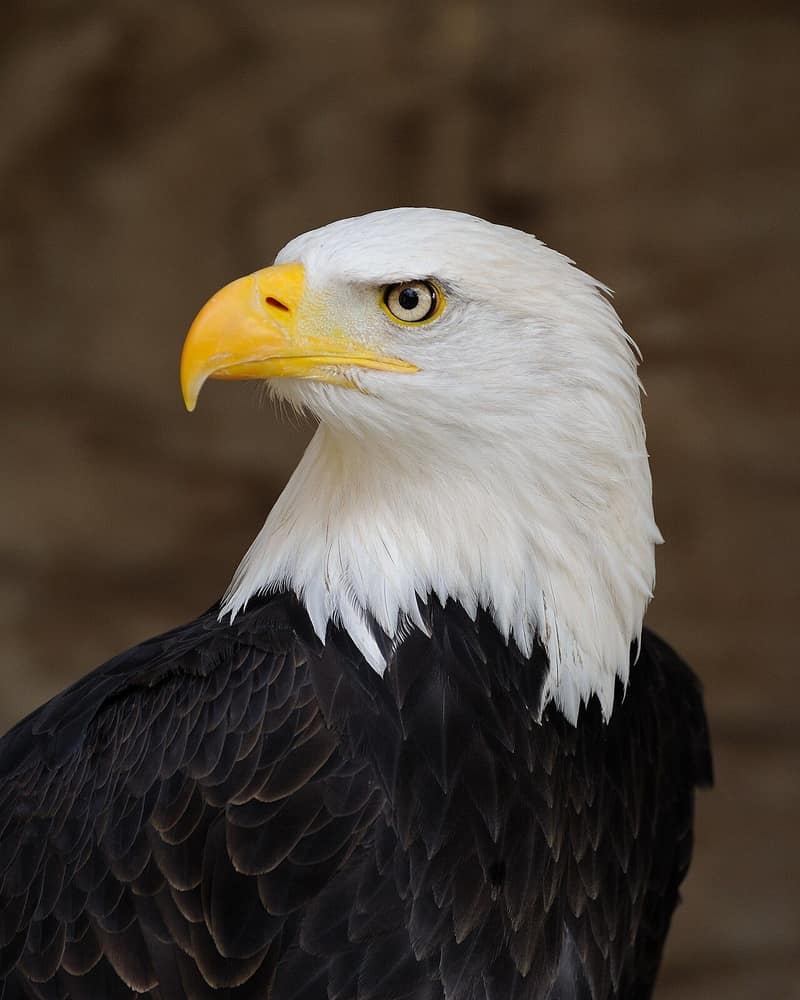 Bald eagle
: a huge head and deep yellow bill. Adults take about five years to get the white head.
Photo: Saffron Blaze, CC BY-SA 3.0, via Wikimedia Commons
| Feature | Red-tailed hawk | Bald eagle |
|---|---|---|
| Length | 45–65 cm | 71–96 cm |
| Weight | 0.69–1.46 kg | 3–6.3 kg (about 4 times heavier) |
| Wingspan | 114–133 cm | About 2 m |
| Adult colors | Brown above, pale belly with a dark belly band, rusty red tail | Dark brown body, white head and tail |
| Diet | Mostly rodents and rabbits | Mostly fish, plus waterbirds and carrion |
| Voice | Hoarse, descending scream | Weak whistles and chattering |
Young bald eagles are brown all over for their first few years and are often mistaken for hawks. Size is the giveaway: even a young eagle is far larger than a red-tail. See our bald eagle guide and bald eagle life cycle.
Eagle vs Falcon: Key Differences
Short answer
An eagle is several times heavier than a falcon and built for power and soaring. A falcon is smaller, faster and more agile, with pointed wings, and it belongs to a different family.
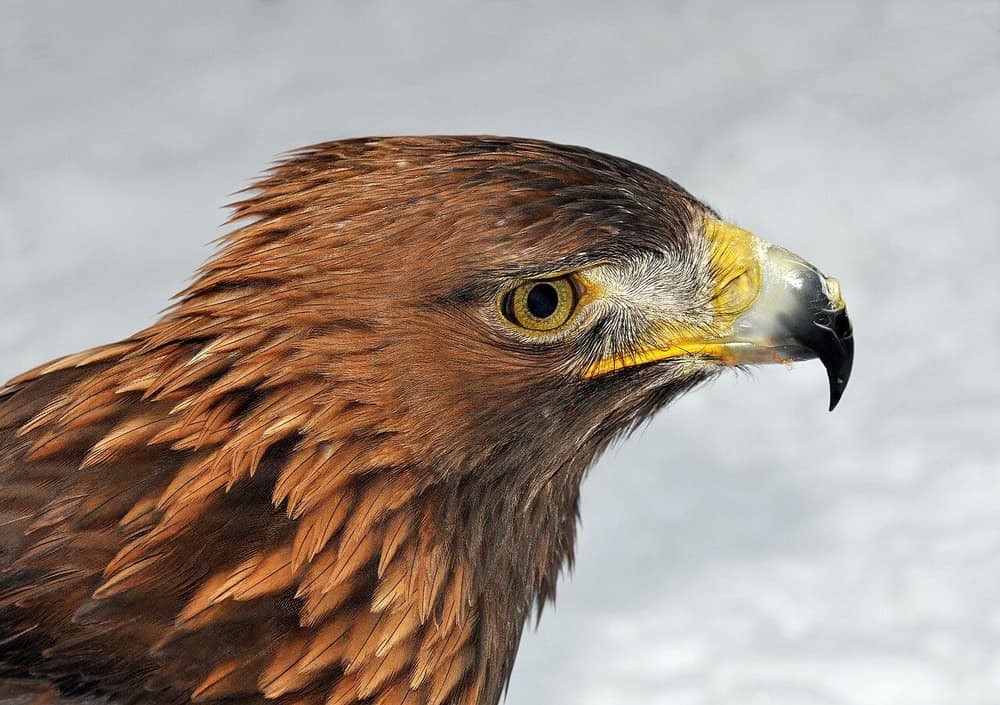 Golden eagle
: dark brown with a golden nape, a hunter of open country and mountains.
Photo: Michael Gäbler, CC BY 3.0, via Wikimedia Commons
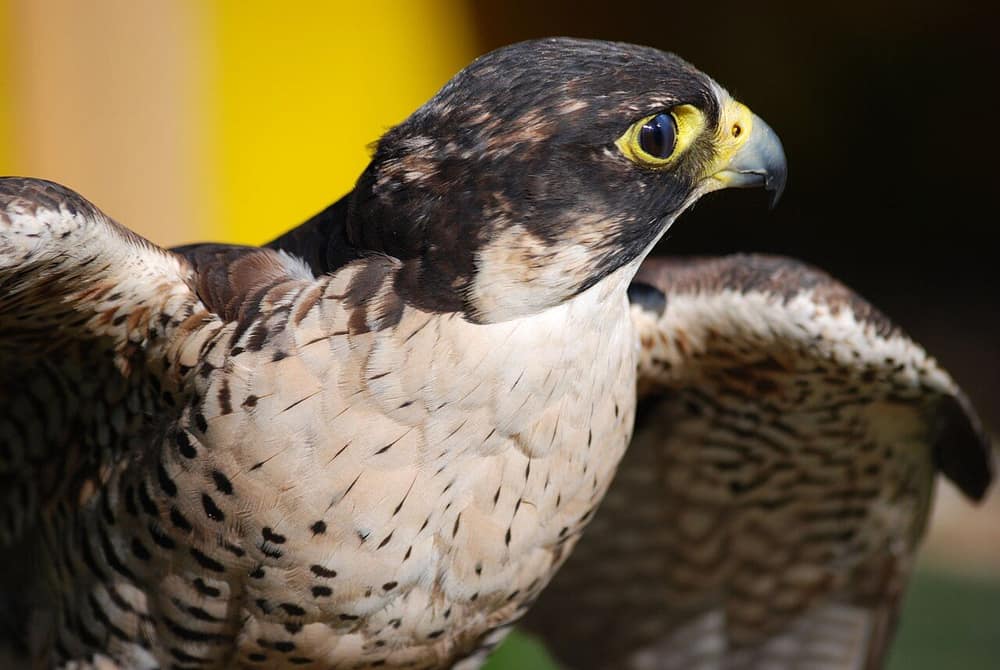 Peregrine falcon
: dark hood and “mustache”, large dark eye and a short, notched beak.
Photo: Lilly M, CC BY-SA 3.0, via Wikimedia Commons
| Feature | Bald eagle | Peregrine falcon |
|---|---|---|
| Length | 71–96 cm | 36–49 cm |
| Weight | 3–6.3 kg | 0.53–1.6 kg (an eagle can weigh 4–10 times as much) |
| Wingspan | About 2 m | 100–110 cm |
| Wings | Broad, flat and long | Narrow and pointed |
| Fastest move | Powerful glides and short dives | The stoop: radar-measured up to 184 km/h in the wild |
| Kills with | Talons | Foot strike, then beak bite |
Hawk vs Falcon: Key Differences
Short answer
Hawks have broad, rounded wings and kill with their feet; falcons have long, pointed wings, a notched beak and kill with a bite. In flight, falcons look sleek and fast while hawks look broad and soar more.
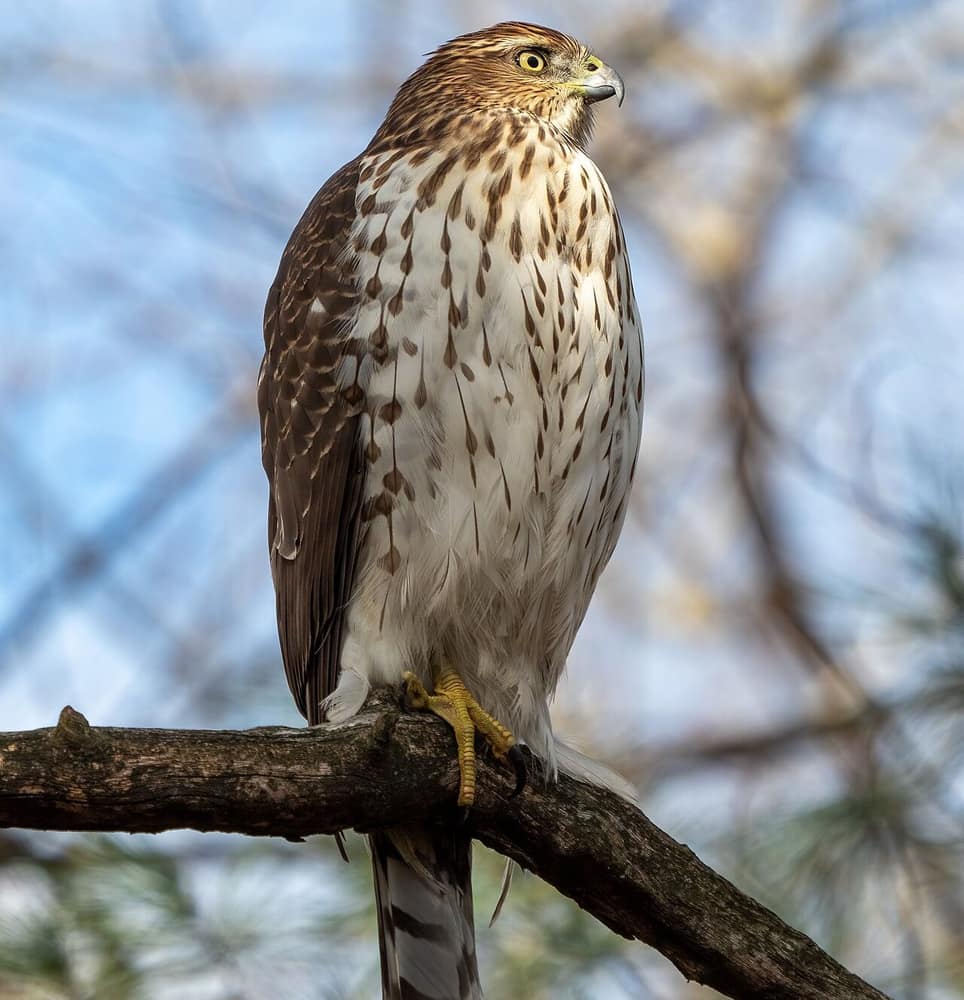 Cooper’s hawk
 (young bird): an accipiter with short wings and a long tail for chasing birds through trees.
Photo: Rhododendrites, CC BY-SA 4.0, via Wikimedia Commons
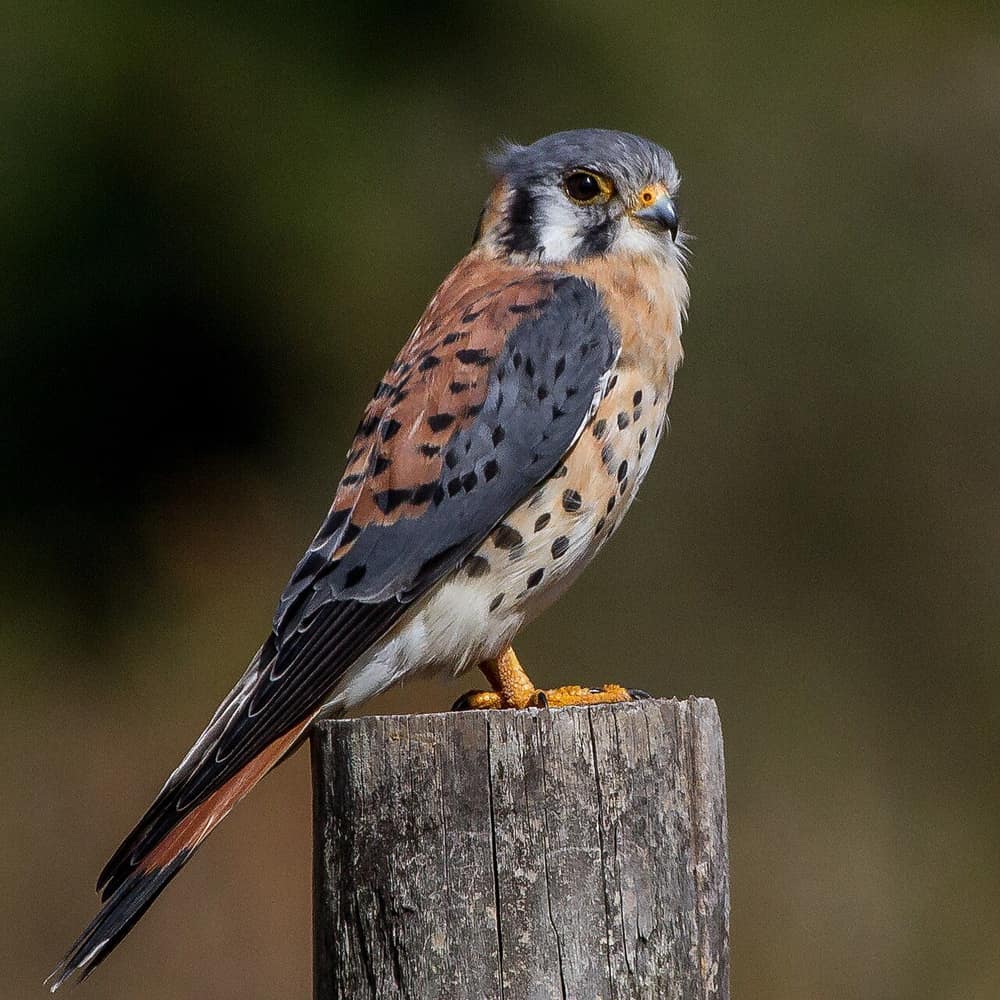 American kestrel (falcon)
American kestrel (male): North America’s smallest falcon, about the size of a mourning dove.
Photo: Andy Morffew, CC BY 2.0, via Wikimedia Commons
| Feature | Red-tailed hawk | Cooper’s hawk | Peregrine falcon |
|---|---|---|---|
| Length | 45–65 cm | 37–45 cm | 36–49 cm |
| Weight | 0.69–1.46 kg | 0.22–0.68 kg | 0.53–1.6 kg |
| Wings | Broad, rounded | Short, rounded | Long, pointed |
| Hunting style | Watches from a perch or soars, then drops onto prey | Surprise chases through trees | High-speed dives and chases in open air |
| Main prey | Rodents | Birds | Birds |
| Family | Accipitridae | Accipitridae | Falconidae |
Field tip: a perched falcon’s wingtips reach close to the tip of its tail, and many falcons show a dark stripe below the eye. A perched accipiter shows short wings and a long tail. See the peregrine falcon guide.
Hawk vs Eagle vs Falcon: Who Would Win in a Fight?
Short answer
In real encounters, size usually decides: eagles routinely take food from hawks and falcons, and bigger raptors are the ones that kill smaller ones. Actual fights are rare, because birds of prey avoid injuries; most encounters are chases, food theft or nest defense.
We do not score imaginary fights. Instead, here is what field studies have actually recorded when these birds meet. A review of 39 studies found that raptors killing other raptors is widespread and size-based (Sergio & Hiraldo 2008).
| Encounter | What was observed | Source |
|---|---|---|
| Bald eagle vs peregrine falcon | On Vancouver Island, bald eagles took 10 ducks from peregrines shortly or immediately after the falcons killed them. Feeding peregrines flew up and called but did not attack an eagle set on taking the carcass. | Dekker 1995 |
| Golden eagle vs peregrine falcon | Golden eagles, rare in the area, took freshly caught ducks from peregrines on three occasions. | Dekker 1995 |
| Red-tailed hawk vs peregrine falcon | Red-tailed hawks took two freshly caught ducks from medium-sized adult peregrines, but large female peregrines were able to drive red-tails off. | Dekker 1995 |
| Gyrfalcon vs peregrine falcon | An immature male gyrfalcon stole a freshly caught pintail from an adult female peregrine. | Dekker 1995 |
| Bald eagle vs peregrine (dunlin chases) | Eagles joined peregrines chasing dunlins; six eagles either caught the dunlin or made the falcon drop it. | Dekker & Bogaert |
| Bald eagle vs hawks and golden eagles | Wintering bald eagles in Nebraska stole prey from ferruginous, red-tailed and rough-legged hawks and from golden eagles. | Jorde & Lingle |
| Bald eagle vs osprey | Bald eagles chase ospreys and force them to drop their fish. | Audubon |
| Raptor kills raptor | Across 39 studies, killing between raptor species was widespread and mostly size-based: bigger species killed smaller ones. | Sergio & Hiraldo 2008 |
Eagle vs hawk encounters
An eagle has a large advantage in weight, foot size and reach. In Nebraska, wintering bald eagles regularly stole prey from red-tailed, rough-legged and ferruginous hawks (Jorde & Lingle). Hawks do dive at eagles that come too close to their nests, but they harass rather than fight.
Eagle vs falcon encounters
A falcon cannot match an eagle’s size, but it is far more agile. On Vancouver Island, peregrines lost ducks to bald and golden eagles and flew up calling rather than fighting (Dekker 1995). The falcon’s best move is to keep its distance.
Can a falcon beat a hawk?
It depends on which falcon and which hawk. A large female peregrine (up to 1.6 kg) far outweighs a male Cooper’s hawk (as little as 220 g), and in Dekker’s study large female peregrines were able to drive red-tailed hawks away. Yet red-tails also took ducks from medium-sized peregrines (Dekker 1995). Falcons win on speed; hawks win on grip.
What Annoys an Eagle? Mobbing and Food Theft
Short answer
Crows, jays, blackbirds, grackles, kingbirds and even chickadees regularly chase and dive at eagles, hawks and falcons. This behavior, called mobbing, drives predators away from nests and feeding areas, and it rarely harms either bird (Cornell Lab).
Mobbing works because a raptor that has been spotted has lost the element of surprise, and the small birds are more maneuverable than the big one. Mobbing calls also recruit other birds to join in (Cornell Lab; Audubon). Even small songbirds will chase large hawks high in the sky, far from any nest (The Nature Conservancy).
Eagles also annoy other raptors: bald eagles chase ospreys until they drop their fish (Audubon) and rob peregrines and hawks, as shown in the encounters table above.
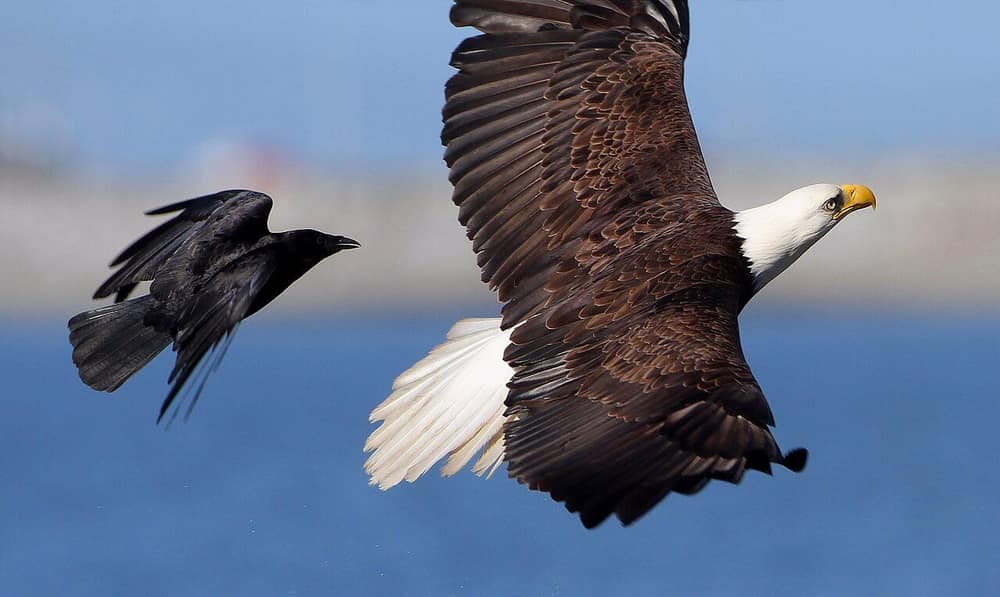
A crow mobbing a bald eagle. Small birds harass raptors to drive them away from nests and feeding areas.
Photo: Nigel from Vancouver, CC BY 2.0, via Wikimedia Commons
Hawk vs Eagle vs Falcon vs Vulture, Kite and Osprey
Short answer
Vultures, kites and ospreys are the birds most often confused with hawks, eagles and falcons. Vultures have bare heads and eat carrion, kites are slim, graceful hawk relatives, and ospreys are fish specialists in a family of their own.
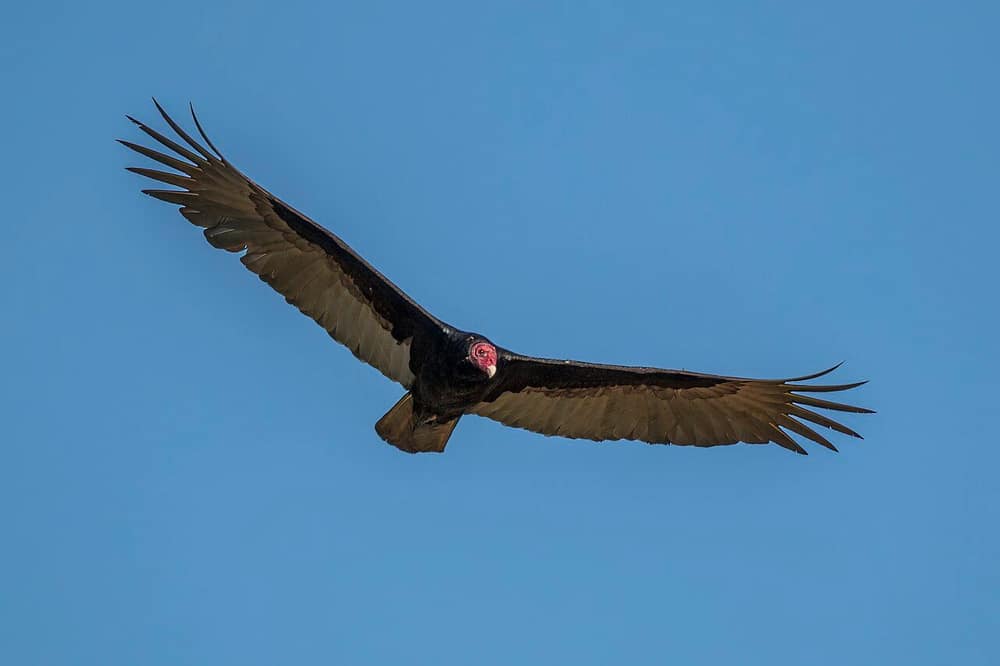 Turkey vulture
: a tiny bare red head, two-tone wings held in a shallow V, and a wobbly, teetering glide.
Photo: Charles J. Sharp, CC BY-SA 4.0, via Wikimedia Commons
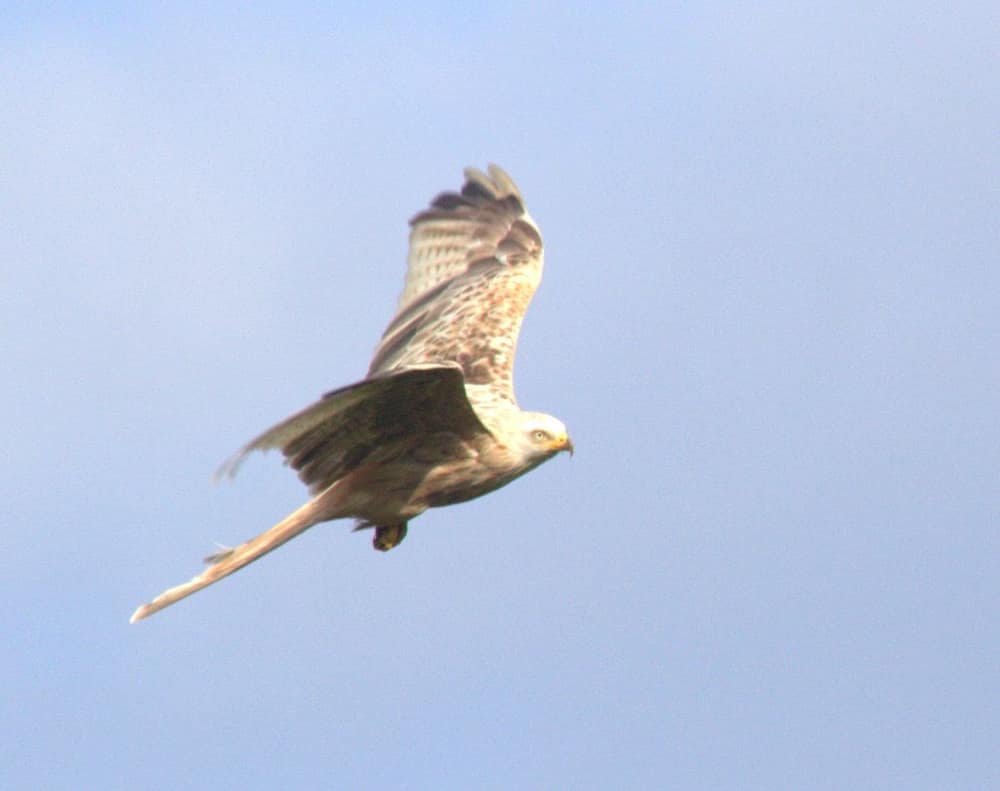 Red kite
: long, angled wings and a deeply forked tail. Kites belong to the same family as hawks and eagles.
Photo: Christine Matthews, CC BY-SA 2.0, via Wikimedia Commons
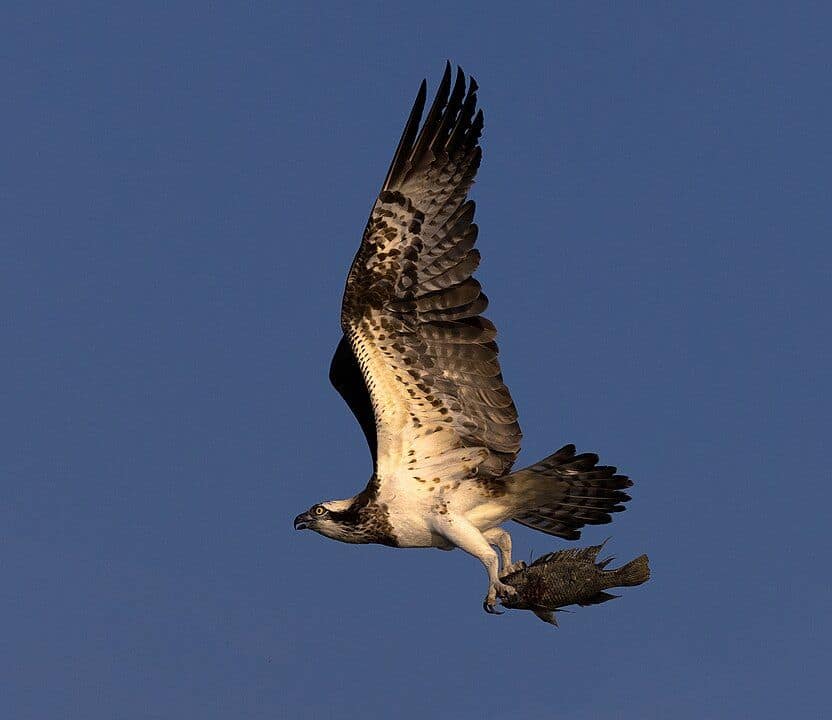 Osprey
An osprey carrying a fish. Ospreys are “fish hawks” in a family of their own.
Photo: Sumeet Moghe, CC BY-SA 4.0, via Wikimedia Commons
| Bird | Family | How to tell it apart | Size (length / wingspan) |
|---|---|---|---|
| Turkey vulture | Cathartidae (New World vultures) | Tiny bare red head; wings held in a shallow V with a wobbly glide; silvery flight feathers; weak feet; eats carrion | 64–81 cm / 170–178 cm |
| Kites (red, black, Mississippi) | Accipitridae (same family as hawks) | Buoyant, graceful flight; red and black kites have a forked or notched tail; some kites have pointed, falcon-like wings | Varies by species |
| Osprey | Pandionidae (its own family) | White underparts, dark stripe through the eye, long wings bent into an “M”; plunges feet-first into water for fish | 54–58 cm / 150–180 cm |
| Buzzard | Depends on country | UK: a Buteo hawk. US: slang for a vulture | — |
Eagle vs vulture
A soaring turkey vulture can look eagle-sized (wingspan 170–178 cm), but its head is tiny and bare, and it holds its wings in a shallow V and rocks from side to side (Cornell Lab). Vultures have weak feet and feed on carrion; eagles have powerful talons and hunt.
Hawk vs kite
Kites are in the same family as hawks. They are slimmer and more buoyant in flight. Red and black kites have a forked or notched tail, and the Mississippi kite has pointed, almost falcon-like wings.
Eagle vs osprey
Ospreys are smaller than eagles (54–58 cm long) and have white underparts, a dark eye stripe and long, bent wings (Cornell Lab). Audubon describes the osprey as a fish-hawk now placed in its own family (Audubon).
What Do Hawks, Eagles and Falcons Sound Like?
Short answer
The famous “eagle scream” in movies is actually a red-tailed hawk. Real bald eagles make weak, high whistles and chattering notes, and peregrine falcons give a harsh, repeated cacking near their nests.
Audubon calls the dubbed hawk scream the most common bird error on screen: nearly every time a bald eagle appears, it gets a red-tailed hawk’s voice because it sounds more dramatic (Audubon). One raptor expert described the real bald eagle call as sounding “like a seagull with laryngitis” (Maine Public).
Red-tailed hawk: the “movie eagle” scream
The hoarse, descending scream that films and TV routinely put on bald eagles.
Listen for: a raspy, two- to three-second “kee-eee-arr” that falls in pitch.
Recording: Jonathon Jongsma (xeno-canto XC71575), via Wikimedia Commons · CC BY-SA 3.0
Bald eagle: what it really sounds like
A real bald eagle recorded in Yellowstone National Park.
Listen for: thin, high whistles and a stuttering, chattering series of notes, nothing like the scream above.
Recording: NPS & MSU Acoustic Atlas / Jennifer Jerrett (Yellowstone sound library), via Wikimedia Commons · Public domain
Peregrine falcon: harsh cacking
A peregrine calling at Yana, Karnataka, India (February 2010).
Listen for: harsh, rapid, repeated notes. Peregrines are mostly quiet away from their nest and call loudly near it.
Recording: Sharadapte, via Wikimedia Commons · CC BY-SA 4.0
Recorded a raptor call? Try our bird sound identifier or the general animal sound identifier.
Where Do Hawks, Eagles and Falcons Live?
Short answer
All three groups live on every continent except Antarctica. Hawks like woodland edges and farmland, eagles need large territories near water or open country, and falcons use cliffs, open land and, increasingly, tall city buildings.
| Group | Typical habitats | Examples |
|---|---|---|
| Hawks | Woodland edges, farmland, roadsides, suburbs and city parks | Red-tailed hawks on highway poles; Cooper’s hawks hunting at backyard feeders |
| Eagles | Large lakes, rivers and coasts; open mountains and grassland; tropical forest | Bald eagles near fish-rich water; golden eagles in open hills; harpy eagles in rainforest |
| Falcons | Cliffs, coasts, open country, Arctic tundra and tall city buildings | Peregrines on skyscrapers and bridges; kestrels on roadside wires; gyrfalcons in the Arctic |
Common Hawk, Eagle and Falcon Species to Know
Red-tailed hawk
Hawk · Buteo
North America’s most familiar hawk, often seen on roadside poles. Rusty red tail in adults.
Red-tailed hawk guideCooper’s hawk
Hawk · Accipiter
A crow-sized bird hunter that often visits backyard feeders to catch doves and songbirds.
Cornell species pageBald eagle
Eagle · Sea eagle
The US national bird: a fish-eating eagle of lakes, rivers and coasts, and a skilled food thief.
Bald eagle guideGolden eagle
Eagle · Booted eagle
A powerful hunter of open country across the Northern Hemisphere, with a golden nape.
Golden eagle guide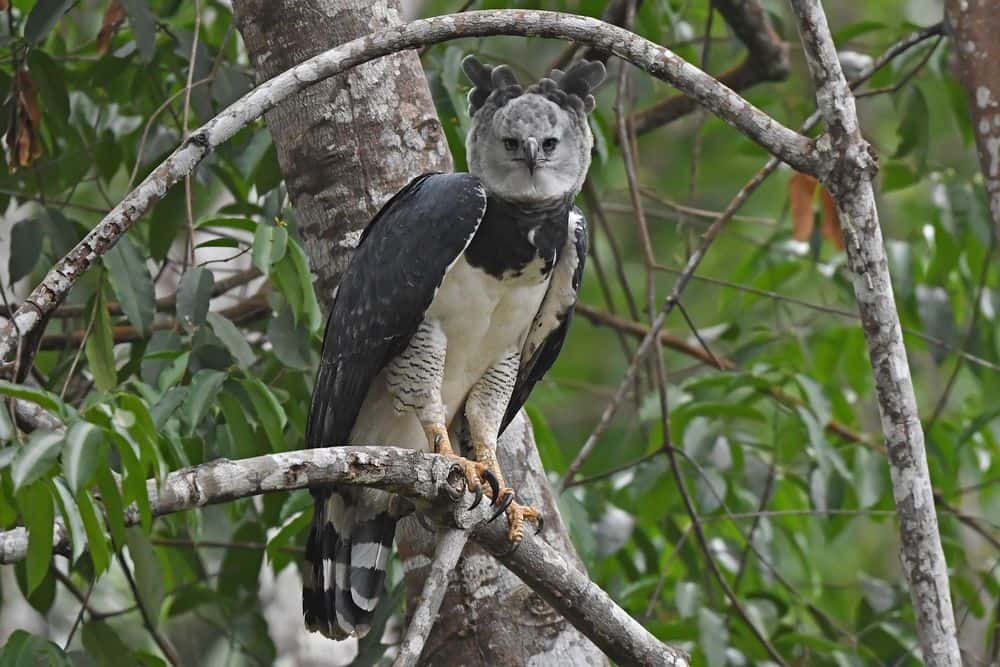
Harpy eagle
Eagle · Forest eagle
A rainforest giant of Central and South America that hunts sloths and monkeys.
Harpy eagle guidePeregrine falcon
Falcon
The fastest animal in a dive, found on every continent except Antarctica and in many cities.
Peregrine falcon guideAmerican kestrel
Falcon · Kestrel
North America’s smallest falcon, a colorful hunter of insects and mice that perches on wires.
Cornell species page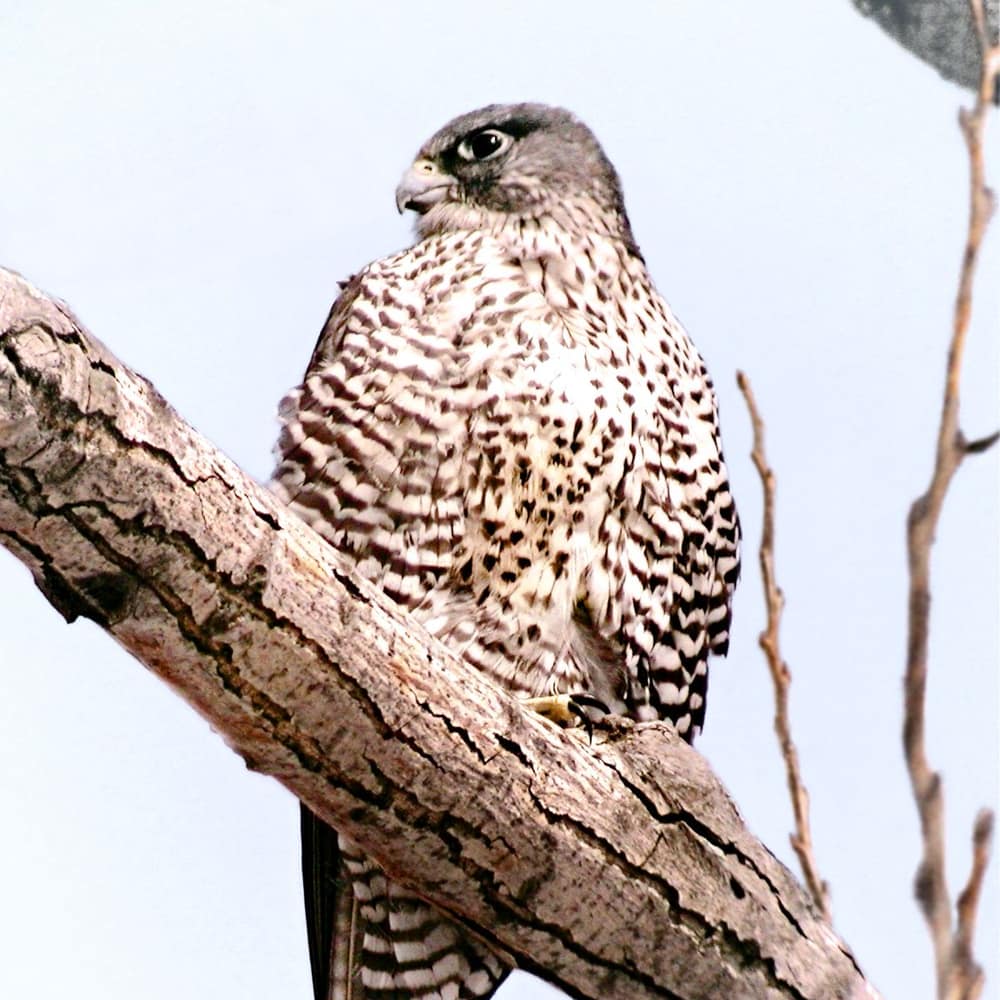
Gyrfalcon
Falcon
The largest falcon, an Arctic species that ranges from dark gray to almost pure white.
Why falcons are so expensiveHawk vs Eagle vs Falcon in Arabic
Short answer
In Arabic, a falcon is صقر (ṣaqr), an eagle is عقاب (ʿuqāb) and a goshawk-type hawk is باز (bāz). The word نسر (nasr) classically means vulture but is often used for eagles today.
| English | Arabic | Pronunciation | Notes |
|---|---|---|---|
| Falcon | صقر | ṣaqr | The everyday word for falcon; also used loosely for hawks |
| Peregrine falcon | شاهين | shāhīn | A traditional falconry name |
| Hawk (goshawk type) | باز | bāz | Classical word for goshawk-type hawks used in falconry |
| Eagle | عقاب | ʿuqāb | The precise word for eagle |
| Vulture (often used for “eagle”) | نسر | nasr | Classically a vulture; widely used for eagles in modern media |
| Gyrfalcon | سنقر | sunqur | The largest falcon |
| Kestrel | عوسق | ʿawsaq | Small hovering falcon |
| Osprey | عقاب نساري | ʿuqāb nassārī | The fish-eating “osprey eagle” |
| Bird of prey | طائر جارح | ṭāʾir jāriḥ | Plural: طيور جارحة (ṭuyūr jāriḥa) |
Are Hawks, Eagles and Falcons Protected?
Short answer
Yes, in most countries. In the United States, native hawks, eagles and falcons are protected under the Migratory Bird Treaty Act, and bald and golden eagles have additional protection.
- It is illegal in the US to kill, capture or keep native raptors, or to possess their feathers, without a permit (U.S. Fish & Wildlife Service).
- The Bald and Golden Eagle Protection Act also prohibits disturbing eagles (U.S. Fish & Wildlife Service).
- Both the peregrine falcon and the bald eagle declined sharply in the 20th century, largely because of DDT, and recovered after it was banned (Cornell Lab: peregrine; bald eagle).
- Falconry is legal in many countries but tightly regulated with permits and training.
Hawk vs Eagle vs Falcon FAQs
What is the difference between a hawk, an eagle and a falcon?
+
Eagles are the largest, with huge heads, deep beaks and long, broad wings. Hawks are medium-sized with broad, rounded wings. Hawks and eagles are in the same family and kill with their talons. Falcons are in a separate family, have long, pointed wings for speed and kill with a bite from a notched beak.
Which is bigger: a hawk, an eagle or a falcon?
+
An eagle. A bald eagle weighs 3–6.3 kg and has a wingspan of about 2 m, around four times heavier than a red-tailed hawk (0.69–1.46 kg) or a peregrine falcon (0.53–1.6 kg). Hawks and falcons overlap in size.
Which is faster: a hawk, an eagle or a falcon?
+
The falcon. A peregrine reached 389 km/h (242 mph) in an experimental dive from an airplane, Guinness estimates hunting stoops at about 320 km/h, and the fastest radar-measured wild stoop was 184 km/h. No comparable dive speeds have been measured for hawks or eagles.
Which is stronger: a hawk, an eagle or a falcon?
+
The eagle, because it is several times heavier and has the biggest feet. Weight for weight, hawks have a stronger grip and falcons a stronger bite. Online claims of “400 psi” grips have no scientific measurement behind them.
Who would win in a fight: a hawk, an eagle or a falcon?
+
Field studies show size usually decides: eagles routinely steal prey from hawks and falcons, and larger raptors are the ones that kill smaller ones. Real fights are rare because injuries are costly, so most encounters are chases or food theft.
Can a falcon beat a hawk?
+
Sometimes. A large female peregrine can drive off a red-tailed hawk and outweighs small hawks such as male Cooper’s hawks, but red-tails have also been seen taking prey from peregrines. Falcons rely on speed to avoid fights; hawks have the stronger grip.
Can a hawk kill an eagle?
+
It is very unlikely. Eagles are several times heavier than hawks. Hawks may dive at an eagle near their nest to chase it away, but documented raptor killings almost always involve a larger species killing a smaller one.
Is a falcon a type of hawk?
+
No. Falcons belong to the family Falconidae and are more closely related to parrots than to hawks. Old names such as “duck hawk” (peregrine) and “sparrow hawk” (American kestrel) caused the confusion.
Is an eagle just a big hawk?
+
Roughly, yes. Eagles and hawks are in the same family, Accipitridae, and BirdLife International notes that birds are called eagles because they are large and hunt large prey, not because they form one close group. The bald eagle is even more closely related to some big hawks than to the golden eagle.
Are falcons related to parrots?
+
Yes. A 2014 whole-genome study placed falcons in the same major branch as parrots and songbirds, separate from hawks and eagles.
What sound does a bald eagle make?
+
A series of weak, high-pitched whistles and chattering notes. The dramatic scream used for eagles in movies is actually a red-tailed hawk.
How do you tell a hawk from a falcon in flight?
+
Look at the wings. Hawks have broad, rounded wings and often soar in circles; falcons have long, narrow, pointed wings and fly with fast, powerful wingbeats. Kestrels, which are small falcons, often hover.
What is the difference between a hawk and a buzzard?
+
It depends on the country. In the UK, buzzards are broad-winged hawks of the genus Buteo, the group that includes the red-tailed hawk. In the US, “buzzard” usually means a vulture.
What is the difference between an eagle and a vulture?
+
Eagles are hunters with feathered heads and powerful talons. Vultures mostly eat carrion, have bare heads and weak feet. A soaring turkey vulture holds its wings in a shallow V and rocks from side to side, while eagles soar on flat wings.
What is a falcon called in Arabic?
+
A falcon is صقر (ṣaqr) and a peregrine falcon is شاهين (shāhīn). An eagle is عقاب (ʿuqāb), while نسر (nasr) classically means vulture but is often used for eagles.
What annoys eagles?
+
Crows, jays, blackbirds, grackles and kingbirds often mob eagles, diving and calling to drive them away from nests and feeding areas. Mobbing rarely harms either bird. People who get too close to nests also disturb eagles, which is illegal in the US.
Are hawks, eagles and falcons protected?
+
Yes. In the US they are protected by the Migratory Bird Treaty Act, and eagles also by the Bald and Golden Eagle Protection Act. Most other countries protect birds of prey too.
Final Summary
- Eagles are the biggest and strongest: a bald eagle is about 71–96 cm long and 3–6.3 kg, around four times heavier than a red-tailed hawk or peregrine falcon.
- Falcons are the fastest: 389 km/h in an experimental dive, about 320 km/h estimated for hunting stoops, and 184 km/h measured by radar in the wild.
- Hawks are mid-sized, broad-winged hunters. Hawks and eagles share a family and kill with their talons; falcons are a separate family, closer to parrots, and kill with a bite.
- In real encounters, size usually wins: eagles routinely steal from hawks and falcons, but actual fights are rare.
- Quick ID: broad rounded wings = hawk; huge plank wings = eagle; narrow pointed wings = falcon. Vultures, kites and ospreys are the main lookalikes.
Sources
Measurements come from the Cornell Lab of Ornithology and zoo species accounts; speed, strength and encounter data come from peer-reviewed studies and record bodies; taxonomy follows the 2014 whole-genome bird tree. Photos and sound recordings are from Wikimedia Commons under the licenses credited with each one.
- Cornell Lab of Ornithology, All About Birds — Red-tailed Hawk identification and measurements
- Cornell Lab, All About Birds — Cooper’s Hawk identification and measurements
- Cornell Lab, All About Birds — Sharp-shinned Hawk identification and measurements
- Cornell Lab, All About Birds — Bald Eagle identification and measurements
- Cornell Lab, All About Birds — Golden Eagle identification and measurements
- Cornell Lab, All About Birds — Peregrine Falcon identification and measurements
- Cornell Lab, All About Birds — Gyrfalcon identification and measurements
- Cornell Lab, All About Birds — American Kestrel identification and measurements
- Cornell Lab, All About Birds — Osprey identification and measurements
- Cornell Lab, All About Birds — Turkey Vulture identification and measurements
- Cornell Lab, All About Birds — “What’s going on when I see little birds going after a big bird?” (mobbing)
- San Diego Zoo Wildlife Alliance — Harpy Eagle (size and weight)
- BirdLife International — Eagle (68 species; defined by prey size rather than relatedness)
- Encyclopaedia Britannica — Falcon
- Nature Alberta — What’s the difference between hawks, eagles, and falcons?
- Jarvis ED, et al. (2014). Whole-genome analyses resolve early branches in the tree of life of modern birds. Science 346:1320–1331
- Science News (2014) — New tree of life confirms strange history of birds
- EurekAlert! / NSF (2014) — “Big bang” of bird evolution mapped by international research team
- Guinness World Records — Fastest bird (diving)
- Air & Space / Smithsonian — Falling with the Falcon (how Frightful’s dive speed was measured)
- Peter D, Kestenholz M (1998). Stoops of Peregrine Falcon Falco peregrinus and Barbary Falcon F. pelegrinoides. Der Ornithologische Beobachter 95:107–112 (radar-measured dive speeds)
- Alerstam T, et al. (2007). Flight speeds among bird species: allometric and phylogenetic effects. PLoS Biology 5(8):e197
- Ponitz B, et al. (2014). Diving-flight aerodynamics of a peregrine falcon (Falco peregrinus). PLoS ONE 9(2):e86506
- Sustaita D, Hertel F (2010). In vivo bite and grip forces, morphology and prey-killing behavior of North American accipiters (Accipitridae) and falcons (Falconidae). Journal of Experimental Biology 213:2617–2628
- Dekker D (1995). Prey capture by Peregrine Falcons wintering on southern Vancouver Island, British Columbia. Journal of Raptor Research 29(1):26–29
- Dekker D, Bogaert L. Peregrine Falcon predation on Dunlins and ducks and kleptoparasitic interference from Bald Eagles wintering at Boundary Bay, British Columbia. Journal of Raptor Research
- Jorde DG, Lingle GR. Kleptoparasitism by Bald Eagles wintering in south-central Nebraska. Journal of Field Ornithology
- Sergio F, Hiraldo F (2008). Intraguild predation in raptor assemblages: a review. Ibis 150 (Suppl. 1):132–145
- National Audubon Society — Osprey field guide (bald eagles chasing ospreys for fish)
- Audubon / BirdNote — Mobbing: when smaller birds join forces to fend off larger birds
- The Nature Conservancy (Cool Green Science) — Why do little birds mob big birds?
- Audubon — Birdist Rule #50: Learn to live with bird errors in TV and movies
- Maine Public (2025) — Hollywood has been lying about what bald eagles really sound like
- U.S. Fish & Wildlife Service — Migratory Bird Treaty Act of 1918
- U.S. Fish & Wildlife Service — Bald and Golden Eagle Protection Act
- Arabic Wikipedia — عقاب (eagle)
- Arabic Wikipedia — نسر (vulture / “nasr”)
- Arabic Wikipedia — صقر (falcon)
Related Articles
Harpy Eagle: Size, Talons, Diet & Facts
One of the heaviest eagles on Earth: how big it really is, its huge talons, and why it hunts sloths and monkeys.
Read articleBald Eagle vs Golden Eagle
How to tell North America’s two eagles apart by size, color, range and behavior.
Read articleAnimal Vision Simulator: See Like an Eagle
Compare eagle, hawk and falcon eyesight with human vision.
Read articleHawk Life Cycle
From egg to fledgling to adult: how hawks grow and breed.
Read articleFalcon Life Cycle
How falcons hatch, learn to fly and become expert hunters.
Read article
Do Female Falcons Eat Male Falcons?
Why female raptors are bigger than males, and the truth behind the cannibalism myth.
Read article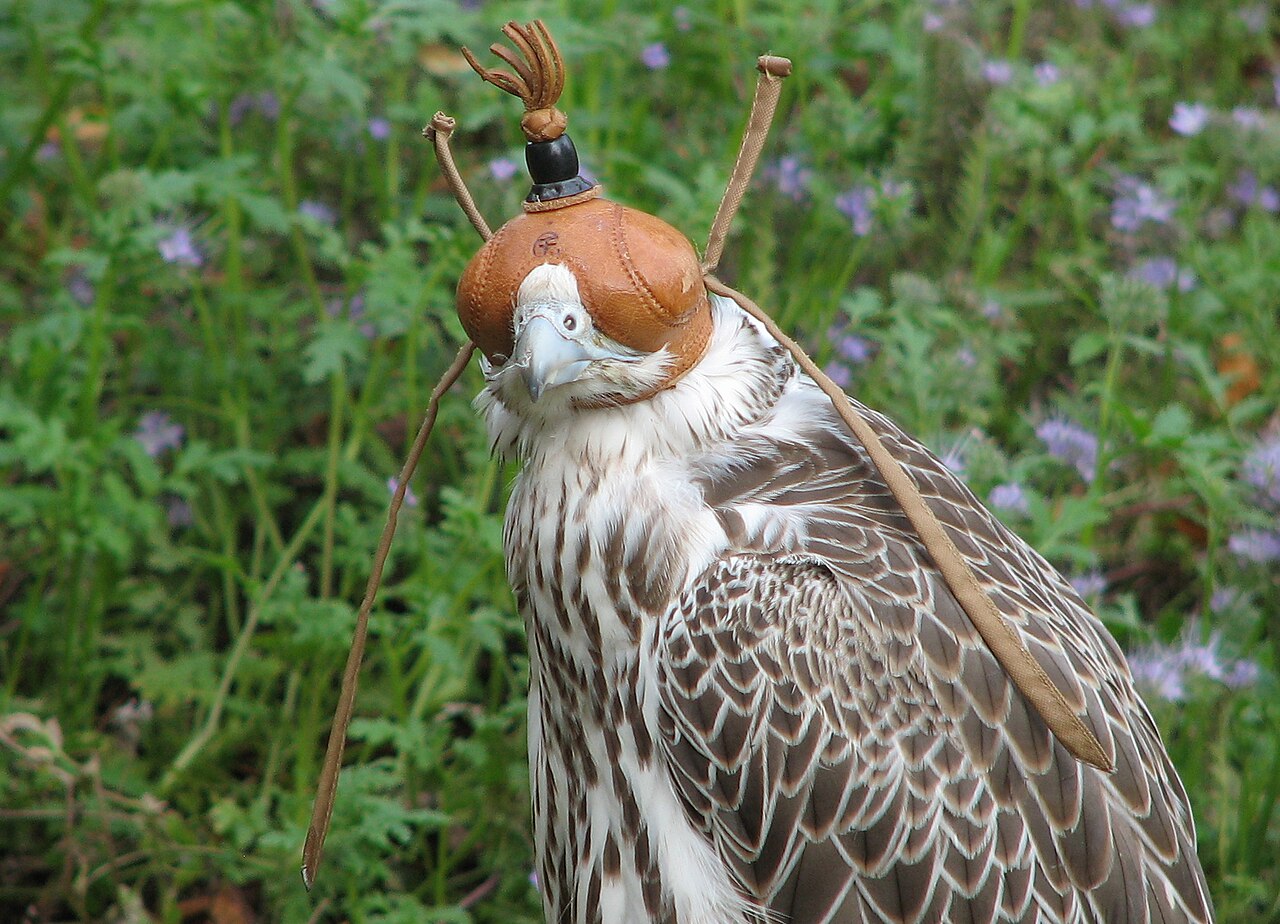
Why Do Falcons Wear Hoods?
The science behind falconry hoods and how covering a raptor’s eyes keeps it calm.
Read article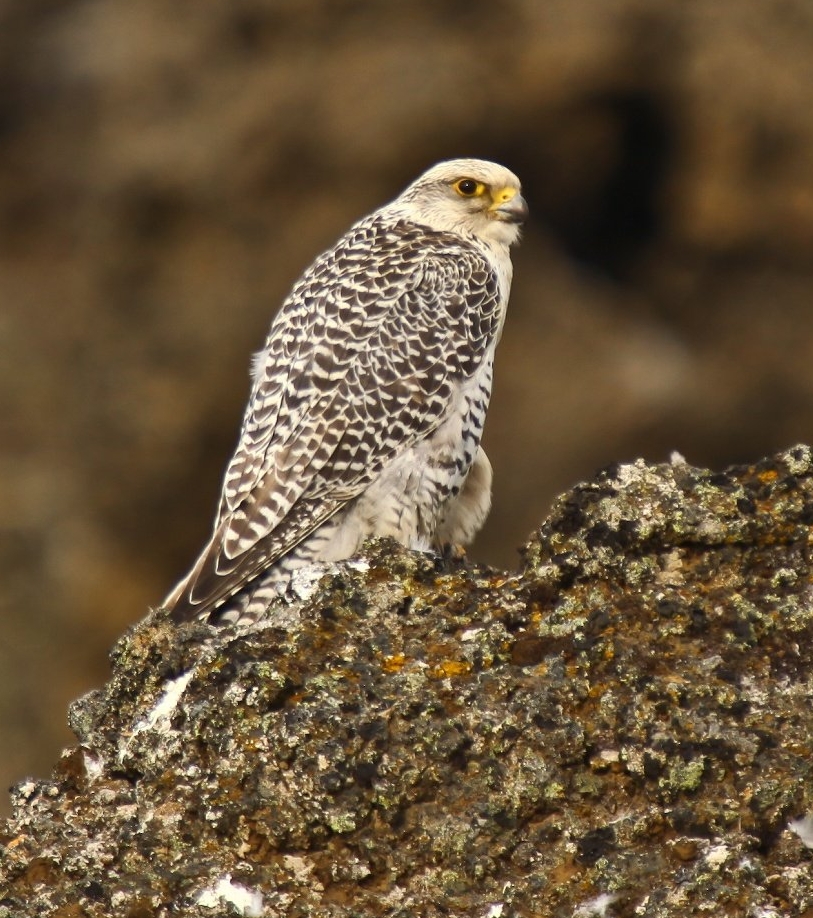
Why Are Falcons So Expensive?
Species, training, rarity and permits: what drives the price of a falcon.
Read articleIdentify a hawk, eagle or falcon
Upload a photo or a call recording to get likely species suggestions, then explore our species guides and other bird-of-prey comparisons.