What Sound Does a Zebra Make?
Zebras are not silent striped horses. They use loud brays and barks plus soft snorts, along with ear and mouth signals, to keep herds coordinated on the African savanna.
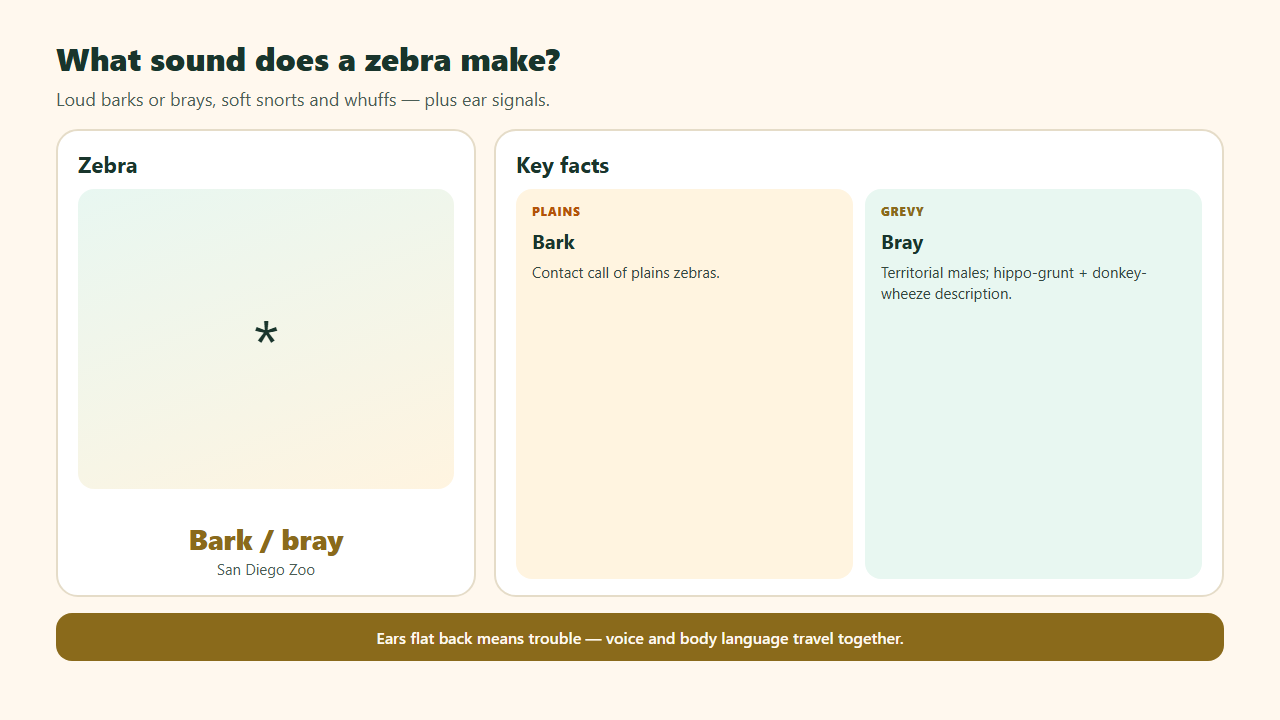
Quick answer
San Diego Zoo Wildlife Alliance says zebras make loud braying or barking sounds and soft snorts and whuffs, and also communicate with facial expressions (San Diego Zoo).
Contact-call style differs by species group: plains zebras bark, while Grevy’s zebra males bray to advertise territory — described in the zoo’s Grevy’s fact sheet (citing Estes) as like “a hippo’s grunt combined with a donkey’s wheeze” (SDZG fact sheet).
Ears flat back is a clear visual signal of trouble or dominance, used together with vocal threats (San Diego Zoo).
Listen to recordingsBark, Bray, Snort
Zoo education material groups zebra voice into loud brays or barks and soft snorts and whuffs (San Diego Zoo). Those calls help keep family groups together inside larger herds.
Like other equids, zebras also use short squeals when kicked or bitten and loose-lipped blowing when content, according to the Grevy’s behavior summary of shared horse-family calls (SDZG fact sheet).
Zebra sounds (San Diego Zoo / Grevy’s fact sheet)
| Sound | Who / when | Notes |
|---|---|---|
| Bark | Plains zebras (contact call) | Species contact call differs from horse whinny |
| Bray | Grevy’s males (territory / rivalry) | Loud; hippo-grunt + donkey-wheeze description |
| Snort / whuff | All (soft) | Close-range; contentment or mild alert |
| Alarm snort / squeal | Various contexts | Listed among equid shared calls on fact sheet |
Do All Zebras Sound the Same?
No. The Grevy’s zebra fact sheet contrasts contact calls across equids: horses whinny, plains zebras bark, and Grevy’s males (and wild asses) bray to announce territory, repel another male or drive a female (SDZG).
So if a viral clip sounds more like a donkey-ish bray than a sharp bark, it may be Grevy’s rather than a plains zebra — though you still need visuals or a reliable ID.
Sound Plus Body Language
San Diego Zoo emphasizes that ear position, eye openness and whether teeth are bared all carry meaning. Ears flat back signals trouble or “follow orders” (San Diego Zoo).
Zebras also strengthen bonds by mutual grooming — standing head to back and nibbling — which is tactile communication alongside voice (San Diego Zoo).
Audio examples
We do not yet host a plains zebra bark recording with clear rights. Below is a donkey bray for comparison with the Grevy’s “hippo grunt + donkey wheeze” description on the San Diego Zoo Grevy’s fact sheet — labeled as a comparison sample, not a zebra.
Donkey bray (comparison for Grevy’s zebra bray)
Grevy’s zebra stallions bray; zoo fact sheets compare the sound to a hippo grunt mixed with a donkey wheeze. This is a donkey bray for comparison — not a plains zebra bark.
Listen for: a loud, drawn-out bray with a rough, wheezing quality.
Recording: Site animal sound library (equid comparison clip) · Used on-site as an equid comparison sample
Frequently asked questions
What noise does a zebra make?+
Loud barks or brays, plus soft snorts and whuffs. Plains zebras are known for barking; Grevy’s stallions bray.
Do zebras neigh like horses?+
Not exactly. Horses whinny; plains zebras’ contact call is typically described as a bark, Grevy’s as a bray.
Why do zebras bark?+
As a contact and social call within the herd — keeping members oriented, especially when visibility is tricky.
How This Guide Was Prepared
Based on San Diego Zoo Wildlife Alliance zebra pages and the Grevy’s zebra behavior & ecology library fact sheet.
Last reviewed against sources: November 2026.
Related wildlife questions
Sources
Zoo education sources used in this guide:
Identify animals & explore guides
Heard a hoofed animal call? Try the sound tools or photo identifier.