Can Dogs Eat Cheese? In Small Amounts
Cheese is the go-to for hiding pills and rewarding good behaviour. A small piece is fine for many dogs, but lactose, salt and a few specific cheeses mean it is not right for every dog.
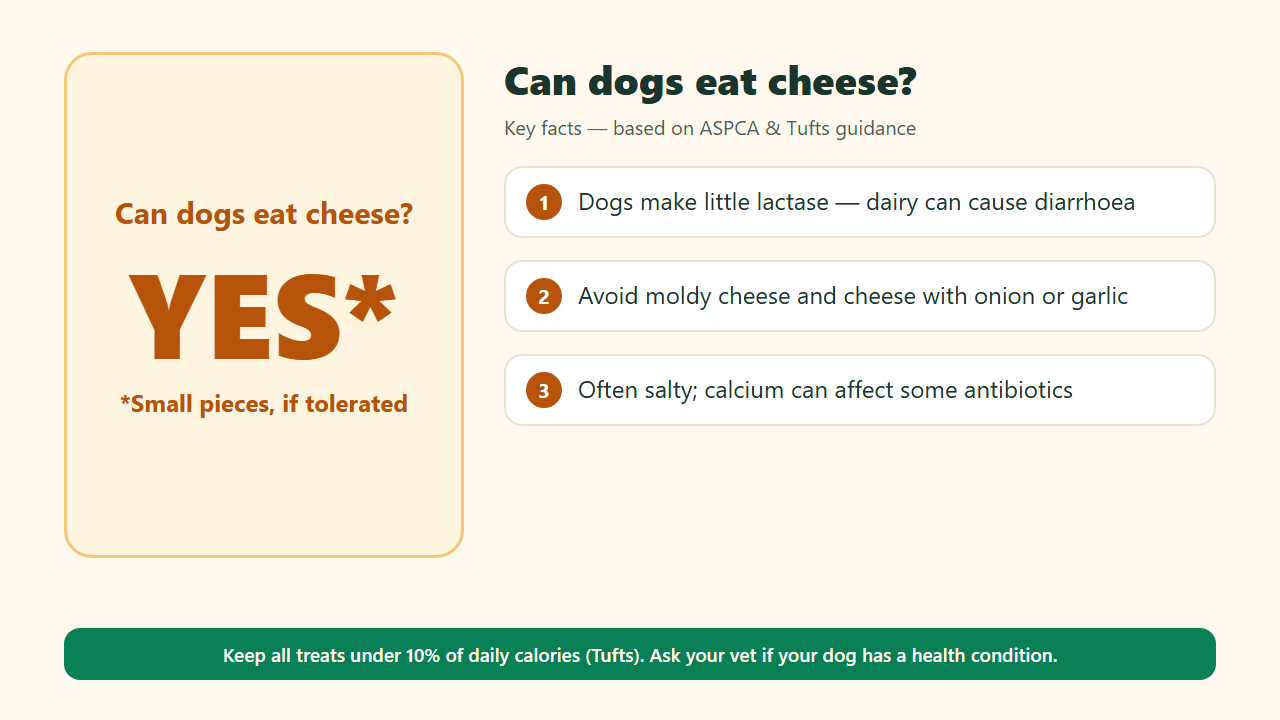
Quick answer
Most healthy dogs can have a small piece of plain cheese now and then. But dogs produce little lactase, the enzyme that digests milk sugar, so dairy can cause diarrhoea and digestive upset in some dogs (ASPCA).
Avoid moldy cheese and cheese flavoured with onion, garlic or chives. Tufts nutritionists also note cheese is often high in sodium, and its calcium can interfere with some antibiotics (Tufts).
Keep pieces small and count them toward your dog’s 10% daily treat allowance.
Lactose: Why Dairy Upsets Some Dogs
Because dogs do not produce much lactase, milk and other dairy-based products can cause diarrhoea and other digestive upset (ASPCA). Tolerance varies — try a very small piece first and skip cheese if your dog gets loose stools or gas afterwards.
Cheese and dogs: quick guide
| Cheese | Give to your dog? |
|---|---|
| Small piece of plain cheese | Usually fine for healthy dogs that tolerate dairy |
| Cheese with onion, garlic or chives | No — these are toxic to dogs |
| Moldy or spoiled cheese (e.g. from the bin) | No — may contain tremorgenic mycotoxins |
| Cheese to hide antibiotics | Ask your vet — calcium can reduce absorption of some antibiotics |
| Any cheese for a dog with pancreatitis, heart or kidney disease | Ask your vet first |
Cheeses to Avoid
- Moldy or spoiled cheese. Pet Poison Helpline lists moldy cheese among foods that can contain tremorgenic mycotoxins, which can cause vomiting, tremors, seizures and fever (Pet Poison Helpline). Keep bins and compost out of reach.
- Cheese with onion, garlic or chives. All of these are Allium plants that can damage red blood cells (Merck) — see can dogs eat onions?
- Large amounts of rich cheese. Eating large amounts of table scraps is believed to be a common risk factor for pancreatitis in dogs, and dogs that have had it are usually kept on low-fat food and treats (Merck).
Using Cheese to Give Pills
Cheese is one of the most common foods owners use to give medication. Tufts veterinary nutritionists highlight two problems: cheese is often high in sodium, which matters for dogs with heart or kidney disease, and the calcium in cheese and milk can interfere with absorption of certain antibiotics (Tufts). Ask your vet whether your dog’s medication can be given with food, and use only enough to cover the pill.
How Much Cheese Can a Dog Have?
Tufts University’s veterinary nutritionists recommend that treats make up no more than 10% of daily calories. For example, a 10 lb (4.5 kg) dog needs about 300 calories a day on average, so its treat allowance is about 30 calories; an average 75 lb (34 kg) dog needs about 1,400 calories, allowing about 140 calories of treats (Tufts). Individual needs vary, and foods that suit a healthy dog may not suit one with a medical condition.
Tufts specifically warns that cheese slices used to give medication count toward that 10% (Tufts). Check the calories on the pack and cut pieces to the size of a fingertip for small dogs.
Frequently asked questions
Is cheese bad for dogs?+
Not usually in small amounts for healthy dogs that tolerate dairy. Dogs produce little lactase, so cheese can cause diarrhoea in some. Avoid moldy cheese and cheese with onion, garlic or chives, and check with your vet if your dog has a medical condition.
Can I give my dog cheese with their antibiotics?+
Ask your vet first. Tufts veterinary nutritionists note that calcium in cheese, milk and other calcium-rich foods can interfere with the absorption of certain antibiotics.
How much cheese can I give my dog?+
Only small pieces, counted as part of the treat allowance — all treats together should stay under about 10% of daily calories, which is around 30 calories for a 10 lb dog.
My dog ate moldy cheese from the bin. What should I do?+
Call your vet or a pet poison control line. Moldy food can contain tremorgenic mycotoxins that cause vomiting, tremors, seizures and fever, according to Pet Poison Helpline.
How This Page Was Prepared
This page was researched and written by the AnimalIDFinder editorial team using veterinary school, veterinary manual, poison control and regulatory sources, all linked below. It has not been individually reviewed by a veterinarian and does not replace professional advice. Last reviewed against sources: October 2026.
Related dog guides
25 Human Foods That Are Bad for Dogs
Toxic foods, choking and blockage hazards, and what to do if your dog eats one.
Read guideCan Dogs Eat Peanut Butter?
Yes, if it has no xylitol. How to check the label, portion sizes, and pill tips.
Read guideCan Dogs Eat Eggs?
Yes, fully cooked and plain. Portion sizes and why raw eggs are not recommended.
Read guideSources
Veterinary and regulatory references used on this page:
- ASPCA Animal Poison Control — People foods to avoid feeding your pets
- Tufts Petfoodology — Pill-popping pets: are the foods you use to give pills safe?
- Tufts Petfoodology — Top five nutrition mistakes pet owners make
- Pet Poison Helpline — Moldy food (mycotoxins)
- Merck Veterinary Manual — Garlic and onion (Allium spp) toxicosis in animals
- Merck Veterinary Manual — Pancreatitis and other disorders of the pancreas in dogs
Explore more dog guides
Nutrition guides are educational only. Browse related dog articles, calculators and the photo identifier, or return to the guides hub.



