Can Dogs Eat Eggs? Yes — Cooked and Plain
Eggs are a simple, protein-rich treat most dogs love. The key points are to cook them fully, keep them plain and keep the portion in proportion to your dog’s size.
Quick answer
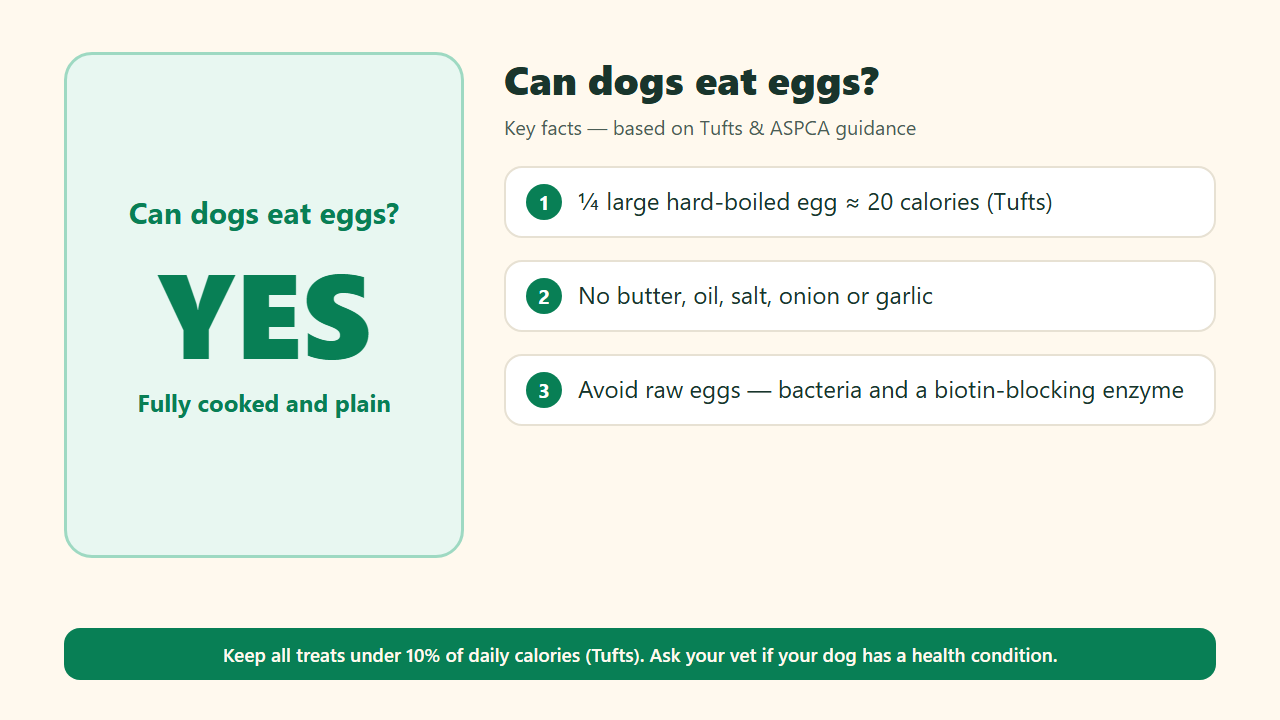
Yes, dogs can eat eggs — fully cooked and plain. Tufts University’s veterinary nutritionists list hard-boiled egg among healthy, low-calorie treat options: about a quarter of a large egg is around 20 calories (Tufts).
Avoid raw eggs. They can carry bacteria such as Salmonella, and raw egg white contains an enzyme that can interfere with absorption of a B vitamin (ASPCA).
Cook eggs without butter, oil, milk, salt or seasoning, and count them as part of your dog’s 10% daily treat allowance.
How Much Egg Can a Dog Eat?
Tufts University’s veterinary nutritionists recommend that treats make up no more than 10% of daily calories. For example, a 10 lb (4.5 kg) dog needs about 300 calories a day on average, so its treat allowance is about 30 calories; an average 75 lb (34 kg) dog needs about 1,400 calories, allowing about 140 calories of treats (Tufts). Individual needs vary, and foods that suit a healthy dog may not suit one with a medical condition.
Egg treat portions (based on Tufts: ¼ large hard-boiled egg ≈ 20 calories)
| Portion of a large hard-boiled egg | Approx. calories | Fits the 10% treat budget of |
|---|---|---|
| ¼ egg | 20 | A small dog (about 10 lb / 4.5 kg allows ~30 calories of treats) |
| ½ egg | 40 | A medium dog |
| 1 whole egg | 80 | A larger dog (about 75 lb / 34 kg allows ~140 calories of treats) |
How to Prepare Eggs for Dogs
- Hard-boiled is easiest to portion — Tufts recommends weighing treats so you know exactly how much your dog gets.
- Scrambled or poached eggs are fine if cooked through without butter, oil, milk or cheese.
- No seasoning — especially no onion, garlic or chives, which are toxic to dogs.
- Cook until the white and yolk are set to avoid the risks of raw egg.
Can Dogs Eat Raw Eggs?
Raw eggs are not recommended. ASPCA Animal Poison Control notes that raw eggs may contain bacteria such as Salmonella and E. coli, and that raw egg contains an enzyme that interferes with absorption of biotin, a B vitamin, which can lead to skin and coat problems (ASPCA).
The AVMA discourages feeding raw or undercooked animal-source protein, including eggs, because dogs can carry and spread these bacteria to people even when they look healthy. Cooking avoids both problems.
Are Eggs Good for a Dog With an Upset Stomach?
Plain cooked egg is sometimes used as a bland protein, but the veterinary bland-diet examples we cite use lean chicken, turkey or low-fat hamburger with rice. See what to feed a dog with diarrhea and contact your vet if your dog is unwell.
Frequently asked questions
Can dogs eat eggs every day?+
A small portion of plain cooked egg can fit into a healthy dog’s daily treat allowance, as long as all treats together stay under about 10% of daily calories. A quarter of a large hard-boiled egg is roughly 20 calories.
Can dogs eat raw eggs?+
It is not recommended. Raw eggs can carry Salmonella and E. coli, and raw egg contains an enzyme that can interfere with biotin absorption. The AVMA discourages feeding raw animal-source protein to dogs.
Can dogs eat scrambled eggs?+
Yes, if they are fully cooked and plain — no butter, oil, milk, salt, cheese, onion or garlic. Keep the portion small and count it as a treat.
How many eggs can a dog eat?+
It depends on the dog’s size and daily calorie needs. A whole large egg is roughly 80 calories, which is more than the entire daily treat allowance for a small dog. Ask your vet if you want to feed eggs regularly.
How This Page Was Prepared
This page was researched and written by the AnimalIDFinder editorial team using veterinary school, veterinary manual, poison control and regulatory sources, all linked below. It has not been individually reviewed by a veterinarian and does not replace professional advice. Last reviewed against sources: October 2026.
Related dog guides
25 Human Foods That Are Bad for Dogs
Toxic foods, choking and blockage hazards, and what to do if your dog eats one.
Read guideCan Dogs Eat Cheese?
Small amounts for most dogs. Lactose, salt, antibiotics, and cheeses to avoid.
Read guideIs Chicken and Rice Good for Dogs?
The vet-cited 2:1 ratio, how long to feed it, and how to switch back to regular food.
Read guideSources
Veterinary and regulatory references used on this page:
Explore more dog guides
Nutrition guides are educational only. Browse related dog articles, calculators and the photo identifier, or return to the guides hub.



