What to Feed a Dog With Diarrhea (and When to Call the Vet)
Most mild diarrhoea in adult dogs clears up within a couple of days. What you feed in that time — and what you avoid — can make a difference. Here is what veterinary schools recommend, what the evidence says about pumpkin and probiotics, and the signs that mean it is time to see a vet.
Quick answer
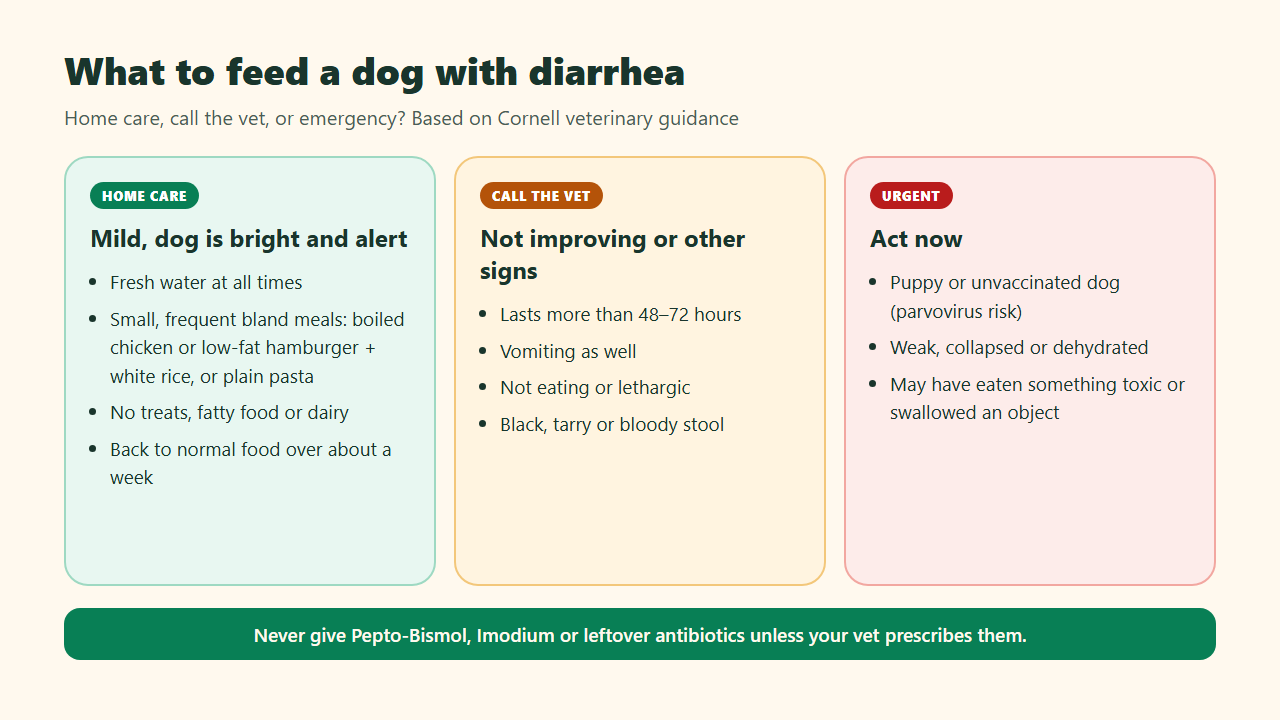
For mild diarrhoea in an otherwise bright, alert adult dog, feed small, frequent meals of a bland, easily digestible food — such as boiled skinless chicken or low-fat hamburger with white rice, or plain cooked pasta — and keep fresh water available at all times (Cornell). Your vet may prefer a prescription gastrointestinal diet.
Avoid treats, fatty or rich food, dairy and human medicines such as Pepto-Bismol or Imodium. Once the stool firms up, switch back to your dog’s normal food gradually over about a week.
See a vet if diarrhoea lasts more than 48–72 hours, the stool is black, tarry or bloody, your dog is vomiting, lethargic or not eating, or your dog is a puppy or unvaccinated — parvovirus is a life-threatening cause (Cornell).
First: Is This a Home-Care Case or a Vet Visit?
“Many cases of diarrhoea in dogs and cats are mild and self-limiting,” according to Cornell’s veterinary college — but the same guidance lists clear reasons to seek care. Dehydration is the main danger: it causes electrolyte imbalances, strains the kidneys and, in severe cases, can be fatal (Cornell).
Home care, call the vet, or emergency?
| Situation | What to do |
|---|---|
| Adult dog with mild diarrhoea who is bright, alert, drinking and eating | Home care with water and a bland diet is usually reasonable; call your vet if unsure |
| Diarrhoea lasting more than 48–72 hours, or a bland diet not helping after 2–3 days | Book a veterinary visit |
| Vomiting as well as diarrhoea, or refusing food | Call your vet today |
| Black, tarry stool or fresh blood in the stool | Call your vet today |
| Lethargy, weakness, or signs of dehydration | Call your vet today |
| Puppy or unvaccinated dog with vomiting and/or diarrhoea | Call your vet now — parvovirus testing advised |
| May have eaten something toxic or swallowed an object | Call your vet or a poison control line now |
What to Feed a Dog With Diarrhea
Cornell says mild diarrhoea can be treated at home with a bland diet such as boiled chicken or low-fat hamburger and white rice, or cooked pasta. These foods are easy to digest and give the gut a break. Avoid any ingredient your dog is allergic to or does not tolerate.
Bland food options for dogs with mild diarrhoea
| Option | How to prepare | Notes |
|---|---|---|
| Chicken or turkey breast + white rice | Boiled or baked, skinless, boneless, no seasoning; about 1 part meat to 2 parts rice (Tufts example) | Low fat; short-term only |
| Low-fat hamburger + white rice | Boiled, fat drained, no seasoning | Cornell option; Tufts notes ground beef can be high in fat |
| Plain cooked pasta | Boiled in water; no sauce, butter or salt | Cornell lists it as an alternative to rice |
| Prescription gastrointestinal diet | From your veterinarian | Complete and balanced; often what vets use for acute diarrhoea |
How to feed it
- Small, frequent meals. Clinical nutrition guidance from the Purina Institute suggests 3 to 6 small meals a day, which helps limit vomiting and diarrhoea and improves absorption.
- Start small. If small portions stay down without worsening diarrhoea, gradually increase the amount and reduce the number of meals over several days.
- Plain only. No seasoning, butter, oil, onion, garlic or gravy.
- Short-term. A bland homemade diet is not nutritionally complete and is meant for a few days (Tufts).
Chicken and rice in detail
For the ratio, preparation and how long to feed it, see our guide: is chicken and rice good for dogs?
Prescription gastrointestinal diets
Cornell notes that most cases of acute diarrhoea seen by vets are treated with a therapeutic gastrointestinal diet — a complete, highly digestible food formulated to support gut health. Unlike chicken and rice, it can be fed for longer if needed.
Water and Hydration Come First
Keep fresh water available at all times and take your dog outside frequently (Cornell). The Purina Institute describes water as the most important nutrient for dogs with acute stomach upsets because of the risk of dehydration.
If your dog is also vomiting, call your vet. Clinical guidance suggests offering small amounts of water every few hours as vomiting settles, and moderate or severe dehydration needs veterinary fluid therapy.
Should You Withhold Food From a Dog With Diarrhea?
Veterinary sources differ slightly here. Cornell mentions that one approach is to withhold food for 12–24 hours before introducing a bland diet. The Purina Institute’s clinical guidance says a short fast of 24–36 hours can suit some dogs with acute, non-life-threatening stomach upsets — but that fasting for more than 48 hours should be avoided, and that early feeding helps keep the gut lining healthy.
Because the right answer depends on your dog’s age, size and condition, ask your veterinarian before withholding food, and never withhold water.
Does Pumpkin Help Dog Diarrhea?
Plain canned pumpkin is a popular home remedy because it contains fibre. However, Tufts University’s veterinary nutritionists point out that pumpkin is a very dilute fibre source: matching the fibre in one popular high-fibre therapeutic diet would take nearly 12 cups a day for a medium-sized dog (Tufts).
If you use it, choose plain canned pumpkin, not pumpkin pie mix, which has added sugar and calories. Check for added salt too. For a dog that genuinely needs more fibre, Tufts recommends asking your vet about an appropriate fibre supplement or a therapeutic diet.
Do Probiotics Help Dogs With Diarrhea?
Your vet may send you home with a veterinary probiotic (Cornell). The evidence is mixed: a 2024 European guideline panel found that, across trials, probiotics shortened acute diarrhoea by less than a day on average, reported no adverse effects, and made no recommendation for or against their use (ENOVAT).
Tufts notes that effects depend on the specific strains and dose, and that product quality varies. If you want to try one, ask your veterinarian to recommend a product.
What Not to Give a Dog With Diarrhea
- Treats and rich food — Cornell advises avoiding excessive treats or rich food until the diarrhoea resolves.
- Fatty foods, skin, fat trimmings, gravy and greasy leftovers.
- Milk and dairy — dogs produce little lactase, so dairy can cause diarrhoea (ASPCA).
- Seasoning, onion and garlic, including store-bought broths that contain them.
- Human medicines, including Pepto-Bismol and Imodium, unless your veterinarian prescribes them.
- Leftover antibiotics — guidelines advise against antibiotics for most mild or moderate acute diarrhoea.
- A sudden new food — switching diets too quickly is itself a common cause of diarrhoea.
Going Back to Normal Food
Once your dog’s stool has firmed up, move back to their regular complete food gradually. The Purina Institute suggests a transition over 5–7 days, and Cornell recommends spreading diet changes over a week or two. A common approach is to replace the bland diet in roughly quarter steps — 25%, 50%, 75%, then 100% regular food — going back a step if the stool softens.
Common Causes of Diarrhea in Dogs
Cornell groups causes into short-lived and more serious ones. Your vet may suggest a stool test, X-rays or blood work to find the cause — bring a fresh stool sample to the appointment.
Usually short-lived
- Eating something unusual (“dietary indiscretion”), such as scavenged food or rubbish
- Switching to a new food too quickly
- Stress, such as boarding or a vet visit
- Intestinal parasites
Potentially more serious
- Infections or inflammation of the gut, including parvovirus
- A swallowed object (foreign body)
- Food allergies
- Poisoning — see 25 human foods that are bad for dogs
- Pancreatic, liver, heart or hormonal disease (such as Addison’s disease)
- Immune disorders and cancer
Frequently asked questions
What can I feed my dog to stop diarrhea?+
For mild diarrhoea in an otherwise healthy adult dog, Cornell suggests a bland diet such as boiled chicken or low-fat hamburger with white rice, or plain cooked pasta, fed in small frequent meals with plenty of water. Your vet may prefer a prescription gastrointestinal diet. See a vet if it has not improved within 48–72 hours.
Is scrambled egg good for dogs with diarrhea?+
Plain, fully cooked egg is a common bland protein, but the veterinary bland-diet examples we cite use lean chicken, turkey or low-fat hamburger. If you use egg, cook it without butter, oil, milk or salt, and check with your vet if diarrhoea continues.
How long does diarrhea last in dogs?+
Many mild cases resolve on their own within a day or two. Cornell advises veterinary care if diarrhoea does not resolve within 48–72 hours, or if a bland diet has not helped after 2–3 days.
Should I stop feeding my dog if they have diarrhea?+
Some vets recommend withholding food for 12–24 hours before a bland diet, but fasting is not right for every dog and fasting for more than 48 hours should be avoided. Ask your veterinarian first, and never withhold water.
How much pumpkin should I give my dog for diarrhea?+
Tufts University’s nutritionists note that the small amounts of pumpkin people usually give contain very little fibre, so it may not help. If you use it, choose plain canned pumpkin, not pie mix, and ask your vet about a proper fibre supplement or therapeutic diet if your dog needs more fibre.
Can I give my dog Imodium or Pepto-Bismol for diarrhea?+
Not unless your veterinarian tells you to. Cornell warns that these human medicines can be harmful to some dogs and may interact with other medications.
Does my dog need antibiotics for diarrhea?+
Usually not. 2024 European veterinary guidelines recommend against antibiotics for mild and moderate acute diarrhoea, reserving them for severely ill dogs. Your veterinarian will decide based on your dog’s condition.
When is dog diarrhea an emergency?+
Seek care promptly if your dog is a puppy or unvaccinated, has black, tarry or bloody stool, is vomiting, is lethargic or weak, will not eat, seems dehydrated, or may have eaten something toxic or swallowed an object.
How This Guide Was Prepared
This guide was researched and written by the AnimalIDFinder editorial team using published guidance from Cornell University’s College of Veterinary Medicine, Tufts University’s Cummings School of Veterinary Medicine, the Merck Veterinary Manual, ASPCA Animal Poison Control, clinical nutrition references and peer-reviewed veterinary guidelines, all linked below. It has not been individually reviewed by a veterinarian and does not replace an examination.
Where sources differ — for example on fasting — we describe each position rather than choosing one. Last reviewed against sources: October 2026.
Related dog guides
Is Chicken and Rice Good for Dogs?
The vet-cited 2:1 ratio, how long to feed it, and how to switch back to regular food.
Read guide25 Human Foods That Are Bad for Dogs
Toxic foods, choking hazards, hidden sources, and what to do if your dog eats one.
Read guideVeterinarian Warning About Homemade Dog Food
Why most home-cooked diets miss essential nutrients, and safer ways to cook for your dog.
Read guideSources
Veterinary school, clinical and peer-reviewed references used in this guide. If your dog is unwell, contact a veterinarian rather than relying on this page:
- Cornell University College of Veterinary Medicine — Diarrhea in dogs
- Cornell University College of Veterinary Medicine — Parvovirus: transmission to treatment
- Tufts Petfoodology — Does my pet need a “bland diet”?
- Tufts Petfoodology — The problem with pumpkin
- Tufts Petfoodology — Good bugs/bad bugs: probiotic supplements
- Purina Institute — Canine acute gastroenteritis / gastroenteropathy (therapeutic nutrition)
- ENOVAT guidelines for antimicrobial use in canine acute diarrhoea, The Veterinary Journal (2024)
- ASPCA Animal Poison Control — People foods to avoid feeding your pets
Explore more dog guides
Nutrition guides are educational only. Browse related dog articles, calculators and the photo identifier, or return to the guides hub.